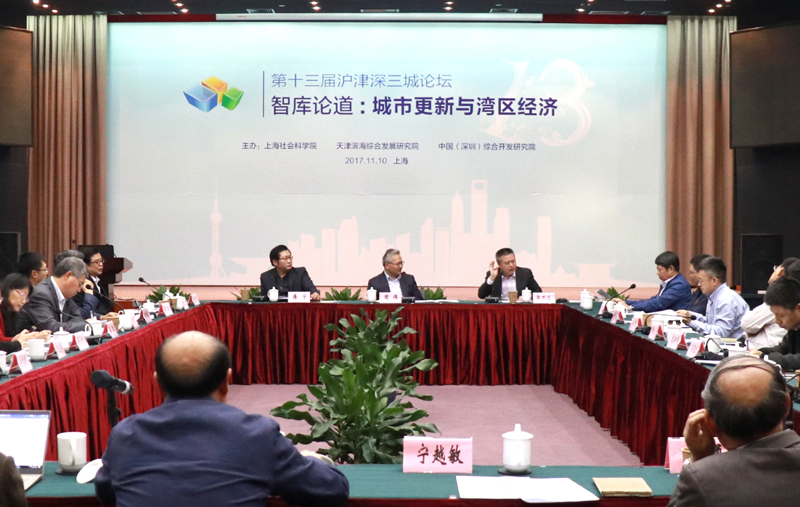
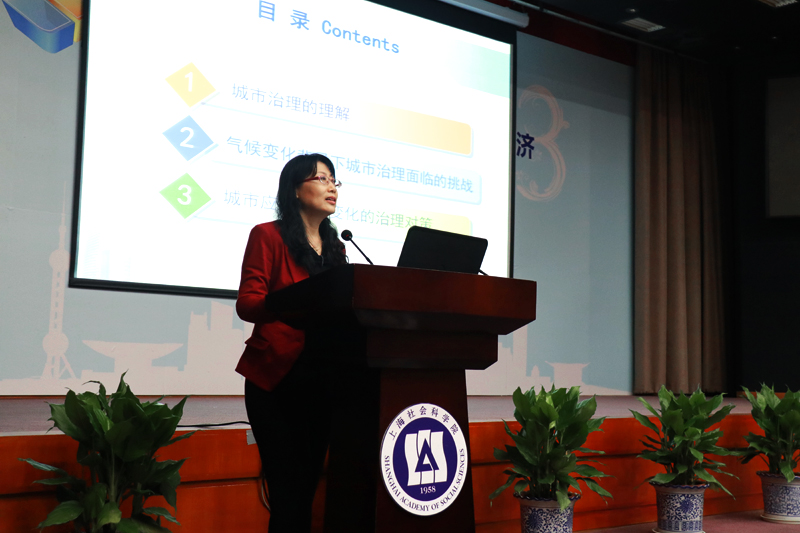
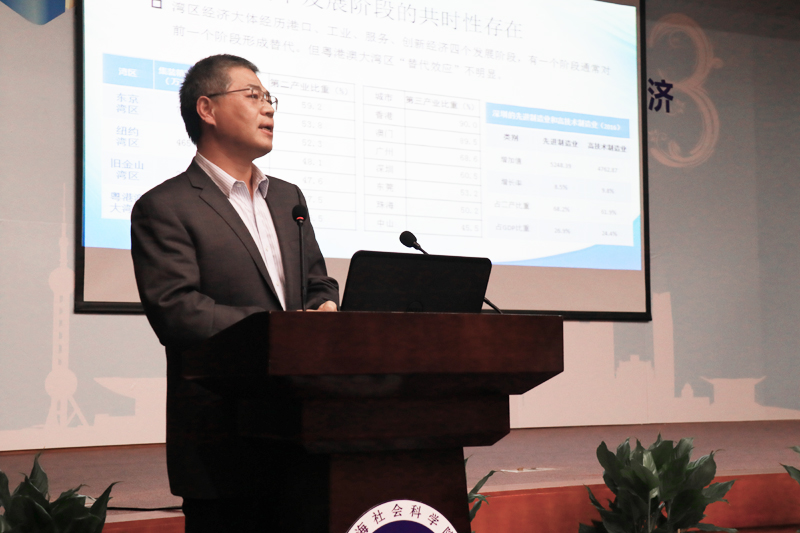
Three issues were discussed during the forum including "Urban Renewal and Development", "Urban Management and Development" and "The Bay Area Economy and Development ".
Venue: Social Sciences Innovation Base, Shanghai, China
Host: CDI, Shanghai Academy of Social Sciences, Binhai Research Institute in Tianjin
Theme: Urban Renewal and Bay Area Economy
09:30-10:15 Opening Remarks and Keynote Speeches
Moderator: Shao Jian, Director of Research Management Office, Shanghai Academy of Social Sciences
Panelists:
- Zhou Wei, Vice President, Shanghai Academy of Social Sciences
- Yang Jinxing, President, Binhai Research Institute in Tianjin
- Liu Zhongpu, Full-time Member, the Consultation Commission for the Shenzhen Municipal CPC Committee
10:15-10:30 Tea Break
10:30-12:00 Session One: Urban Renewal and Development
This session will focus on the renewal and maintenance of urban infrastructure, the upgrading of residential areas, the inheritance of community culture and policy mechanisms.
Moderator: Zhou Wei, Vice President, Shanghai Academy of Social Sciences
Panelists:
- Li Jiang, Director, Shenzhen City Planning and Land Resource Research Center
- Zeng Zhen, Director of Urbanization Department, CDI
- Wan Lin, Professor, Shanghai Jiao Tong University
- Wan Yong, Director of Institute Applied Economics, Shanghai Academy of Social Sciences
- Zhu Xinwei, Planner, Tianjin Urban Planning and Design Institute
- Tan Jian, Planner, Tianjin Bohai Urban Planning and Design Institute
12:00-13:30 Lunch
14:00-15:20 Session Two: Urban Governance and Development
This session will focus on the city management and explore the relationship between belts and blocks to provide practical solutions for city development.
Moderator: Jiang Ning, Vice President, Binhai Research Institute in Tianjin
Panelists:
- Zhang Fan, President, Shanghai Urban Planning and Design Research Institute
- Lu Hanlong, Former President, Shanghai Academy of Social Sciences
- Li Jinkui, Senior Research Fellow, CDI
- Gao Hong, Director, Shenzhen Urban Development Center
- Jin Gang, Deputy Director, Office for Policy Research, Administration Committee of Tianjin Economic-Technological Development Area
- Wang Li, Director of Institute of Industrial and Regional development, Shanghai Academy of Social Sciences
15:20-15:30 Tea Break
15:30-16:50 Session Three: The Bay Area Economy and Development
This session mainly discusses the Guangdong-Hong Kong-Macao Greater Bay Area involving Shenzhen, the Hangzhou Bay Area involving Shanghai and the Greater Bohai Bay Area involving Tianjin.
Moderator: Li Jinkui, Senior Research Fellow, CDI
Panelists:
- Jiang Ning, Vice President, Binhai Research Institute in Tianjin
- Wu Xiaoqing, Research Fellow, Binhai Research Institute in Tianjin
- Liu Zhongpu, Full-time Member, the Consultation Commission for the Shenzhen Municipal CPC Committee Ren Ting
- Zhang Yuge, Director of Hong Kong-Macao Economic and Social Research Center, CDI
- Ning Yumin, Director of Urban and Regional Science Department, East China Normal University
- Zhu Jianjiang, Director of Urban and Population Department, Shanghai Academy of Social Sciences
16:50-17:05 Closing Remarks
Moderator: Zhou Wei, Vice President, Shanghai Academy of Social Sciences
Panelists:
- Zhou Wei, Vice President, Shanghai Academy of Social Sciences
- Guo Wanda, Executive Vice President, CDI
Yang Jinxing, President, Binhai Research Institute in Tianjin
In the next round of city transformation, city renewal will improve the city functions. First, city renewal still needs to follow the law of urban development and to promote comprehensive renovation in a bid to improve city environment. Second, renovation of old city areas will make full use of old buildings and realize “more renovation and less demolition” with integrating the new and the old.
In the current stage, city governance mechanisms in our country still face many problems, for example, insufficient social and civil services, relatively low participation in urban public affairs, limited presence of social organizations, etc. A sound mechanism among government, businesses and society is vital in ensuring the smooth functioning of city governance, among which, a diversified community with self-governance system will be built and developed, and non-profit organizations at the basic level of urban life will be encouraged to play a bigger role in social governance under the government’s guidance. It is suggested that “extensive social governance” will give place to a standardized social governance mode that puts people first in order to achieve rule of law, rule of virtue and self-governance.
The development of bay areas provides new opportunities for the sustainable development of urban economy, while setting higher requirements for bay area’s capacity in bringing together resources for coordinated development. For example, discrepancies exist between the cities in the Guangdong-Hong Kong-Macao Greater Bay Area, but such imbalances also bring new opportunities for growth. We should break administrative boundaries between cities and integrate resources. A well-functioning modern collaborative industrial system and a metropolitan commuter zone will be of great significance to promoting the balanced development of economy and society in the region.
Gallery