Innovative, Objective, Practical

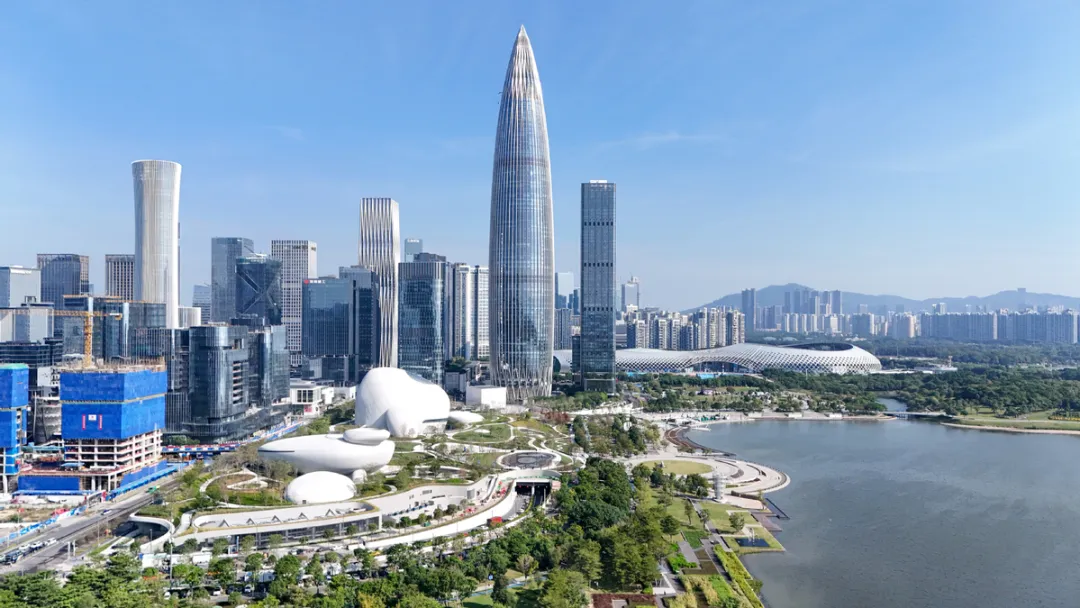
//A drone photo, taken on Nov 1, 2025, shows a view of Shenzhen Bay Culture Square in Shenzhen, South China's Guangdong province. (PHOTO / XINHUA)
Amid growing demand for cross-boundary consumption, logistics, and scientific research, experts recommend extending operating hours at key passenger and cargo land border crossings — particularly at the Shenzhen Bay, Futian, and Liantang ports.
They believe this move will help invigorate economic vitality, nurture the growth of innovative industries, and facilitate the movement of passengers and cargo through Hong Kong to global market.
The proposal, which represents the shared aspirations of those who live in both cities amid deepening integration, was included in Hong Kong’s first five-year plan, announced Sept 16, as a key step to strengthening collaboration within the Guangdong-Hong Kong-Macao Greater Bay Area.
Among the seven Shenzhen-Hong Kong land border crossings, only Huanggang offers 24-hour passenger services, while Shenzhen Bay provides 24-hour freight services. The other crossings open at 6:30 am or 7 am and close between 10 pm and midnight.
In 2025, cross-boundary passenger traffic at Shenzhen-Hong Kong land checkpoints reached 264 million, a record high, and cross-boundary truck trips totaled 4.32 million.
Kenny Shui Chi-wai, vice-president of Our Hong Kong Foundation and executive director of its Public Policy Institute, highlighted the importance of the Futian, Shenzhen Bay, and Huanggang ports for their connections with core industries.
To facilitate the commuting of scientific researchers and professional service providers, he suggested first extending the closting time of the Futian Port from 10 pm to midnight — in line with Shenzhen Bay — and later gradually expanding the passenger services at the two checkpoints to 24 hours a day.
By doing this, more scientific samples and legal documents requiring urgent delivery will be able to cross the boundary late at night, and strategic platforms located near the border could further deepen their collaboration, Shui said.
In addition to Shenzhen Bay, only Wenjindu and Liantang provide freight services, both of which operate from 7 am to 10 pm. Shui suggested that the government and industry stakeholders jointly discuss establishing a relatively fixed extension window — for example, extending operating times by one or two hours in both the morning and the evening, enabling more trucks to choose nearby border crossings and enhance supply chain efficiency.
Hong Kong Legislative Council member Erik Yim Kong said that extending checkpoint operation hours would allow more time for various commercial activities to take place in Hong Kong, in areas such as trade, finance, and consumer-related business, and provide more options for goods and fresh produce from farther away to enter Hong Kong.
Echoing public sentiment, both Yim and Shui support extending the operating hours at Liantang Port from 10 pm to 11 pm. This will better leverage the functions of this emerging eastern gateway and facilitate northbound travel for Hong Kong residents — particularly the elderly, who rely on transportation fare concessions to reach the checkpoint.
With a designed passenger clearance capacity of only 30,000 trips per day, Liantang Port — which began handling passenger traffic in 2023 — has seen its average daily passenger trips exceed 60,000, peaking at more than 120,000 per day.
At present, many border ports do not have consistent names in Hong Kong and the mainland — especially their English names. For example, the Liantang Port and Wenjindu Port are known in Hong Kong as Heung Yuen Wai and Man Kam To control points. Yim also calls for harmonizing their names to reduce confusion among travelers.
Yang Qiurong, a senior research fellow at the China Development Institute, proposed piloting appropriately extended customs clearance hours on weekdays at Futian and Luohu — the two busiest border crossings — along with 24-hour passenger clearance on weekends and public holidays.
She also recommended establishing dedicated lanes for business travelers and transfer passengers at the Shenzhen Bay Port — the most convenient border crossing for those traveling to and from Hong Kong International Airport — and optimizing customs inspection procedures at major cargo land ports.
Shui and Yang also stressed the importance of night-time supporting measures. They said that special attention should be paid to strengthening public-transport feeder services, leveraging technology to improve efficiency amid limited manpower, and enhancing service facilities around the checkpoints — such as parking, dining options, and emergency medical care — to improve the overall night-time passenger experience.(by Li Bingcun CHINA DAILY)

With one-person companies becoming one of the hottest entrepreneurial trends on the Chinese mainland, favorable government policies have been upgrading with the aim of fostering a full-fledged ecosystem for small businesses to grow. Zhou Mo reports from Shenzhen.
When GBAnexus — a government-backed big-data center in technology powerhouse Shenzhen — launched China’s first inclusive online artificial-intelligence platform for one-person companies (OPCs) and other small enterprises last month, it marked more than just a new digital service for solo entrepreneurs.
The platform — offering free cloud resources, low-cost access to AI models, limited free data services, and full-chain entrepreneurial incubation — aims to bring down digital costs for OPCs, making it easier for them to grow.
Procurement costs of computing power, AI models and data are too high for OPCs to afford, leaving them at a disadvantage. Moreover, OPC founders often operate without access to professional entrepreneurial guidance and industry connections to turn ideas into viable businesses, says Li Dongyang, director of operations at GBAnexus.
“We want to build an inclusive service community where the benefits of AI can be shared by micro firms, and solo entrepreneurs can receive tailored entrepreneurial support,” he says.
Li says the platform’s computing resources are available at 50 to 80 percent of prevailing market prices. OPCs can also gain access to its more than 40 billion data records.
Its launch stands as a vivid example of how Chinese mainland authorities have gone to great lengths to back one-person businesses — a model that’s undergoing a significant upgrade. While cities threw their hats in the ring to attract solo entrepreneurs with financial subsidies and affordable working spaces, they are now creating a sound ecosystem with comprehensive resources, such as computing power, skill trainings and application scenarios, to fuel their growth.
The fever of introducing OPC-related policies and measures among mainland provincial-level areas and cities hasn’t cooled down in the second half of this year. Southwest China’s Yunnan province and the Northwest China city of Xi’an, Shaanxi province, unveiled a series of measures to support OPC development last month.
East China’s Zhejiang province introduced the country’s first specialized terminological standard focusing on OPCs, providing a unified industrial benchmark for the identification, evaluation, operation and services of OPCs across the country. The provincial capital of Hangzhou in June launched an all-in-one service guide that aims to establish a companion-style service mechanism for OPCs.
The initiatives mark a major shift from initial supportive policies rolled out nationwide, largely centering on financial incentives and subsidized office space.
Ye Fei, general manager of the Plug and Play China GBA International Innovation Center, has strong feelings about the frenzy, recalling the time he was approached by the authorities of various districts in Shenzhen and cities across the country that sought his advice on developing OPCs.
“I told them to think twice before jumping on the bandwagon as this model is never a one-size-fits-all solution for every city. Local governments need to clarify their core goals first as different objectives call for different strategies,” he says.
Tailor‑made policy needed
As of March, 23 Chinese mainland cities had launched OPC policies, with over 100 policy measures unveiled, according to a report published by the State Administration for Market Regulation’s development research center.
Most of the cities’ policies centered on financial subsidies, working space support and public services provision, with little differentiated designs based on local conditions, the report said. Some local governments even replicated policy frameworks from peer cities, leading to high homogeneity.
All 23 cities provided policy measures in the three aspects mentioned, the report found. While 95 percent of local governments launched preferential tax measures, only 20 percent offered OPCs support on capability enhancement, such as skill training and talent introduction. The proportion of cities that focused on helping OPCs with resource matching, such as supply-chain connection and market expansion, was even lower, at 15 percent.
“Some local governments lack in-depth understanding of the OPC model and roll out policies merely out of peer pressure,” Ye says. “They are like students rushing to hand in their papers — when other cities introduce OPC policies one after another, they feel compelled to follow suit for fear of being left out of the new trend.”
Another reason behind their anxiety lies in the potential “siphon effect” brought by OPC policies in peer regions. “Once a region introduces preferential policies, it may draw OPCs and high-quality talents from other regions, bringing hidden risks to their industrial layout and efforts to retain talents,” Ye says.
The consequences of unbridled competition are far-reaching and detrimental, says Peng Xiaozhao, assistant researcher of Department of Financial Development, State-owned Assets and SOE Research at the China Development Institute, a Shenzhen-based think tank.
First, generous subsidies offered by different cities could prompt OPCs to relocate frequently in a bid to reap preferential policy benefits, leading to a massive waste of public funds, he says. Second, because of similar policies, OPCs could crowd into the same segments and those with low barriers, stifling differentiated development and original innovation.
Peng also says that as OPC communities sprout up on the mainland following the launch of OPC-related policies, those without industrial chain support and practical application scenarios could struggle to retain firms, giving rise to high vacancy rates.
According to a report published by a team led by Yao Jianhua, professor of the School of Journalism at Fudan University, the number of OPC communities nationwide had reached 426 by May, covering 28 provincial-level areas and 65 cities. East China’s Jiangsu province topped the number with 158 OPC communities, accounting for 37.1 percent of the nation’s total, followed by East China’s Shandong province and South China’s Guangdong province, which had 40 and 36 OPC communities respectively.
Encouragingly, the “FOMO”, or “fear of missing out”, mentality outlined by Ye is gradually fading. Local governments and OPC community operators increasingly recognize that successful OPC development depends not on how quick preferential policies are introduced or how many incubators are being built, but on establishing a robust industrial ecosystem tailored to solo entrepreneurs.
Building ecosystem
“Whether an OPC community can foster the growth of solo entrepreneurs hinges on whether its operator truly understands the development logic and operational needs of this emerging business group,” says Wu Xi, head of operations at Angel Family — one of the first group of OPC communities in Shenzhen. “An OPC community should not serve merely as a property landlord. Instead, it should build a system that covers venue, policy, capital, application scenarios and services.”
Moreover, it should give full play to its role as a “translator” between governments and OPCs, facilitating targeted policy implementation by authorities and fostering sustainable growth for startups, Wu says.
“On one hand, we know exactly what difficulties OPCs are facing. We organize them into practical suggestions and pass them on to policymakers to help improve policies. On the other hand, policy documents are hard for many entrepreneurs to understand. We translate those policies into something they can really comprehend and use.”
Peng suggests that besides building a sound industrial ecosystem for OPCs, local governments should develop tailored OPC policy frameworks by leveraging their respective industrial foundations and institutional advantages.
In the Guangdong-Hong Kong-Macao Greater Bay Area, Shenzhen could build on its strengths in scientific and technological innovation and high-end manufacturing to strengthen technology supply and expand global market channels, serving as a cradle for OPC technological innovation, says Peng.
Capitalizing on its commerce and transportation hub status, Guangzhou could foster an open and inclusive ecosystem of application scenarios and professional services to develop into a commercial and operational hub for OPCs, he notes.
Meanwhile, Dongguan and Foshan, with their solid manufacturing base, could strive to nurture industry-focused OPCs in niche markets, Peng says.
“This will help form a complementary OPC industrial ecosystem across different cities, preventing homogeneous competition and redundant construction, thereby further enhancing the Greater Bay Area’s overall competitiveness in the global economic landscape.”(By Zhou Mo, CHINA DAILY)

//A couple pose for a photo at the marriage registration office in Futian district, Shenzhen, South China’s Guangdong province, Feb 14, 2026. (PHOTO/XINHUA)
Greater efforts should be made to improve systems and policies that support marriage in order to make life easier for families and encourage young people to wed, researchers have said.
The call came after Guangdong released its marriage registrations list for the first half of the year. According to the Department of Civil Affairs of Guangdong Province, Guangdong registered 288,000 marriages during the period, down from 292,000 marriages a year earlier.
While the province is home to 11.7 percent of China’s population aged from 20 to 39, its marriage registrations account for only 8.8 percent of the nation’s total.
Shenzhen led cities in the province with 57,181 marriage registrations, followed by Guangzhou at 52,435. The number of marriage registrations in Dongguan and Foshan also surpassed 20,000.
“The Guangdong-Hong Kong-Macao Greater Bay Area boasts abundant job opportunities and a concentrated marriage age population, creating favorable conditions for people to form romantic relationships. However, employment pressures, high living costs and population mobility make them more prudent when making relationship-related decisions,” said Huang Rui, director of the Institute of Regional Development Planning at China Development Institute, a Shenzhen-based think tank.
A researcher in the talent development research center at the Guangdong Academy of Social Sciences, who preferred to be anonymous, said the decline in marriage registrations “should not simply be interpreted as young people losing interest in marriage. It reflects a combination of demographic changes, delayed marriage age and evolving social attitudes.”
Young people, with higher educational levels and improved incomes, have become less dependent on their families and attach greater importance to personal will when considering marriage. Meanwhile, high housing and living costs, coupled with employment pressure in big cities, means young people need more time to build their careers and prepare for family life, they said.
“Actually, we are not rejecting marriage itself. Rather, we are seeking greater stability in employment, housing and future family life before making such a decision,” a Shenzhen-based software engineer in his late 20s, who asked not to be identified, said. “We talk more about emotional readiness and financial security first.”
Local governments have launched a range of measures to reduce practical barriers and strengthen people’s confidence in starting a family.
In Guangzhou’s Baiyun district, authorities have shifted the focus from one-off incentives to long-term support by developing a full-cycle marriage service system that covers matchmaking activities, marriage registration, cultural activities and family support.
Youth and talent housing policies in Shenzhen provide rental subsidies, transitional housing and settling-in allowances that support the early years of family formation.
“The criteria of an effective policy measure lies in whether it can reduce the time and economic costs of forming a family and ease care giving burdens,” Huang said.
Huang proposed improving measures in three aspects. First, she said, it is crucial to strengthen employment and income prospects, reduce workplace discrimination based on gender, age and marital status, and improve social security coverage for people in flexible jobs.
Second, better policy coordination is needed across housing, childcare, education and healthcare to help bring down household living expenses. And third, community-based childcare, after-school activities and elderly care services could be further developed to ease the dual burden of child rearing and elder care on families, she added.
The researcher from the Guangdong Academy of Social Sciences emphasized the importance of cultivating a positive and healthy attitude toward marriage and family among young people through publicity, family and school education.
The government could also improve marriage service systems by supporting social organizations, communities, universities and enterprises to build exchange platforms for young people, as well as by offering charitable services to them, he added.(by Zhou Mo, CHINA DAILY)

And it's not just about shipping more units. Chinese manufacturers are now designing products that fit the way Europeans actually live, from portable units that bypass strict installation rules to gadgets that offer sun protection too. Zhao Chenchen takes a closer look.
Umbrellas, mini fans, and ice makers. The demand for these cooling appliances from China surges as Europe experiences another summer of extreme heat. And Chinese manufacturers are redesigning these products to better fit local lifestyles.
ZHAO CHENCHEN Foshan, Guangdong Province "This is a mobile split air conditioner tailored for the European market. The top module, which only weighs about 10 kilograms, functions as the outdoor condenser, and it can be easily mounted onto a windowsill without requiring structural drilling."
XIONG XUEQIN Sales Director, Midea RAC Europe Region "In Europe, the rental rate is relatively high, and people want products that can be used right away. Compared to traditional mobile air conditioners, it has higher energy efficiency to save your electricity bill and better noise control as its external unit is outdoors. That's why it can win the hearts of European consumers."
A product like this was born out of a localized approach. European consumers did not have the demand to purchase air conditioners until recent years. But with a global designing team, Chinese enterprises can respond faster with local insight.
ZHAO ALI Europe Product Manager, Midea RAC Overseas "We started from the product, with the front-end team identify a specific problem from the local consumers. Then we bring together a dedicated team to develop a solution, working closely with our R&D teams in China as well as our industrial design team in Italy."
Sales of this AC in Europe have more than doubled to some 200,000 units this year. More Chinese manufacturers are designing products around local consumer needs, from portable fans for outdoor lifestyles in Latin America to energy-efficient climate solutions for European homes. Expert says innovation no longer stops at the factory floor.
LIU ZHIJIE Director, International Cooperation Department China Development Institute "It's about tech innovation. We've long moved from the model of original equipment manufacturing. Chinese companies can now turn independent R&D into products fast , driven by the market demand."
With an expanding China–Europe freight train network, some shipments can now reach Europe in as little as 15 days. That's around 25 days faster than traditional sea freight. As summer demand gradually gives way to the heating season, production lines are already preparing for the next wave of orders.
Designing smarter, responding faster, and staying closer to the markets they serve are becoming the key competitiveness for Chinese manufacturers. (Zhao Chenchen, CGTN)
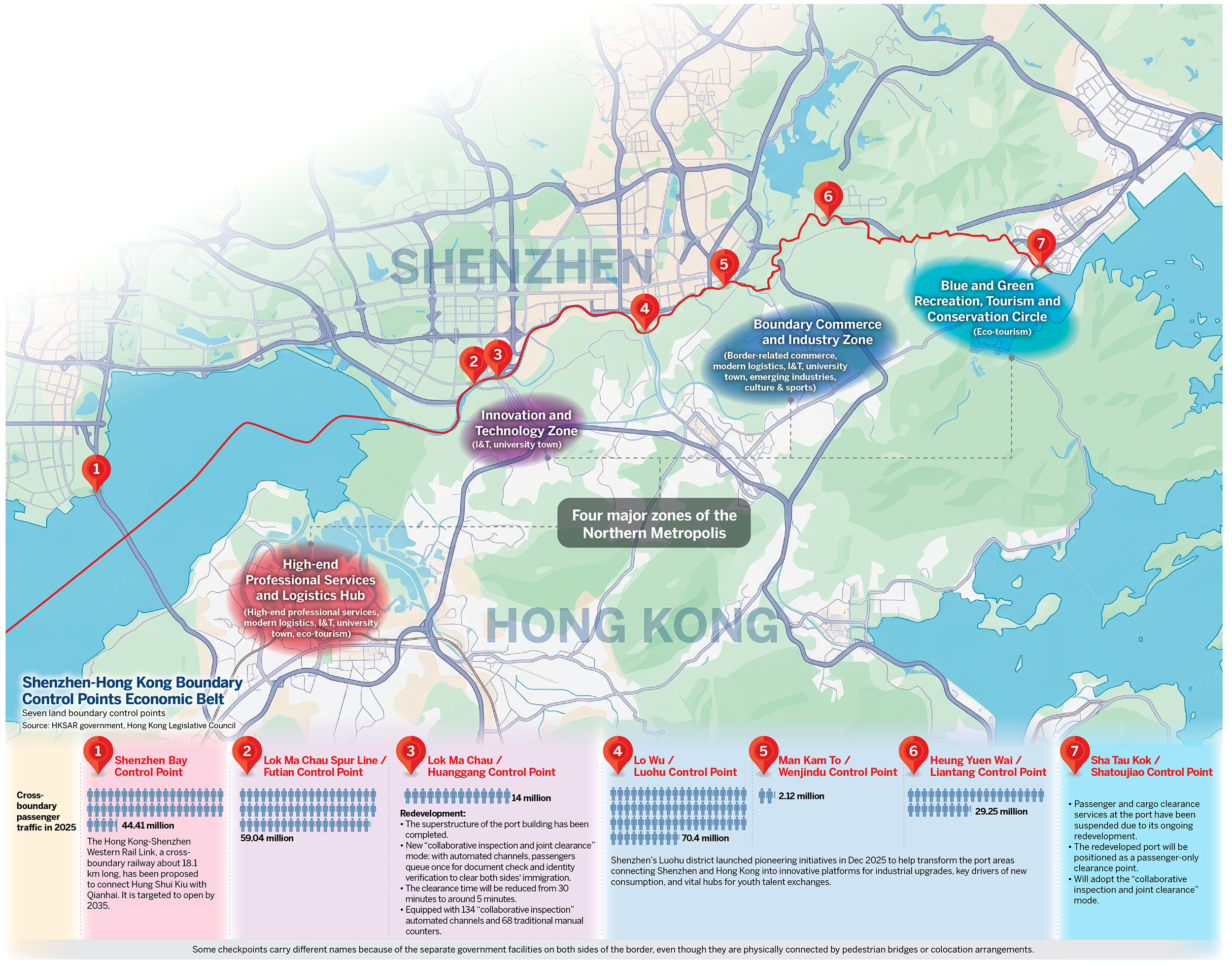
Editor’s note: As key transportation hubs in the Guangdong-Hong Kong-Macao Greater Bay Area, the cluster of ports in Shenzhen and Hong Kong is seeking a leap in value with a refreshed outlook and more integrated functions to turbocharge industries and the cities’ respective economies. China Daily presents a three-part series to document the transformation, with the first article spotlighting the significant potential of the land-port economic belt.
A chain of cross-boundary checkpoints has mushroomed on both sides of the Shenzhen River and its adjacent bay areas, carving out an economic corridor that serves as a key gateway for the flow of people, goods and capital between innovation epicenter Shenzhen and world financial hub Hong Kong.
After the twin cities’ ups and downs for almost half a century, the crossings are undergoing a profound transformation to enhance their value, aiming to convert massive traffic flows into fresh economic momentum.
Desperate for new development opportunities, Shenzhen and the Hong Kong Special Administrative Region have turned their sights to the boundary areas, with the southern Chinese mainland boomtown upgrading crossing facilities and integrating industries to further unleash the capabilities of the strategic passages, and the SAR spearheading its ambitious Northern Metropolis project to reshape the once-desolate area.
With greater development priorities, the future of this prime location is expected to be a strategic lever for both sides to address economic pain points, promote regional industrial upgrading and advance the country’s high-level opening-up.
The seven land-boundary crossings between Shenzhen and Hong Kong currently handle over 200 million passenger trips annually, accounting for 40 percent of the nation’s total inbound and outbound passenger traffic. They include the three busiest ports — Luohu, Futian and Shenzhen Bay — complemented by the only round-the-clock checkpoint, Huanggang, as well as Wenjindu, Liantang and Shatoujiao.
The figures speak for themselves. Cross-boundary visits at all ports hit a record high of 273 million last year, up 14 percent year-on-year, with an average of 750,000 movements logged daily. Since Hong Kong’s return to the motherland in 1997, passenger throughput between the two cities has more than tripled, and the trade volume is up 10 times to 790 billion yuan ($116 billion), magnified by the opening of more crossings.
“Linking two core cities of southern China and benefiting from the institutional advantages of ‘one country, two systems’, the Shenzhen-Hong Kong boundary area, driven by trade and innovation-technology industries, is of unique significance to the country,” says Xie Laifeng, who heads the Hong Kong, Macao and Regional Development unit at the China Development Institute.
“Whether it is in terms of passenger traffic or internationalization, it outperforms many other counterparts and even surpasses the economic vitality of some border regions between countries,” he says. “As cross-boundary traffic continues to rise, and integration of the Guangdong-Hong Kong-Macao Greater Bay Area enters a new phase, the boundary crossings’ functions need to be further upgraded, with new economic models in place to promote deeper industrial, livelihood and cultural connectivity.”
Pursuing such lofty goals, China has made extraordinary efforts to evolve ports of entry from peripheral passages to regional economic engines. Under the 14th Five-Year Plan (2021-25), the country added and expanded 40 boundary crossings, bringing the total to 311.
New phase, new plans
Entering the nation’s 15th Five-Year Plan period (2026-30), Shenzhen has made boosting the boundary area economy a key priority, pledging to adopt varied strategies for developing different land ports. The city’s renovated Huanggang Port is due to open this year, while Luohu, Shatoujiao and Wenjindu ports will be upgraded in the next few years, according to Wu Jun, director of the Cooperation and Development Division of the Office of Port of Entry and Exit of the Shenzhen Municipal People’s Government.
The upgraded checkpoints will see streamlined customs procedures, greater processing capacity and more clearly defined functions, Wu tells China Daily in an exclusive interview. The new-look Huanggang Port will release 500,000 square meters of land to back up the development of the Hetao Shenzhen-Hong Kong Science and Technology Innovation Cooperation Zone.
In the long term, Shenzhen may create a dedicated crossing in the Hetao cooperation zone to facilitate the movement of scientific researchers, as well as the Qianhai checkpoint of the planned Hong Kong-Shenzhen Western Rail Link — a vital cross-boundary infrastructure that will connect the two cities in just 15 minutes.
In Shenzhen’s push to strengthen the border crossings’ integration with industries, western checkpoints will focus on modern services and high-end consumption, while those in the central areas will facilitate the flow of scientific and technological resources, and those to the east will create new scenarios for cross-boundary consumption.
Luohu district — home to three checkpoints — took the lead in launching initiatives last year to revitalize the port economy, focusing on cross-boundary trade, high-end consumption, emerging technology applications and talent communication.
“Along with the earliest-developed crossings, Luohu has the closest ties, most frequent exchanges, and the most active cross-boundary consumption with Hong Kong,” says Liu Xiaomei of the Luohu District Development and Reform Bureau.
The city hopes to leverage these advantages and nearby industrial resources to introduce lightweight, high-value-added industries along the boundary, such as coordinating with Hong Kong in developing a life-and-health industrial park, exporting financial and knowledge services, and expanding the trade of fresh food and agricultural products, she says.
Boundary crossings are also excellent platforms for showcasing products and promoting the consumption of smart home devices, wearable technology, senior-friendly technology, automobiles, as well as gold and jewelry.
“Previously, the crossings mainly functioned as transit hubs — busy but underutilized. The initiatives are set to leverage their geographic advantages to make them destinations for Shenzhen and Hong Kong residents to work, live and relax,” Liu says.
On the other side of the boundary, the 300-square-kilometre Northern Metropolis is rapidly taking shape, and is on course to be Hong Kong’s most dynamic area in the next two to three decades. Its core industries — tech innovation, the digital economy, low altitude aviation and higher education — along with a projected population of 2.5 million and a new transport network centered on the Northern Link, are poised to fuel the region’s economic growth.
Zheng Yongnian, dean at the School of Public Policy of The Chinese University of Hong Kong, Shenzhen, says the “port economy” represents an upgrade from the traditional “transit economy”.
“By leveraging the traffic of boundary crossings, it fosters the development of local industries, such as consumption, trade and logistics, achieving an extension of industrial chains and economic value-added,” he said.
“A growing number of crossings are undergoing such transformation. Many countries are promoting economic growth, employment and trade by establishing free trade and special economic zones, or port clusters at seaports, land border crossings or airports, transforming them from economic outposts into hubs,” Zheng says.
Hong Kong business-sector lawmaker Erik Yim Kong has compiled an insightful research report in this field, saying the port economy holds promise as a new economic driver for Shenzhen and Hong Kong that will strengthen the overall level of openness and industrial competitiveness of the 11-city Greater Bay Area.
As natural conduits connecting both sides, the port areas can further explore opportunities in customs clearance facilitation, cross-boundary data flow, and mutual recognition of professional qualifications, providing valuable insights for other free trade zones and cross-border cooperation zones across the country.
Connecting domestic and international markets, developing border ports can further improve the efficiency of cross-boundary logistics, passenger and capital flow, backing the country’s “dual circulation” strategy and high-level opening-up, says Yim.
Tailored strategies needed
Given the varying levels of development in the border regions of both sides, different project strategies are essential.
Xie says that Shenzhen’s port cluster, having matured after years of development, demands new business models and greater internationalization to unlock its worth. He calls for urgent attention to enhance older ports with haphazard layouts, aging infrastructure and severe traffic congestion. For new ports being planned, allocating more space for new consumption formats and for innovation and entrepreneurship would be ideal.
With Hong Kong’s inno tech parks running at high capacity, the boundary port areas are well-positioned to absorb spillover demand. Attracting more Hong Kong and international firms to the area would also spur development of the Northern Metropolis, he says.
He said he believes Shenzhen’s crossings will see significant improvement under the 15th Five-Year Plan. With Luohu taking the lead, he hopes more areas will follow suit in scaling up port-driven economic development, pinning high hopes on Qianhai and Shekou in Nanshan district.
On the Hong Kong side, Yim says, developing the boundary areas has long been neglected, resulting in underdeveloped industries and inadequate supporting infrastructure. The authorities’ lengthy decision-making and implementation procedures have further slowed its pace of development.
He suggests forming a high-level Shenzhen-Hong Kong cooperation task force to elevate port development to the national level, jointly planned and developed by both sides to create complementary strengths. Hong Kong’s growth can be expedited through proposed dedicated legislation for the Northern Metropolis, which is set to innovate land development models and speed up project approvals.
In Zheng’s view, the port cluster should tap the SAR’s strengths to vigorously develop cross-boundary service industries — an area in which China’s economy has lagged and which is crucial to future international trade growth.
He advocates combining the policy advantages of both sides to make these checkpoints the first stop for companies going global. Building on the opportunities presented by the nation hosting this year’s Asia Pacific Economic Cooperation meetings in Shenzhen, the Shenzhen-Hong Kong port areas could further deepen policy openness on multiple fronts, including visa and tax-related measures, he added.
Zheng also recommends drawing on successful experiences of advanced port-economy models like Singapore, Dubai and Tokyo to develop diversified businesses at border ports, building free trade zones, and developing complete industrial chains in coordination with surrounding regions to ensure that the boundary corridor becomes an integral part of the national economy.
Next Actions
1. Elevating the strategic positioning of the border economic belt to a “national-level Shenzhen-Hong Kong cooperation platform”.
2. Jointly planning and developing the border region to achieve complementary advantages of the two sides.
3. Strengthening spatial planning for existing border crossings and strategically integrating them with high-value-added industries based on their respective strengths.
4. Reserving space for emerging industries, such as the low-altitude economy, as well as for innovation and entrepreneurship, when planning new border crossings.
5. Taking advantage of the nation’s hosting the 2026 Asia-Pacific Economic Cooperation meetings to deepen policies on opening up the boundary areas, particularly with regard to visa and taxation matters.
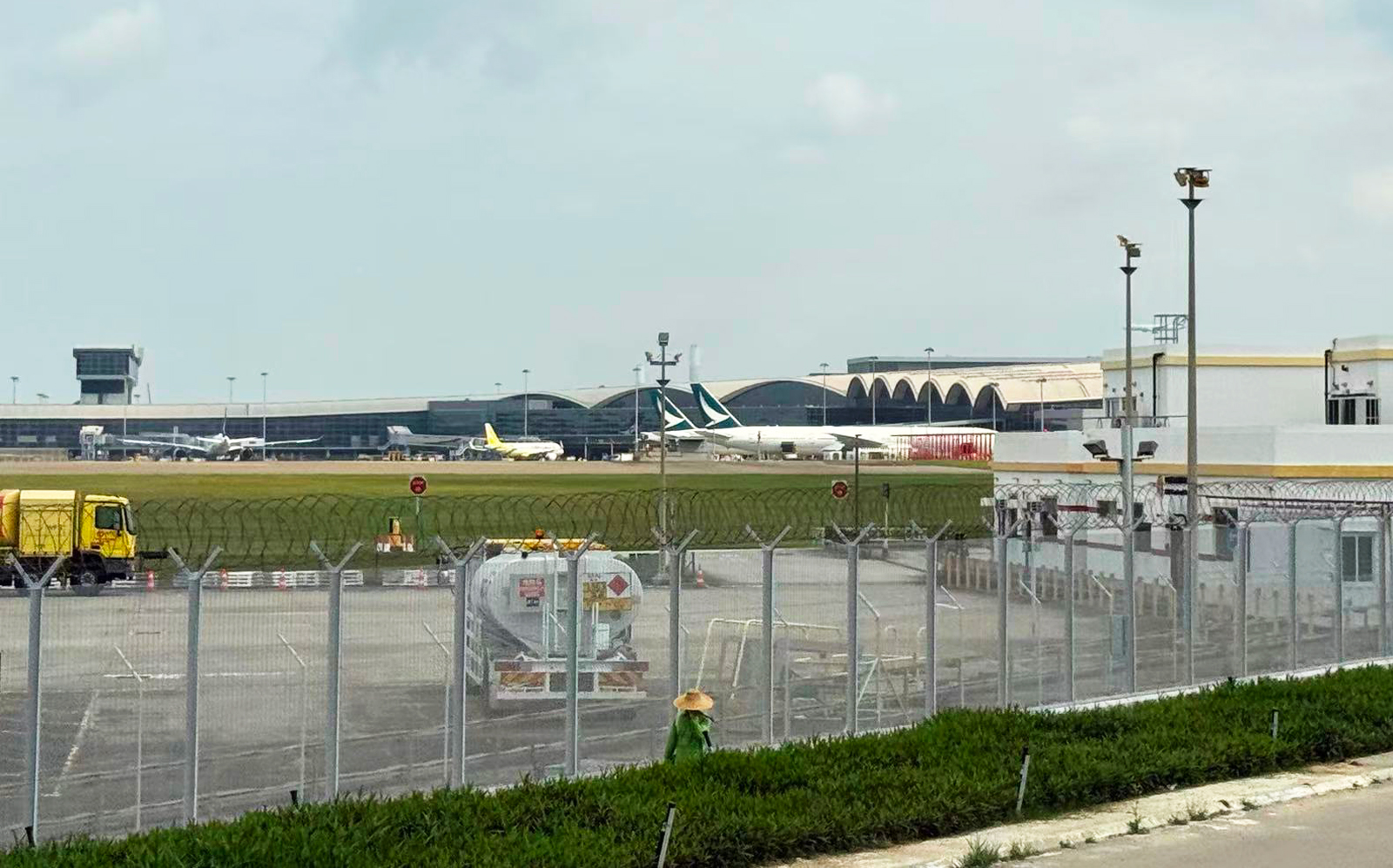
The fuel crisis across the global airline market is not only influencing passengers’ summer travel choices, but may also reshape the aviation industry’s international landscape, which is facing mounting challenges amid global turbulence.
The Guangdong-Hong Kong-Macao Greater Bay Area, which boasts multiple major airports, including an international air hub in Hong Kong, is also feeling the pinch. But the region’s relatively stable fuel supplies may help it fill the gap caused by international flight reductions and accelerate its development of a world-class airport cluster, experts say.
The soaring oil prices caused by conflict in the Middle East have driven up global jet fuel prices and led to supply shortages in many regions, resulting in widespread flight cancellations across international routes and increased fuel surcharges on airline tickets.
Jet fuel prices have reached a ten-year high. The domestic settlement price for jet fuel rose from 5,600 yuan ($821) per ton in March to about 9,800 yuan per ton in April, marking a monthly increase of 75 percent. International jet fuel prices have surged by more than 100 percent over the past two months, far outpacing the rise in crude oil prices.
The surge in prices is rapidly eroding profit margins, leading to the widespread cancellation of unprofitable routes. In April and May, which covers the Labor Day Golden Week, a large number of flights from Chinese mainland cities to Southeast Asia and Australia were canceled, including those to tourist hotspots such as Phuket, Bangkok, and Sydney.
In Hong Kong, Cathay Pacific and its subsidiary Hong Kong Express have canceled approximately 2 percent and 6 percent of their passenger flights, respectively, from mid-May through the end of June. Greater Bay Airlines has also canceled flights to Bangkok from May through September, as well as some flights to Taipei.
Zhou Shunbo, executive director of the New Economy Institute at the Shenzhen-based China Development Institute, said the fuel price surge has had a major impact on the operations of low-cost airlines, with larger airlines also being hit. Coupled with the Russia–Ukraine conflict, these geographic tensions have dealt another blow to the international aviation industry, which has been slowly recovering from the COVID-19 pandemic.
He believes that while some domestic travel demand may shift to high-speed rail, the uncertainty surrounding international flights and short-term price fluctuations will dent people’s willingness to travel abroad in the near term, particularly among budget travelers.
Reduced passenger flights will also cut cargo capacity in aircraft holds, which may drive up the shipping costs for goods that rely on air transport — such as precision electronic components and high-value seafood. This could further affect the development of core industries and everyday life in the Greater Bay Area, Zhou said.
If the situation persists, it may prompt national and local authorities to examine the long-term impact of rising fuel costs on urban development and to introduce policies to aid the aviation industry and its shift to sustainable energy.
He cautioned that flight slots at key international hubs — such as London Heathrow Airport — are highly valuable. If a carrier reduces its flights and gives up certain slots, they may be auctioned off to other airlines, making it difficult to re-enter that market.
Given the current ample supply of jet fuel in China, he believes the Greater Bay Area can seize this opportunity to capture market share from affected international markets and further the goal of developing its local airports into international aviation hubs.
Timothy Chui Ting-pong, executive director of the Hong Kong Tourism Association, said that in addition to the Labor Day holiday, the entire summer season from June to August is the peak season for tourism. Many students planning to study abroad will choose to fly from Hong Kong, and these plans will also be affected under the current circumstances, he added.
He said flight reductions would impact Hong Kong International Airport’s high-frequency, dense transit network as well as its cargo services — which rank first globally in terms of throughput — potentially weakening the city’s competitiveness as an international aviation hub in the long run. However, he emphasized that this is an industry-wide challenge troubling global airports.
Chui urged local airlines to maintain strategic routes connecting Hong Kong to Europe, Japan, the Chinese mainland and Australia, ensure a stable local fuel supply, and provide appropriate compensation to affected passengers to maintain their confidence in local services.
If the fuel crisis continues, the government should consider introducing support measures — for example, reducing fees for aircraft parking and airport operations, and providing subsidies for key trunk routes, he said.
As the Labor Day holiday approaches, many travelers have taken to social media to share their experiences of flight cancellations and discuss how to recoup their losses. Chen Xueqing, a traveler from Chongqing, booked a China Southern Airlines flight two months in advance to enjoy a vacation in Vietnam, which was subsequently canceled.
She had “carefully selected” the flight as it did not require her to take any extra leave. Like her, many people assumed that the wave of flight cancellations would only affect overseas aviation companies and did not expect domestic carriers to be affected as well.
Although she will receive a full refund, other flights on the same day had risen to 5,000 yuan, far exceeding the original cost of her ticket. Furthermore, she had already booked domestic flights and hotels in Vietnam, which were non-refundable, meaning she would incur a loss regardless of whether she went or not. She later negotiated with China Southern Airlines and managed to rebook onto an Air China flight on the same day.
To minimize potential losses, travelers are recommended to prioritize major airlines with a wide selection of routes and flights, carefully review the terms and conditions before purchasing international tickets, and opt for hotels and other travel products that offer free cancellation whenever possible.
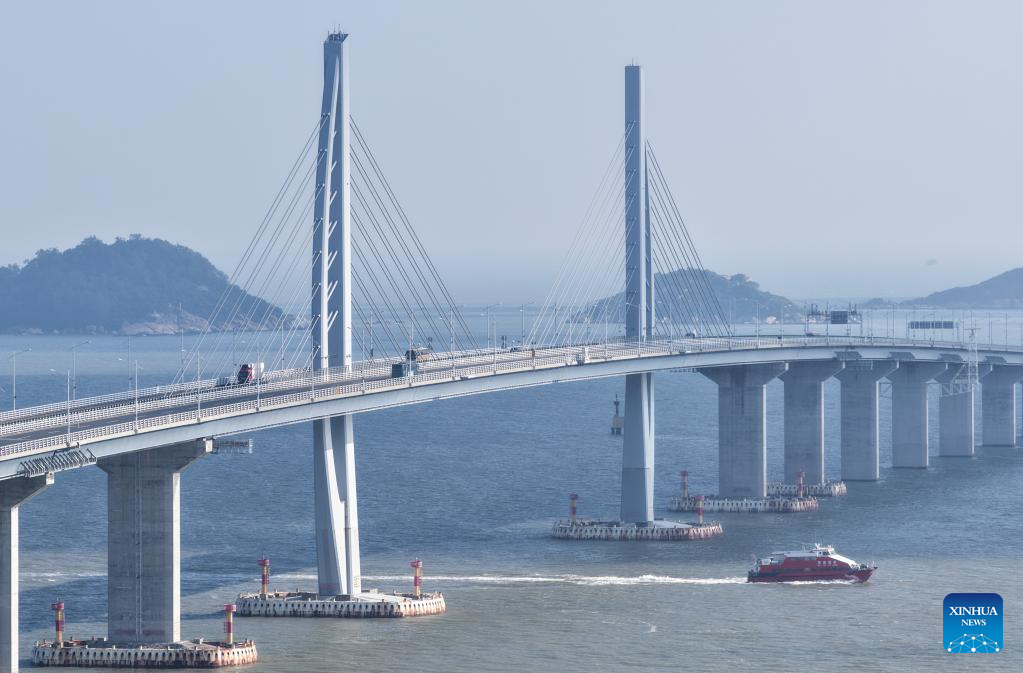
Experts believe that retail magnate Richard Liu Qiangdong’s ambitious 5 billion yuan ($724 million) investment plan for the yacht industry, aiming to integrate the industry chain and expand the ecosystem, is set to give a significant boost to the fledgling yet promising market in the Guangdong-Hong Kong Macao Greater Bay Area.
The injection of capital and the nation’s policy tailwinds have led experts to advocate for related institutional reforms to fully invigorate the industry and stimulate the consumption vitality of the marine economy.
Liu, founder of China’s retail giant JD, launched the nautical brand Sea Expandary — a leading yacht project in China in terms of investment scale and industrial layout — on Feb 24. Dedicated to developing green and intelligent yachts, the venture will establish its headquarters in Shenzhen’s Qianhai area and a manufacturing base in Zhuhai.
By integrating the fragmented resources of the domestic yacht industry, the company will collaborate with the two coastal cities to enhance product technology, improve infrastructure construction and develop tourism routes, in a bid to establish a benchmark for the high-end yacht industry.
Hu Zhenyu, director of the Department of Sustainable Development and Blue Economy Research of China Development Institute, said he believes that the new brand will bring comprehensive advancement for the industry through technological iteration, industrial chain enhancement, and ecosystem expansion.
The company’s focus on green and intelligent solutions will accelerate the application of technologies such as new energy, smart navigation, and unmanned operations in the domestic yacht sector, driving industry transformation and enhancing international competitiveness, Hu said.
Its comprehensive industrial chain layout will attract supporting industries like the manufacturing of core components, maintenance and repairs, and financial services.
Furthermore, the project is expected to drive the development of infrastructure such as public berths and green refueling stations, while fostering crew training, secondhand transactions and the leasing of vessels, addressing key bottlenecks in developing yacht tourism and related consumption, said Hu.
As an integration of the manufacturing and service industries, the yacht industry can also expand consumption scenarios in the Greater Bay Area's marine economy, promoting the transition of marine engineering equipment toward lightweight and intelligent designs, he added.
Louis Liu Yi, professor at the School of Tourism Management at Sun Yat-sen University, said that the Greater Bay Area's yacht market has lacked the participation of influential business figures in recent years, and earlier investments by Hong Kong tycoon Henry Fok Ying-tung’s family have not yielded significant development.
Richard Liu’s involvement instills great confidence in the market, and the company’s vision has brought new hope for the Greater Bay Area’s yacht sector to enhance its influence.
He hopes that this initiative will enhance the value of the local yacht industry, promote the application of innovative technologies, and stimulate consumption in supporting services.
Jerry Ye Jialin, vice-president of Guangdong Yacht Tourism Association, highlighted the industry’s vast market potential. In a press conference held in December, China’s Vice-Minister of Transport Li Yang said the ministry is drafting measures to boost yacht consumption, a new growth point in the coming years.
Over the past three years, the annual growth rate of newly registered yachts in China has exceeded 40 percent, shifting toward mass-market scaled development, according to Li.
Calling for institutional improvements to capitalize on the trend, Ye urged local governments to enhance the management of yachts and public marinas, streamline procedures for Hong Kong yachts traveling to Shenzhen, and permit their visits to more Greater Bay Area cities.
“The aim is to systematically lower the costs associated with yacht ownership and usage, enabling more people to embrace the new lifestyle and consumption pattern,” said Ye.

In a gradual revolution of public parenting spaces, a new facility -- the "Father-and-Baby Room" is popping up in shopping malls across Chinese cities, signaling a shift toward a more equitable distribution of childcare responsibilities.
At a shopping center in the south Chinese metropolis of Shenzhen, the "super daddy zone" is easily identifiable by a glowing blue bottle logo.
Soundproof magnetic doors ensure privacy, while illustrated guides on the walls demonstrate how to prepare formula and hold an infant. Fathers are often spotted pushing strollers to take care of their babies in this space.
Nearby, a "Men's Parenting Room" sits beside a "Women's Parenting Room" at another mall in Shenzhen, both equally equipped with diaper-changing stations, sinks with hot and cold water, and formula-preparing areas.
"To meet customers' needs, we've set up such baby care rooms for both dads and moms on two different floors. It encourages fathers to be more involved in taking care of the baby," a mall staff member explained.
The key difference from traditional mother-and-baby rooms is the omission of private breastfeeding cubicles, focusing just on care, feeding, and rest functions. A more inclusive and practical trend, however, is merging the two into gender-neutral "family nursing rooms."
Some establishments have re-branded the previous "Mother-and-Baby Rooms" as simply "Nursing Rooms," with clear zoning to separate breastfeeding areas from open washing and changing spaces. This allows fathers to assist with childcare while respecting the privacy of nursing mothers.
Liu Xiao, a father who just changed his one-year-old daughter's diaper in one such room, expressed his approval for this space. "These facilities are very user-friendly and convenient. They actually influence our choice of where to shop," he said. "I believe the traditional idea that 'men work outside, women manage the home' is fading. Fathers should join in parenting. My daughter is very attached to me, and I find it very rewarding."
This evolution mirrors profound changes in Chinese families' parenting concepts, said Ming Liang, executive director of the Department of Urbanization of China Development Institute, adding that such changes have reshaped fathers' role in parenting and pushed society toward a more balanced model of shared parenting.
Traditionally, public parenting facilities in China were almost exclusively "Mother-and-Baby Rooms," designed to protect the privacy of breastfeeding women, often accompanied by "No Men Allowed" signs.
However, as societal norms shift and family structures evolve, fathers are taking a more active role in child-rearing, particularly among the "post-90s" and "post-95s" generations who are now the primary childbearing demographic. This growing desire for shared responsibility has clashed with the reality of available facilities, according to Ming.
Experts believe that the emergence of father-and-baby rooms fills this gap. Building a fertility-friendly society requires multi-dimensional support policies to ease family burdens and promote shared parenting.
The transition from "Mother-and-Baby" to "Father-and-Baby" or just "Nursing" rooms signifies more than a name change. It marks a profound step in social progress, said Ming.
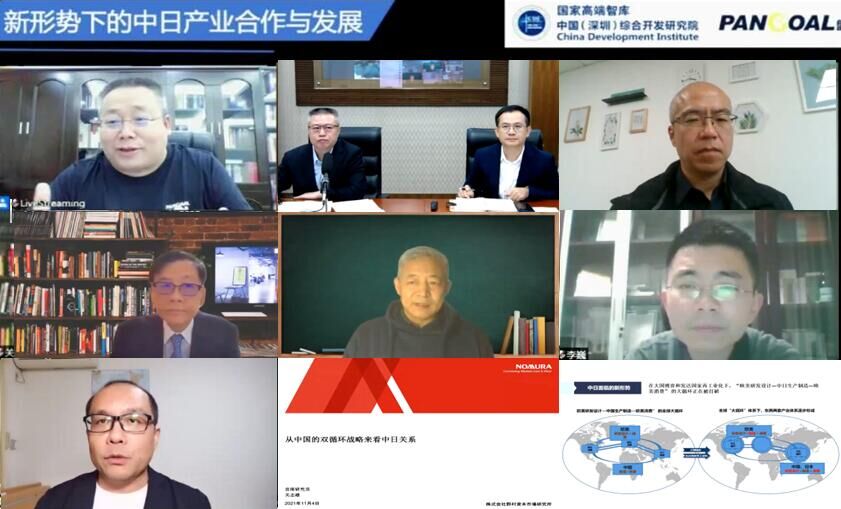
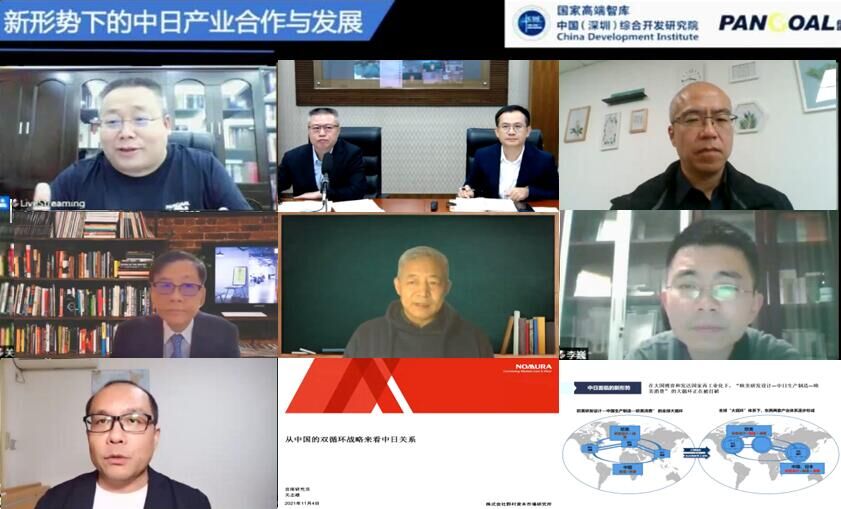
China and Japan have large room for cooperation in emerging industries and the two sides should seek complementary development, scholars said on Thursday.
They made the remarks at an online seminar on China-Japan industrial cooperation and development, co-organized by the Shenzhen-based think tank China Development Institute and Beijing-based think tank Pangoal Institution.
"For China and Japan, the space for cooperation in traditional industries is not that large. But in emerging industries, it is huge," said He Jun, director of the enterprise innovation research office of the Institute of Industrial Economies at the Chinese Academy of Social Sciences.
"This is because each of the two countries has developed unique advantages in emerging industries. Therefore, they can leverage each other's strengths to jointly promote the development of those industries."
He took the industrial internet as an example. "While Japan excels in software and operational technology, China is developed in communication technology. If the two could work together to form a sound cooperative mechanism, it will be a win-win situation for both sides."
He's view was echoed by Cao Zhongxiong, director of the New Economy Research Centre at CDI, who believes China and Japan could explore more cooperation in blue ocean markets in the digital field by integrating China's digital technologies with Japan's manufacturing.
Japan can also provide talent support for the development of the Chinese digital economy, he added.
Cao also noted that China's globalization drive, transformation of industrial structure and consumption upgrade will create large opportunities for Japan and called on Japan to grasp the opportunities.
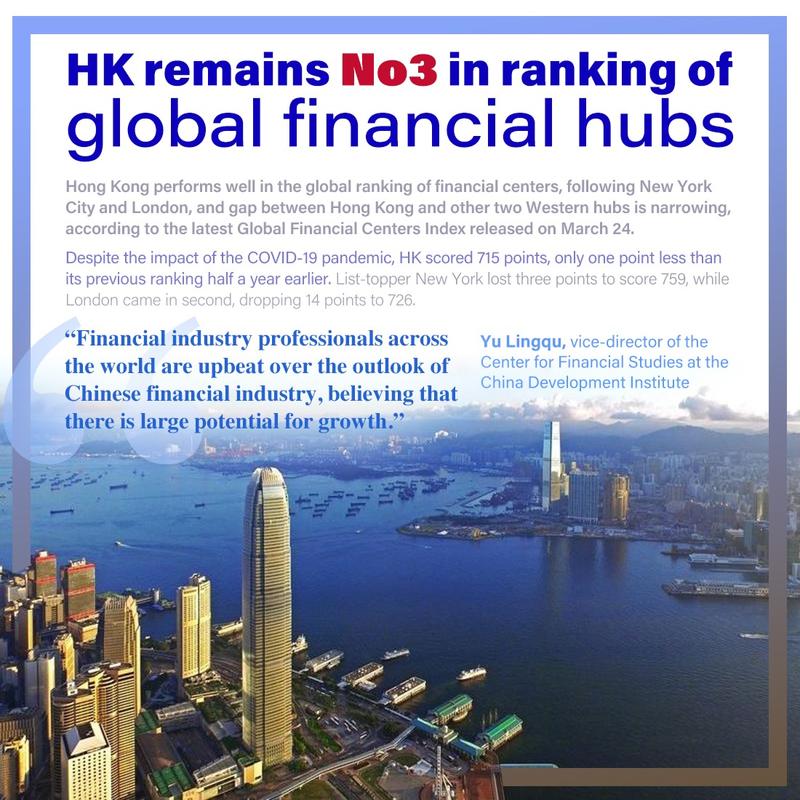
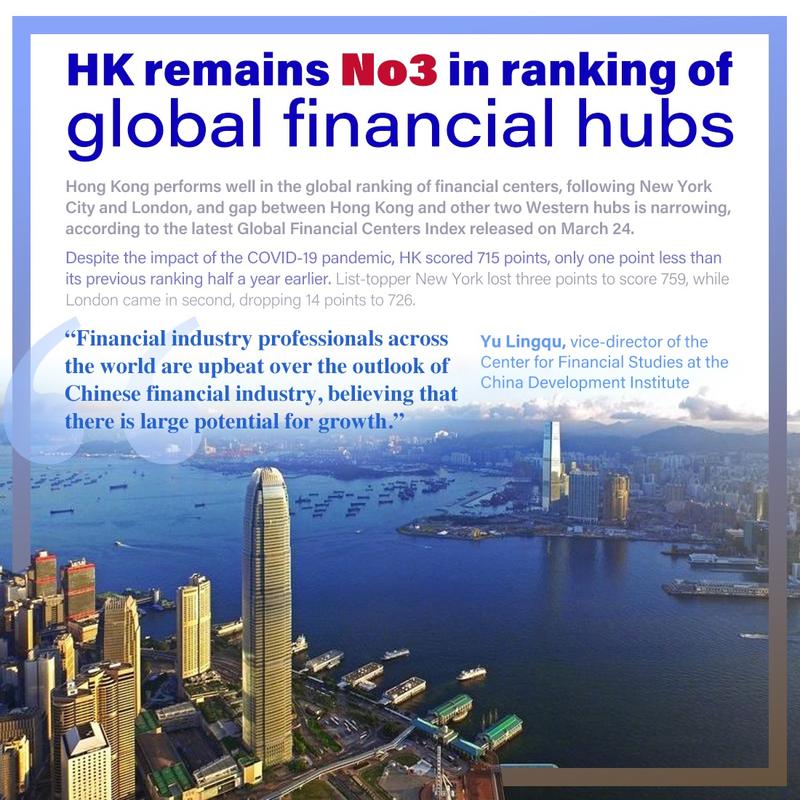
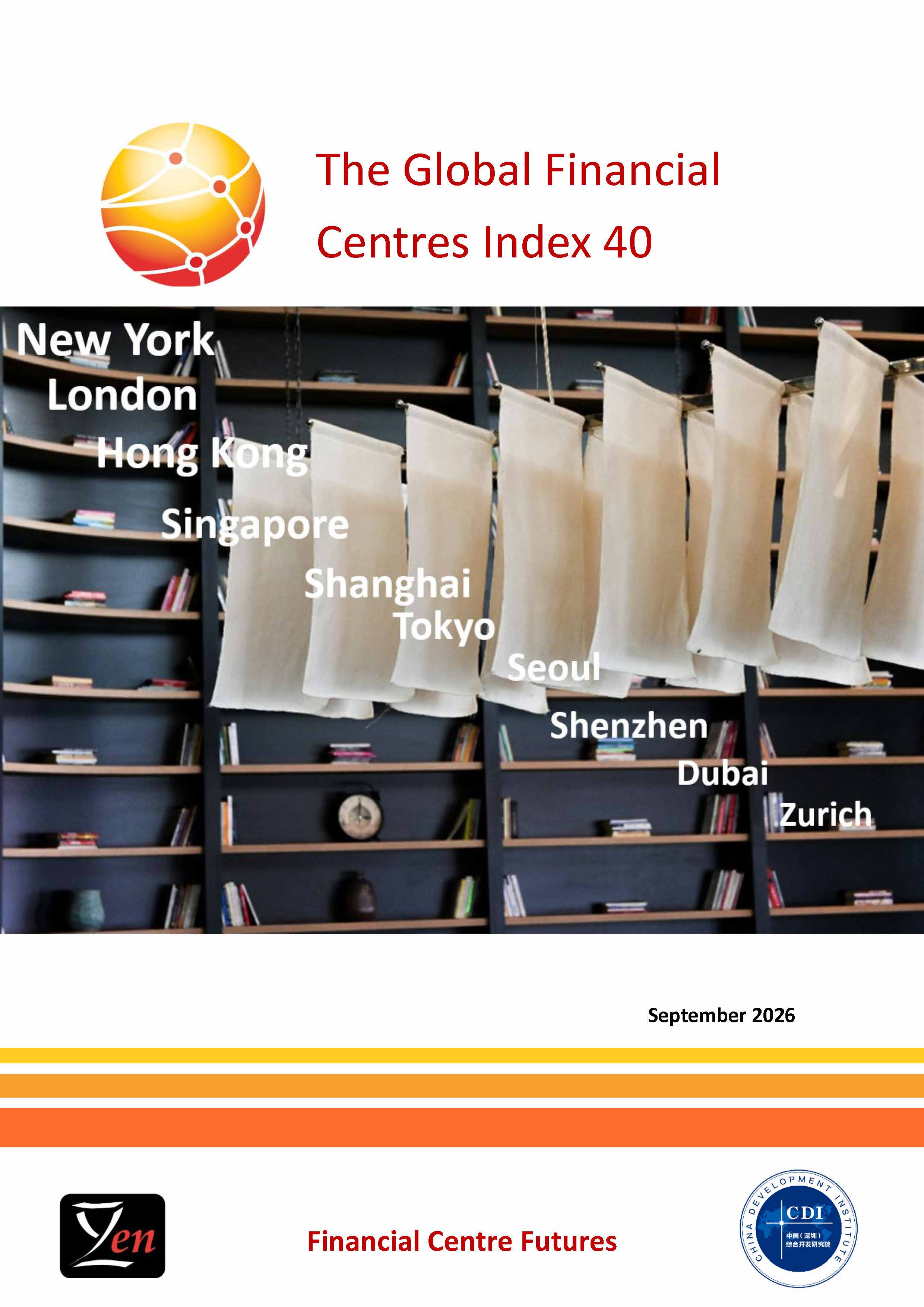
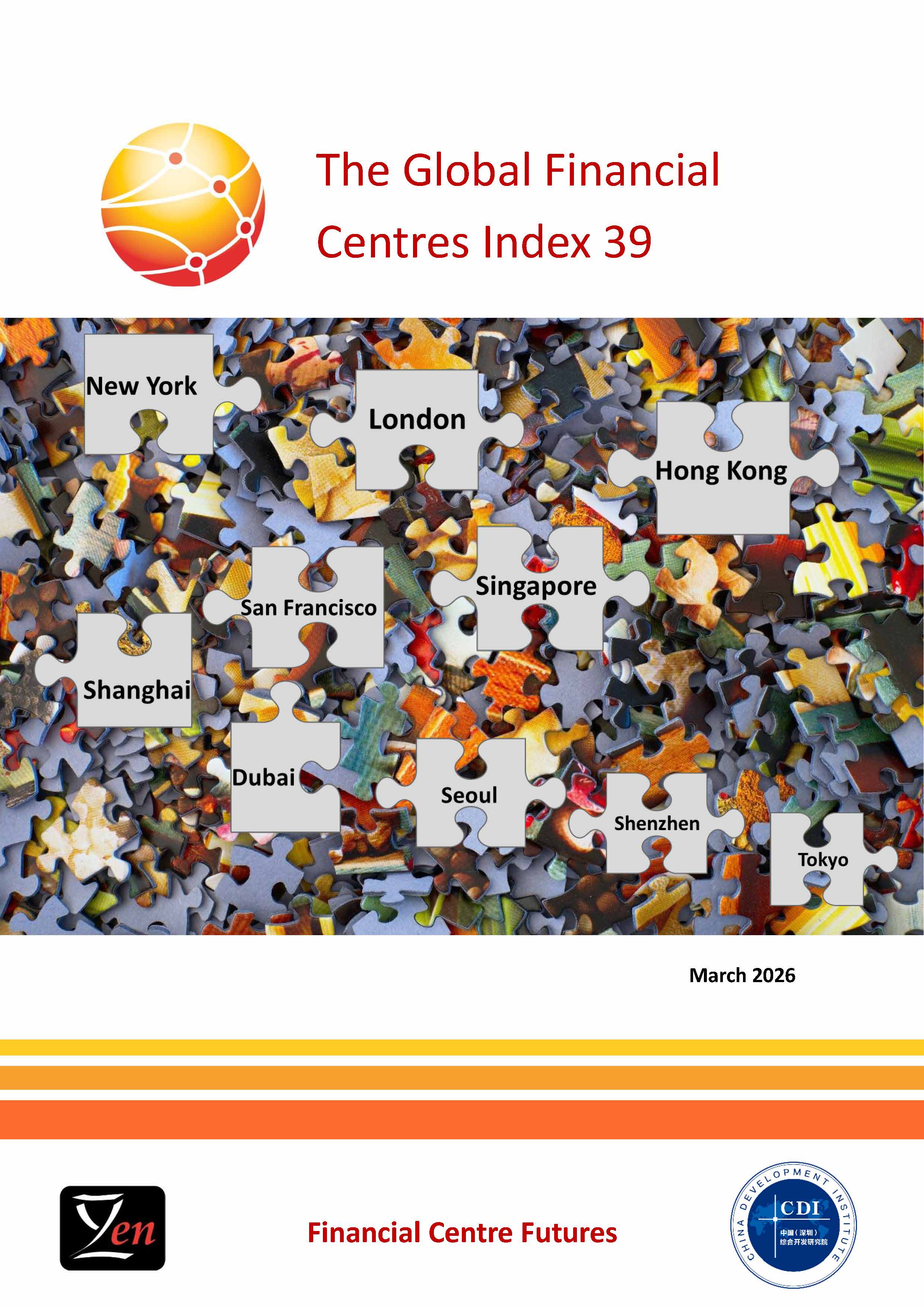
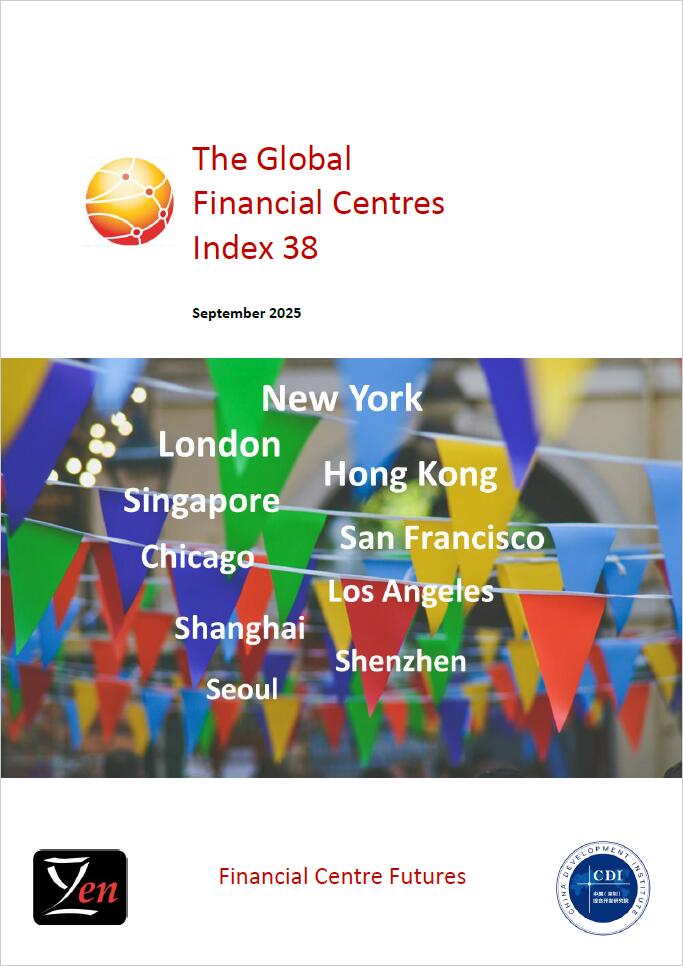
Hong Kong remained in third place in the global ranking of financial centers, following New York City and London, according to the latest Global Financial Centers Index.
Despite the impact of the COVID-19 pandemic, Hong Kong scored 715 points, only one point less than its previous ranking half a year earlier. List-topper New York lost three points to score 759, while London came in second, dropping 14 points to 726.
The GFCI was jointly published on Thursday by the China Development Institute, a Shenzhen-based think tank, and London-based think tank Z/Yen.
ALSO READ: HKSAR still a global finance center, magnet for international investors
The gap between Hong Kong and the two top Western financial centers is narrowing, said Yu Lingqu, vice-director of the Center for Financial Studies at the China Development Institute.
The semiannual ranking bases its results on the study of five areas — business environment, human capital, infrastructure, financial sector development, and reputation. The list ranked 126 financial centers worldwide.
Among the subindexes, Hong Kong ranked third in reputation globally. In the aspects of business environment, human capital, and infrastructure, the city grabbed fourth place. In financial sector development, Hong Kong ranked 11th.
Yu said financial centers on the Chinese mainland generally performed well in financial technology and reputation. “Financial industry professionals across the world are upbeat over the outlook of Chinese financial industry, believing that there is large potential for growth,” he said.
ALSO READ: ‘HK's status as global financial hub intact amid pandemic’
But he added that mainland financial centers are stronger in “hard power” than in “soft power”.
“They needs to learn from Hong Kong’s experience to further enhance their financial ‘soft power’, including business environment, human capital and infrastructure,” Yu said.
The researcher also said that the findings of the latest ranking was based on the data collected as of the end of 2021 and did not reflect the recent changes in the world’s financial situation, including the Omicron outbreak, the Russia-Ukraine conflict, and the US Federal Reserve’s interest rate hike.
“Global financial centers are facing a number of uncertainties. We need to improve risk management, create a sound business environment and strengthen cooperation between financial centers to promote better growth of the world economy,” Yu said.
READ MORE: PBOC support for HK's financial hub status solid
Shanghai ranked fourth in the GFCI, advancing two places from the previous ranking. Beijing and Shenzhen also made into the top 10 list, ranking the eighth and 10th respectively.
Los Angeles was fifth, followed by Singapore and San Francisco. Tokyo took the ninth place.
China will invest CNY 474.1 billion (US$67.9 billion) to improve rail connection in the Greater Bay Area, building 775 km (480 miles) of intercity railway and five transport hubs, according to a plan approved by the National Development and Reform Commission (NDRC).
The Greater Bay Area is an ambitious scheme announced by the Chinese government in 2017 to link Hong Kong, Macao and nine cities in Guangdong province to form an integrated mega economic and technology hub capable of rivalling San Francisco’s Silicon Valley, writes South China Morning Post.
In recent years the scheme has been gradually rolled out with the construction of the Hong Kong-Zhuhai-Macao Bridge and the Hong Kong-Guangzhou high-speed train, as well as inter-region cooperation on other infrastructure projects, education and scientific research.
The connectivity programme, which was approved on 30 July by the NDRC, China’s top economic planning agency, is intended to cover all cities in the area above county level with 5,700 km of railway by 2035. By then, passengers would be able to commute between major cities in the Greater Bay Area within an hour, major cities to smaller cities within two hours, and major cities to capitals in surrounding provinces within three hours, according to the plan.
Under the scheme, transport hubs will be built within cities, connecting airports, train stations and linking intercity rail systems with inner city transport. Hong Kong and Macao would also be better integrated into the regional grid, the plan said.
Currently, connectivity was limited in the region, said Guo Wanda, executive vice-president of the China Development Institute, a Shenzhen-based think tank.
“There are still too few [railway] lines between cities, it’s inconvenient to switch from railways to subways and other services [in different cities] – including ticketing and road signs – are not integrated,” he said.
Under the new plan, small and medium-sized cities would be better connected, instead of being overshadowed by major cities, said HuoWeidong, who has a doctorate from the Institute of Guangdong, Hong Kong and Macao Development Studies at the Sun Yat-sen University in Guangzhou.
In addition, Huo described the new plan as a “breakthrough in design” because it would consider intercity connection as a “hub-to-hub” concept compared with the old “city-to-city” model, easing the movement of people, business and goods.
“The hub-to-hub design will also strengthen the connection of major airports and small and medium-sized cities, and I am confident that this will present opportunities attractive to overseas investors,” he said.
Immediate effects of the plan included boosting the economy within the Greater Bay Area, said Peng Peng, executive director of the Guangdong System Reform Research Society.
“Guangdong, the largest province in terms of foreign trade [in China], has been hit hard by the coronavirus pandemic and [the souring of] US-China relations. We can’t depend on foreign trade for the recovery,” he said. “In the short term, the room for boosting domestic demand will be limited. So infrastructure construction will be the main avenue for growth.”
However there were difficulties in carrying out the plan, such as financing, Peng said.
“Guangzhou’s financial situation is [less robust than] Shenzhen’s. A critical factor [for this project] is whether local governments can arrange the financing smoothly,” he said.
The list of the top global financial from Z/Yen in London shows a continued shift to the Asia and some sharp movement, perhaps Brexit-related, to among some of the British off-shore centers. Released twice a year since 2007, the Global Financial Centres Index (GFCI) has since 2016 been a collaboration between Z/Yen, a London think tank, and the China Development Institute, a national think tank focused on public policy.
The Index started with a focus on four leading financial centers — London, New York, Paris and Frankfurt, recalled Michael Mainelli, executive chairman of the Z/Yen Group XX. It now includes 100 financial centers.
“When 60% of an index moves from Western centres to Asian centres in a decade, it is a time for reflection,” wrote Mainelli.”Some of the shifts have been geopolitical, ranging from the increasing economic importance of China, to global conflicts, sanctions, trade flows, financial crises, and demography. Other shifts have been deliberate and intentional policies directed at increasing the attractiveness of specific financial centres for relocation and inward investment.”
London and New York jostle for first place, as they have for year, with New York on top this time. Both fell slightly in the ratings and Hong Kong is only three points behind London and Shanghai overtook Tokyo to move into fifth place while Beijing, Zurich and Frankfurt moved into the top ten, replacing Toronto, Boston and San Francisco. It is likely that an Asian center will have the top slot very soon, Mainelli added.
Some smaller Chinese cities are rising in importance — Hangzhou was added to the list with this report. An investment banker based in New York commented “We all know about Hong Kong and Shanghai but a number of secondary Chinese centres are appearing on the radar now.”
Cities that are newcomers to the list might be surprised to learn what they can do to attract the sort of highly educated professionals that a financial center needs. Mercer, the consultancy, recently commissioned a study which surveyed 7,200 workers and 577 employers across 15 emerging megacities in seven countries.
Mercer sees some of the cities that Z/Yen identified as part of a larger trend.
“In 10 years, nearly half of all economic growth will originate from just 400 cities and the one billion residents who call them home. That’s why business leaders and city officials need to be more creative in the fight for talent in the U.S. and abroad. To develop tactics for recruiting and retention, leaders first must understand the unique needs of tomorrow’s workforce,” the company said in describing its survey results.
David Anderson, president, international at Mercer, said businesses need to understand their audience.
“It’s cliché but in business, the customer is always right. Yet when it comes to people management strategies, employers rarely listen to their workforce – and that must change. Call it Business to the Individual, or B2I – there isn’t a one-size-fits-all solution for communicating with employees. Future leaning companies will employ customizable, personalized recruiting and internal communications strategies to be effective.”
Mercer sees people remaining at the center of evolving technologies like automation, AI and robotics. But they have different expectations of the impact of technology — 24% of employers expect individuals will be replaced by technology while only 14% of workers feel that way. The company says companies must be transparent about skills which may be phased out. Several other studies have said that as some processes become automated, companies will increasingly value soft skills such as communications and empathy.
When it comes to designing urban neighborhoods that will be attractive, the study found a few surprises. Supermarkets or shopping centers placed high at 77%, followed closely by being close to a bank branch, at 72%. Really? Aren’t branches supposed to be obsolete? Convenient transportation ranked with 66% of respondents, schools for children at 59% while parks and green space were just 46% and convenient pools or gyms 37%.
The study could be useful reading for emerging financial centers.
For GFCI 24, the group researched 110 financial centers and added four new ones — Cape Town, GIFT City (Gujarat), Hangzhou and Sofia. Brexit may have been behind the moves up by Zurich, Frankfurt, Amsterdam, Vienna and Milan while off-shore British Crown dependencies Jersey and Guernsey with the Isle of Man tumbling 27 places. Bermuda on the other hand rose six places to Number 30.
The report said that Brexit continues to be a major source of uncertainty for many centers with some respondents asking if London would retain its critical mass after Brexit. Respondents in London are less optimistic than those in other centres, reflecting the uncertainty over Brexit, the report said.
”Getting very fed up with Brexit,” commended a pension fund manager in London. “We cannot continue to operate with so much uncertainty. Many of the staff here are trying to plan for their futures.”
UK and USA respondent were also concerned about restriction in movement of talented staff. Regarding infrastructure, bankers wondered how to foster a FinTech environment and also cited a need for better air travel connectivity from some centers.
“Air travel infrastructure and having direct flights into and out of centres is becoming ever more important,” said an investment professional in Seoul.
Showing significant gains were Astana, the capital of Kazakhstan, Budapest, St. Petersburg and Tallinn while Cyprus and Warsaw fell, and Sophia was a new entrant tot he index. Dubai, Abu Dhabi and Doha all rose significantly, reversing the trend from GCFI 23.
Western Europe’s leadership position has been under challenge for several years as the assessment of the top five centers in Asia/Pacific and North America have improved, overtaking western Europe.
Chinese centers continue to exhibit strength as Shanghai passes Tokyo to enter the top five and Kong Kong, Singapore and Shanghai continue to close the gap on the leaders, the report said, adding a comment from a commercial banker based in Paris: New York and London don’t seem to be doing anything to fight off the Asian challenge.”
Shenzhen firms hike investment in R&D sector
Nearly 20 percent of Shenzhen-registered listed companies devoted more than 10 percent of their operating revenue to research and development last year, a level on par with globally leading high-tech enterprises like Google and Apple, according to a report.
In all, 256 companies covered in the Shenzhen-registered Listed Companies Development Report disclosed their R&D spending in their 2017 annual reports.
Between them, the companies spent approximately 77.75 billion yuan ($11.19 billion) on R&D, up 24.8 percent year-on-year.
Their average R&D intensity - the ratio of R&D spending to operating revenue - was 3.95 percent, up 0.24 percentage points year-on-year, the report said.
A total of 45 listed companies, or 17.6 percent, poured more than 10 percent of their operating revenue into R&D in 2017.
The report, published in Shenzhen on Tuesday, was jointly compiled by the Shenzhen-based think tank China Development Institute and Hongxin Securities.
Researchers based their findings on 27 indicators in four main areas - scale, development potential, business capacity and social contribution.
"The figures show that Shenzhen-registered listed companies are making great efforts on enhancing their innovative capability," said Yu Lingqu, a researcher from CDI.
"A 10 percent R&D intensity means they are on the same level as technology giants such as Google and Apple."
According to the report, information technology was the sector that took the lead. Of the 10 listed companies with the biggest R&D investment, eight were IT companies.
The R&D investment of Tencent Holdings Ltd, the world's largest game maker and second biggest social media firm by revenue, and telecom equipment maker ZTE Corporation amounted to over 10 billion yuan, respectively.
As of the end of 2017, the number of Shenzhen-registered listed companies had reached 367, with a market capitalization amounting to nearly 10.3 trillion yuan.
In 2017 alone, 46 Shenzhen enterprises made their initial public offerings in domestic and international capital markets.
Information technology and finance were the two sectors with the largest market capitalization, combining to make up over 70 percent of the total.
"This shows Shenzhen's economic growth is driven by technology and finance," Yu said.
In 2017, Shenzhen-registered listed companies generated approximately 4.07 trillion yuan in operating revenue, growing 20.8 percent from a year earlier.
Of the total 367 Shenzhen-registered listed companies, the report covered 341. The rest were excluded either because their stocks were suspended from trading for a long time, or they had not published their annual reports by the end of June.
After years of booming growth, China’s real estate sector, a major pillar of the world’s second-largest economy, is wobbling.
The fundamentals of China’s real estate market will face “a year of recession” in 2019, China International Capital Corp. (CICC) said Monday in a research report. Sales, investments and new construction starts will decline significantly next year, according to researchers at the largest state-backed investment bank in China. In response, the government should alter policies that were put in place to cool the market, the researchers said.
The assessment reflects the chill in the market that Chinese property developers have already begun to feel, prompting them to dial back land purchases. Growth in China’s real estate investment slowed to 8.9% in September from 9.2% in August, and home sales by floor area fell 3.6% from a year earlier, the first time since April.
During the ordinarily golden September-October property-sales season, slack demand forced developers to offer huge promotions, including free cars and lower down payments. Some developers slashed prices as much as 30%, angering earlier buyers who paid higher prices.
The central government initiated a campaign to control surging property prices in September 2016. Based on previous cycles, policymakers usually begin to relax tightening measures after housing sales have declined for six months. Based on that, CICC projected that the next round of policy easing may come at the end of the 2019 first quarter or the start of the second quarter.
But as China’s economy faces broader headwinds and uncertainty from an intensifying trade war with the United States, CICC’s researchers recommend an earlier policy adjustment. China’s top financial and economic officials haven’t addressed the cooling outlook for the property market.
According to the CICC assessment, property sales across China are likely to fall for the first time in five years, with sales by floor area and by prices both expected to decline 10%. The downward pressure on home sales and prices will be especially obvious in third- and fourth-tier cities, while the property market in the first- and second-tier cities is expected to be resilient.
CICC said it expects real estate investments in 2019 to decline by 5% and new construction starts, by 10%, reflecting weakening fundamentals in the property industry.
China Vanke Co. Ltd., one the country’s biggest developers, recently said "survival" was the ultimate goal for the next three years as a “turning point” has arrived for the industry.
The Mid-Autumn festival and the week-long National Day holiday normally bring buyers out in masses in September and October, spurring residential property sales. But this year has been different, even for the country's biggest developers.
During the weeklong public holiday at the start of October, sales in 31 cities fell 27% from a year earlier, according to Shanghai-based property consultant CRIC.
Several major Chinese property developers significantly slowed their land purchases in September.
A total of 2,332 plots of land, with a gross area of 97.3 million square meters, were available for sale in September, according to a China Index Academy report. That was an 8% decrease year-on-year. A total of 1,950 plots were sold, down 13% compared with the same period last year.
The CICC report suggests four feasible paths for policy adjustment next year, including increasing supply, lowering the down payment ratio, relaxing excessive restrictions on mortgage interest rates and increasing the amount of mortgage loans.
Measures to control housing prices could be maintained, but pricing mechanisms and price tracking management should be improved, the researchers suggest.
On the outlook for property stocks, CICC said it thinks the P/E ratios of mainland listed A stocks and Hong Kong-listed H stocks are at a historic low level. Even though a sales decline will raise concerns about property developers’ sales and profit growth in the short term, the negative effects are likely to be far less than the boost expected from policy adjustment, the bank said.
Beijing and Washington are unlikely to reach a deal on intellectual property rights or further opening up of China’s financial market – even if the leaders of the two countries meet later this month, a key Chinese government adviser said.
“What they were negotiating in Beijing and Washington in the past round [of talks earlier this year] was mostly about trade itself,” Fan Gang, a former member of the monetary policy committee of the People’s Bank of China, said in a speech at Harvard University on Wednesday.
Since the countries had not even begun to discuss the two issues at the heart of the trade war, it was “hard to have a solution” to the dispute, Fan said.
When asked whether China would improve its intellectual property protection and further open up its financial market to ease trade tensions with Washington, Fan said the reforms were necessary but would not come quickly.
“The reforms may change the position of the other side, but it will take some time. It’s not a short-term issue. It’s a midterm issue,” Fan said.
Chinese President Xi Jinping is expected to meet his US counterpart Donald Trump on the sidelines of the G20 summit in Buenos Aires at the end of this month.
They are not talking about trade … Buying doesn’t solve the problem
Fan Gang
Analysts on both sides have expressed confidence recently that Beijing and Washington might reach a truce over the trade dispute during the summit, in the two leaders’ first meeting since a tit-for-tat trade war between their nations broke out in July.
But Fan, a leader in an economists’ club founded by Chinese Vice-Premier Liu He, said he was pessimistic about bilateral ties “in the short-run and the long run”. Liu had led several rounds of trade negotiations this year with Trump administration officials including Treasury Secretary Steven Mnuchin.
“I don’t think in the short-run you can reach an agreement,” Fan said. “How can you reach agreements with Donald Trump and his team? They are not talking about trade. How much can China actually buy? Buying doesn’t solve the problem.”
The economist said he expected the ideological conflicts from the trade war to last.
“It’s about internet control, it’s about ideology, it’s about national security and so-called political superiority,” he said. “In the long run, it’s hard to have a solution.”
I think the United States is united on China
Fan Gang
Fan also acknowledged the consensus on China’s trade practice across the US political spectrum.
“It was the [US midterm] election day yesterday and anything seems to be a controversy, but I think the United States is united on China,” he said.
His comments came as Washington continued to express concern about China’s ambitious manufacturing plan, “Made in China 2025”, which channels state funds to domestic companies developing advanced technologies in robotics, telecommunications and aviation.
The initiative, which aims to break China’s reliance on foreign technology and pull its hi-tech industries up to Western levels, has become a lightning rod for Washington’s – and Trump’s – ire in the trade war with Beijing.
In a post-midterm-election address on Wednesday, Trump called Made in China 2025 “insulting” and suggested Beijing was backing away from it.
Fan stressed that continuing the initiative was beyond question.
Nevertheless, his views reflected a school of thought within Beijing that boldly favours China and the United States reaching a compromise to reduce the intensity of the trade tensions. He said the trade war had accelerated China’s long-needed market reform.
“There are so many things that the Chinese central leadership has agreed to do, committed to doing, but didn’t do for such a long time,” Fan said. “After the trade war, a lot of things started moving.”
Beijing and Washington are unlikely to reach a deal on intellectual property rights or further opening up of China’s financial market – even if the leaders of the two countries meet later this month, a key Chinese government adviser said.
“What they were negotiating in Beijing and Washington in the past round [of talks earlier this year] was mostly about trade itself,” Fan Gang, a former member of the monetary policy committee of the People’s Bank of China, said in a speech at Harvard University on Wednesday.
Since the countries had not even begun to discuss the two issues at the heart of the trade war, it was “hard to have a solution” to the dispute, Fan said.
When asked whether China would improve its intellectual property protection and further open up its financial market to ease trade tensions with Washington, Fan said the reforms were necessary but would not come quickly.
“The reforms may change the position of the other side, but it will take some time. It’s not a short-term issue. It’s a midterm issue,” Fan said.
Chinese President Xi Jinping is expected to meet his US counterpart Donald Trump on the sidelines of the G20 summit in Buenos Aires at the end of this month.
Analysts on both sides have expressed confidence recently that Beijing and Washington might reach a truce over the trade dispute during the summit, in the two leaders’ first meeting since a tit-for-tat trade war between their nations broke out in July.
But Fan, a leader in an economists’ club founded by Chinese Vice-Premier Liu He, said he was pessimistic about bilateral ties “in the short-run and the long run”. Liu had led several rounds of trade negotiations this year with Trump administration officials including Treasury Secretary Steven Mnuchin.
“I don’t think in the short-run you can reach an agreement,” Fan said. “How can you reach agreements with Donald Trump and his team? They are not talking about trade. How much can China actually buy? Buying doesn’t solve the problem.”
The economist said he expected the ideological conflicts from the trade war to last.
“It’s about internet control, it’s about ideology, it’s about national security and so-called political superiority,” he said. “In the long run, it’s hard to have a solution.”
Fan also acknowledged the consensus on China’s trade practice across the US political spectrum.
“It was the [US midterm] election day yesterday and anything seems to be a controversy, but I think the United States is united on China,” he said.
His comments came as Washington continued to express concern about China’s ambitious manufacturing plan, “Made in China 2025”, which channels state funds to domestic companies developing advanced technologies in robotics, telecommunications and aviation.
The initiative, which aims to break China’s reliance on foreign technology and pull its hi-tech industries up to Western levels, has become a lightning rod for Washington’s – and Trump’s – ire in the trade war with Beijing.
In a post-midterm-election address on Wednesday, Trump called Made in China 2025 “insulting” and suggested Beijing was backing away from it.
Fan stressed that continuing the initiative was beyond question.
Nevertheless, his views reflected a school of thought within Beijing that boldly favours China and the United States reaching a compromise to reduce the intensity of the trade tensions. He said the trade war had accelerated China’s long-needed market reform.
“There are so many things that the Chinese central leadership has agreed to do, committed to doing, but didn’t do for such a long time,” Fan said. “After the trade war, a lot of things started moving.”
He cited China’s lifting of ownership limits for foreign car firms in April, which enticed US carmaker Tesla to build a plant in Shanghai; a further opening of the Chinese financial market; and lowering of tariffs as examples of trade war-impelled changes that have happened in recent months.
Other Washington policymakers, including Danny Russel, a former assistant secretary of state for East Asian and Pacific affairs, agreed that any deal between Trump and Xi at G20 would be limited or incremental if at all.
He said the Trump administration had publicly aired “such a list of offences by China, that are shared not only by the business community or the policy community but by Congress, that it may be hard for the administration to simply set those issues aside and say, ‘We’ve reached a deal on the trade figures, but we haven’t dealt with forced transfer of technology, of cybertheft, of intellectual policy, of the industrial policy of Made in China 2025’”.
Russel made his remarks at an Asia Society round table discussion in New York on Wednesday.
“If you don’t have a very clear direction of where to go, you confused the ministries and people who implement the policies,” Fan said of the central leadership’s shifting position on market reforms.
“You can’t blame all the problems on lower level bureaucrats,” he said. “That’s why I called the trade war a wake-up call.”
A fierce debate is raging about the future of China’s economy. Many believe it is being held behind closed doors at the powerful Politburo.
They would be wrong. Instead, these discussions are taking place in the hallow halls of Peking University.
In the past three weeks, Zhang Weiying, the prominent liberal economist and a professor at the prestigious seat of learning in Beijing, has mapped out his vision of the future.
On Monday, Fan Gang, another influential professor at Peking University and president of the China Development Institute, outlined a similar roadmap.
Their views come at a time when the world’s second-largest economy is being buffeted by internal and external headwinds, including rising trade tensions with the United States.
Zhang has attributed the Cold War-style stand-off between Beijing and Washington to China’s flawed economic model.
“Domestically, misleading yourself means a future of self-destruction,” he said in a speech, which appeared on the National School of Development’s website before it was taken down by the authorities.
“Blindly emphasizing the unique Chinese model means going down the road of strengthening state-owned enterprises, expanding government power, and relying on industrial policy. This will lead to a reversal of the reform process, the abandonment of our predecessors’ great cause of reform, and ultimately economic stagnation,” he continued.
“Externally, misleading the world leads to confrontation. From the Western perspective, the ‘China model’ theory makes China into an alarming outlier, and must lead to conflict between China and the Western world,” Zhang added.
During the past six months, international relations with the West have deteriorated as quickly as the economy.
Threatened
Tariffs worth more than US$250 billion have already been slapped on Chinese exports to the US by President Donald Trump.
He has also threatened to impose duties on the remaining goods and products worth another $258 billion, citing “unfair practices” and “intellectual property violations.”
Moreover, the fallout has rippled across the entire economy with GDP growth falling to levels not seen since the Great Recession of 2009, while consumer spending has slowed and factory activity has dropped.
“China is serious about liberalizing its economy and its pace of doing so has been accelerated by the trade war with the United States,” Fan, who is also an adviser for President Xi Jinping’s government, said.
“That kind of willingness is genuine … China recognizes that it needs more liberalization to become more competitive in the global market.”
But the pace of reforms is in danger of stalling with “vast interest groups” lobbying against further opening up to overseas competition.
This, he pointed out, had to change as China’s economy goes through a transformation from low-cost manufacturing to high-tech production, backed up by a thriving services industry and a more sophisticated consumer sector.
“China should move on,” Fan said. “You have more and more companies operating internationally and enjoying international terms for competition. Why do you still have those protections? More and more companies don’t need it.
“Previously, China’s pressure came from the top. The policymakers put pressure on the localities, on the companies, to push them to change. [Now,] some outside pressure [such as the trade dispute] may serve as a good push.”
Realigning the economy and being embroiled in a brawl with the US has prompted the Politburo, which is the main decision-making body of the ruling Communist Party, to reiterate its pledge to stimulate growth.
So far, the government has unveiled a raft of measures, including tax cuts, infrastructure spending and cheap financing for struggling private sector companies, while pressing ahead with its clampdown on debt.
A stimulus-inspired package for the markets has also been rolled out after nearly $3 trillion was wiped off the Shanghai Composite Index and $1.1 trillion off Shenzhen in the past nine months. This, in turn, has hit the spending power of more than 150 million middle-class investors.
Priority
Boosting confidence has become a priority with the Politburo admitting on Wednesday that “downward pressure on the economy has increased” and that “timely measures” must be taken, without revealing concrete proposals.
Hours later, Chinese factory activity statistics for small- and medium-sized companies were released.
The numbers were disappointing with the Caixin Purchasing Managers’ Index, or PMI, edging up slightly higher to 50.1 from 50.0 in September while remaining in expansion territory.
“China’s economy has not seen obvious improvement,” Zhengsheng Zhong, the director of macroeconomic analysis at CEBM Group, a Caixin subsidiary, said.
“Overall, expansion across the manufacturing sector was still weak. Production and business confidence continued to cool despite stable demand. The pressure on production costs didn’t ease,” he added.
Roughly 24 hours earlier, the official PMI, compiled by National Bureau of Statistics, revealed that manufacturing growth was at its weakest level in more than two years, fueling concerns about the aftershocks of tit-for-tat tariffs and a perceived slowdown in major reforms.
“China’s reform and opening-up and the China-US strategic cooperation are two inter-related things,” Sheng Hong, the executive director of the Unirule Institute, an independent Chinese think tank, said. “That is to say, there is no strategic cooperation without reform and opening-up, nor is there reform and opening up without China-US strategic cooperation.
“Today, China faces the risk of leaving the path of reform and opening up, which would risk the loss of strategic cooperative relations with the US. Such a result would be a complete failure.”
Amid the carnage of the trade battle, the great China debate continues.
BANGKOK - China is serious about liberalising its economy and its pace of doing so has been accelerated by its trade war with the United States, says Chinese economist and government adviser Fan Gang.
"That kind of willingness is genuine… China recognises that it needs more liberalisation to become more competitive in the global market," said the Peking University professor and president of Shenzhen-based think-tank China Development Institute.
But the pace of reforms has been hampered by what he called "vast interest groups" lobbying Beijing against lifting the protection for local firms that it has maintained for years as a developing country.
"China should move on. You have more and more companies operating internationally and enjoying international terms for competition. Why do you still have those protections?... More and more companies don't need it," Professor Fan said, referring to Chinese companies like mobile phone maker Huawei.
"Previously, China's pressure came from the top. The policymakers put pressure on the localities, on the companies, to push them to change," he said. Now, "some outside pressure may serve as a good push".
Prof Fan was speaking to The Straits Times on Tuesday (Oct 30) on the sidelines of the Forbes Global CEO Conference in Bangkok.
Global stock markets have taken a bumpy ride this year after US President Donald Trump triggered a trade war between the world's two largest economies, accusing China of stealing intellectual property and unfair trade barriers.
A series of tit-for-tat measures has resulted in more than US$250 billion (S$346 billion) worth of Chinese goods subject to tariffs of up to 25 per cent in the US, and some US$110 billion worth of US goods are subject to reciprocal taxes in China.
Analysts expect the trade war to put a drag on global economic growth.
Mr Trump and Chinese President Xi Jinping are expected to meet on the sidelines of the Group of 20 (G-20) summit in Buenos Aires next month.
Mr Trump, while saying he expects to make a "great deal" with China, has warned that he is ready to slap tariffs on even more products if a deal does not transpire.
In the face of the trade war, China should focus on developing its own market rather than retaliation, said Prof Fan.
"As long as you can really extend your market further, as long as you can attract more investment in your industrial supply chain, you can win," he said.
Asked if he was concerned that companies which export products to the US may relocate from China to third countries, Prof Fan said that was "unavoidable".
The flip side of this is that companies targeting the Chinese market may be nudged to set up base within China to avoid the tariffs, he added.
Given the complexity of modern supply chain networks, it is too early to say which country will ultimately prevail, he cautioned.
"That depends on which market is growing faster… which becomes bigger," he said. "If the China market is growing faster and becomes bigger, China may not suffer too much."
City transformed from traditional model to major hub of innovation
Four decades ago, Shenzhen was just a small fishing village adjacent to Hong Kong. Today, the city in southern Guangdong province is the country's high-tech and innovation hub.
It's known as China's Silicon Valley and is the headquarters of internet and telecom giants Tencent and Huawei, thanks to the country's reform and opening-up policy.
With a population of more than 12 million, Shenzhen's rapid growth arose from cultivating emerging industries, including the internet, new-generation information technology, new materials, new energy and biological medicine. Beyond that, energy conservation, environmental protection and the cultural and creative industries have played a key role.
Last year, the added value of emerging industries in Shenzhen amounted to about 918 billion yuan ($132 billion), increasing 13.6 percent compared with a year earlier and accounting for 40.9 percent of the city's GDP, according to official statistics.
The bioindustry saw the most robust growth, with added value expanding 24.6 percent year-on-year, followed by the internet industry at 23.4 percent.
The metropolis is now home to more than 11,000 national high-tech enterprises.
"Shenzhen's high-tech industry has already formed an integral industry chain. It has an internationalized supporting system at its back," said Huang Dinglong, chief executive of artificial intelligence company Malong Technologies.
The local government has attached great importance to research and development. Last year, Shenzhen's investment in R&D reached over 90 billion yuan, accounting for 4.13 percent of its GDP, on par with Israel and South Korea, which lead in that category.
Local policies have provided a sound breeding ground, allowing high-tech enterprises to grow in a sound environment, said Yan Qin, general manager of Direct Genomics, a company specializing in genomics.
"They don't have an extra burden, as the local government offers great support to them - for example, helping them with initial funding and understanding government policies."
In addition, with its proximity to the international financial center of Hong Kong, Shenzhen has also developed strengths in capital, with a large number of small enterprises being able to secure venture capital at early stages, Yan added.
Over the 40 years since the reform and opening-up policy was launched, Shenzhen has been an economic miracle by global standards, with its GDP growing at more than 20 percent a year on average.
In 1980, it was chosen as China's special economic zone, which entitled it to more market-oriented and flexible economic policies.
Since then, Shenzhen's economy has seen explosive expansion, from under 200 million yuan to 2.2 trillion yuan in 2017, which is more than 10,000 times bigger and on course to surpass Hong Kong.
Qu Jian, vice-president of the China Development Institute, said the city has transformed from a traditional economy reliant on resources and labor to a modern economy fueled by innovation.
"The reason so many technologically innovative enterprises have been created in Silicon Valley is that talent across the world is flocking into the area," Huang said. "It's the same for Shenzhen."
Yan, meanwhile, said local high-tech enterprises have a shortage of professional managers, who he believes play a vital role.
"Shenzhen needs to introduce more professional managers who have worked at Fortune 500 companies to improve management so that the city's high-tech industry can achieve better growth,"
XI'AN, China, Oct. 19, 2018 /PRNewswire/ -- The first Xixian New Area International Forum on Innovative Urban Development Mode (IUDM 2018), organized in Xi'an and attracting more than 500 experts and scholars from China and abroad to explore innovative urban development models, was held under the theme "New Era, New Economy, New City."
The forum was joined by Rajendra Kumar Pachauri, former chairman of the Intergovernmental Panel on Climate Change (IPCC) from 2002 to 2015; Liu Shijin, deputy director of CPPCC Committee for Economic Affairs and former vice-president of Development Research Center of the State Council; and Fan Gang, secretary-general of the China Reform Foundation and director of the National Economic Research Institute.
The IUDM 2018 placed special focus on urban development principles including city quality, living environment and applications of new technology through themed exhibitions, keynote presentations and public engagement activities. Xixian, the host district and the latest result of innovative urban development in the region, has been highlighted as a solution for future urban planning and management.
As the newest district of the greater Xi'an area, Xixian contributes to the development of urban planning through a focus on the construction of national-level free trade pilot zones, service trade zones and innovation and entrepreneurship zones as a means of boosting Shaanxi's economic growth and credentials as a hub for emerging strategic industries and services.
"Hoping to create a sample of new urbanization with Chinese characteristics, we insisted on a people-centred urban development strategy that conserves resources, preserves the environment, matches urban to rural development and protects historical and cultural heritage. Through years of tireless explorations, the result is gradually coming together," said the vice-governor of Shaanxi Province at the forum.
"Xixian New Area has entered a period of accelerated development, the IUDM 2018 forum is a new starting point, and we cordially welcome everyone to come to Shaanxi and Xixian and join us to write a magnificent new chapter of the future for urban development," said Liang.
About Xixian New Area
The Xixian New Area is the first national new area themed with innovative urban development mode. It is led by innovative urban planning and city-industry integration with ecological priorities; the goal is to create a modern, sustainable city with improved ecology, livability and business environment.
SOURCE Xixian New Area
Beijing must not launch retaliatory attacks against American firms or US business operations in China, despite US President Donald Trump’s threat to slap further punitive tariffs on Chinese goods and restrict Chinese investment in the US, a Chinese economist and government adviser has warned.
“Trump would love to see [China] make trouble for US firms,” Fan Gang, a former member of the monetary policy committee of the People’s Bank of China, said in a speech at Tsinghua University in Beijing on Wednesday.
“The business community is now the only voice [in the US] that may speak for China,” Fan said. “If we target them, then we may really lose the trade war.”
Fan, a leader in an economists club founded by Vice-Premier Liu He, said that rather than focus on punitive responses to the Trump administration’s trade action, “we should further open up our market and create a fair business environment. In the long run, it’s good for China.”
Known as a liberal economist, Fan’s tone was soft in comparison with the trade war rhetoric that has come out of China’s official media since Trump began imposing punitive tariffs on Chinese goods six months ago.
But Fan’s suggestion that China focus on rolling out the red carpet for US companies and executives seemed in line with the Chinese government’s recent responses to Washington’s escalatory trade actions.
In addition to vowing to slash tariffs on US imports after Trump’s imposed punitive duties on Chinese products, Beijing has pledged to further open up its domestic market and protect the interests of foreign businesses in China, including US firms.
The government has gone the extra mile to woo foreign investment from America, granting electric car maker Tesla permission to set up an exclusively owned factory in Shanghai and giving energy giant ExxonMobil a preliminary green light to build a US$10 billion complex in Guangdong.
“The anti-China sentiment is growing in the US community, but in the past they were our alliance in the US political world,” Fan said.
The economist said China has to do some self-scrutiny and admit it has not done enough to open up its domestic market or to nurture foreign business investment.
“The American and European chambers of commerce complained about China’s business environment one year after another,” and were ignored, Fan said. “Now the US, EU and Japan are uniting their fronts, and they are not happy about China.”
China, he said, now must do many things “that should have been done in the past” to bring positive changes to its economic system and placate irritated foreign investors.
Although Fan spoke as an economist, his views also reflected a school of thought within Beijing that boldly favours China and the US reaching a compromise to reduce the intensity of the trade tensions.
“It is not just about trade imbalance,” Fan said. “In the past, we could ease the tensions by buying a few more Boeing aircraft. Not now.”
Yet, Fan also called the trade war part of a bigger plan by Washington to contain China’s rise.
“We must have long-term preparations,” Fan said. “The real intention of the US is not to reduce the trade deficit but to contain China’s development – in particular, China’s technological advancement.”
Fan said China will never sell off its US treasury holdings to hit back at the US amid the trade war because the move would hurt China more than the US. China is the single biggest foreign holder of US government debt.
“If China dumps its holdings of US treasuries, the trade war will spread to the financial realm,” Fan said. “China is vulnerable in the financial field.”
China’s holdings of US government bonds fell for a third consecutive month in August to US$1.165 trillion, down from US$1.171 trillion in July, according to the US Treasury Department.
aul Gruenwald, chief global economist at S&P Global, said in Beijing on Wednesday that the US and China may resume official talks next year in a form similar to the “Strategic and Economic Dialogue”, a now-defunct high-level communication mechanism which had helped contain divergent and often conflicting interests between the two nations through regular meetings that started in 2006.
“You have to talk, and then you can solve the problem,” Gruenwald said.
What Happened
Speaking at Tsinghua University on Oct. 17, Fan Gang, an economist, influential Chinese government adviser and former member of the People's Bank of China's Monetary Policy Committee, argued that the government in Beijing must not launch retaliatory attacks against U.S. business operations in China. He said this strategy would only lead U.S. President Donald Trump to reinforce the pressure campaign against the country, and that Beijing needs to maintain its connections with U.S. businesses, since those relationships now offers "the only voice" that can speak for China.
In Fan's view, alienating U.S. business would cause China to "really lose the trade war." He also warned against dumping U.S. Treasurys, as that would hurt China more than it would the United States. Finally, he asserted that simply agreeing to purchase more U.S. goods is not going to ease economic frictions with the United States, and he said he wants Beijing to view the trade war with the United States as a long-term strategic competition in which the United States is trying to slow China's rise.
Why It Matters
Now that U.S.-China trade battles have entered more extreme tariff territory, with the potential for the United States to impose tariffs on all Chinese imports, Beijing has to weigh the degree of its response.
China is beyond the point of tariff reciprocity, but it has the option of increasing regulatory pressure and imposing investment restrictions on U.S. companies still eager to grow in the Chinese market. However, there are indications that Beijing considers it more prudent at this stage to moderate, rather than escalate, its retaliatory measures, particularly when it comes to strategic sectors where it still needs U.S. and foreign investment, like the technology, auto and energy sectors. There is a growing debate in China about how much reform should be made to state-owned enterprises, and those in favor of reform are considering the necessity of strengthening the competitiveness of China's private sector. To this end, China has moved forward in offering market access to key companies such as U.S. vehicle manufacturer Tesla, Swiss investment bank UBS and German-based chemical producer BASF, in part to fulfill earlier promises. (China may still choose to give non-U.S. companies an edge in future bidding rounds.)
Shanghai, Beijing and Shenzhen safely secured their top three spots as financial centers in China, while the country's major centers saw their competitiveness enhanced, according to the 10th edition of the China Financial Center Index released by the China Development Institute, a think tank based in Shenzhen, Guangdong province.
A total of 31 financial centers in China are rated in the index, which is based on 91 criteria involved in the performance of the financial industry, strength of financial institutions, scale of financial market and financial environment.
The index has been updated every year since 2009 to present the new progress in China's financial centers. And all 31 of the financial centers earned higher scores in this year's evaluation, with Shenzhen, Shanghai, Hangzhou, Guangzhou and Nanjing experiencing the biggest jumps.
Now let's look at the top 10 list.
No 10 Wuhan
No 9 Chongqing
No 8 Nanjing
No 7 Tianjin
No 6 Chengdu
No 5 Hangzhou
No 4 Guangzhou
No 3 Shenzhen
No 2 Beijing
No 1 Shanghai
China capable of handling challenges including possible market fluctuations
Sino-U.S. trade conflicts will never constrain China's efforts to push forward economic structural reforms, economists said on Monday at the Boao Forum for Asia in Hainan province.
Last week's tit-for-tat moves between China and the U.S. are a reflection of fundamentally unbalanced economic development, and China should focus on its long-term interests, sustainable growth, restructuring and further opening up, Fan Gang, director of the National Economic Research Institute, told China Daily in an exclusive interview during the forum.
With the opening-up experience in the past decades, China is in a stronger position to deal with risks including possible market fluctuations caused by trade conflicts, "and that means we can open further", said Fan.
President Xi Jinping will provide a new policy blueprint on Tuesday at Boao, when participants gathering in the coastal city are expecting to hear of more opening-up and reform measures that the country will take.
China's economy has hit the bottom of the so-called L-shape growth trend, according to Fan, although an immediate rebound is less likely. "We are in a process of bumping at the bottom, a normal process of the economic cycle, which can be seen as an opportunity to fix China's own problems, such as overcapacity and financial risks, then we can have a better growth in the next stage", he said.
The country's potential economic growth rate could be between 5 to 6 percent in the coming years, mainly driven by domestic consumption rather than depending on exports or investment, former central bank governor Dai Xianglong said at the forum on Monday.
Closing more indebted manufacturers with overcapacity is inevitable during the economic restructuring and quality-upgrading process, pushing debt risk management, especially for non-financial enterprises, to be one of the policymakers' priorities, said Dai.
He suggested launching specific laws on debt restructuring as soon as possible. "I have confidence on taking market-oriented measures to tackle debt risks."
The former central bank governor stressed the debt-to-equity swap program and more capital injection from the government.
Given the less-developed financial sector compared with the globally advanced level, Dai called for the strengthening of Chinese securities companies, a way to enhance direct financing and facilitate deleveraging. He also suggested to continue encouraging institutional investors and optimizing a multi-level capital market structure.
Zhang Yuyan, director of the Institute of World Economics and Politics at the Chinese Academy of Social Sciences, said at the forum that China proceeds with opening up measures at its own pace, which will benefit the regional economy in Asia, especially neighboring countries, although other potential risks may emerge in Asia, including the tightening of major economies' monetary policy.
MGM held another seminar on national education titled “The Development of the Greater Bay Area and the Opportunities for Macau” on Wednesday.
Dr. Guo Wanda, executive vice president of China Development Institute was invited as the keynote speaker to speak on both opportunities and challenges of the Greater Bay Area plan for Macau.
According to a statement issued by the gaming operator, more than 300 MGM team members and teaching staff of local tertiary educational institutions attended the seminar.
MGM has been hosting a series of seminars on national education since 2016, with topics ranging from the economic development of mainland China and Macau, Belt and Road Initiative, to Chinese traditions and culture.
Teaching staff of three local tertiary educational institutions were also invited to attend the seminar.
New York has displaced London to become the world’s top financial center, with Brexit to blame.
According to The Global Financial Centers Index produced by the China Development Institute and London-based think tank Z/Yen Partners, New York surpassed London in the latest biannual survey.
Still, the race was tight with New York topping the U.K. city by just two points, while both cities' overall scores fell.
The financial community has been concerned about how Brexit would impact London, with some businesses altering their strategies in the city amid its impending exit from the European Union. Brexit, the separation of the U.K. from the European Union, should be completed in March 2019.
The survey noted that Frankfurt is winning business, and that Brexit will continue to help this trend.
While both London's and New York‘s financial dominance retreated in the latest survey, Hong Kong moved up. Hong Kong was only three points behind London in the latest survey.
BEIJING, Sept. 20 (Xinhua) -- China has reassured private businesses of continued, equal and favorable policies compared with their state-owned counterparts as the private sector has become a significant part of the economy and a major source of market vitality.
Premier Li Keqiang reiterated the stance Wednesday during the Annual Meeting of the New Champions 2018, also known as Summer Davos, in north China's city of Tianjin.
The country will implement and optimize policies that support the development of private and non-public economy and remove relevant constraints, Li said.
The Chinese government had constantly taken measures to reduce taxes and fees on small, medium-sized and micro enterprises, while reducing their financing costs and easing their financing difficulties, Li said. "Most of these enterprises are privately-owned and have generated the most jobs for the country."
The premier's remarks came as the Chinese economy has entered a new period requiring a higher level of innovation and entrepreneurship.
"China will increasingly rely on endogenous innovation to spur economic development in the future, a process that needs risk takers from private businesses, while state firms, always slower and more cautious in decision-making, are relatively less vigorous and not that willing to take risks," said Fan Gang, president of the China Development Institute, a Shenzhen-based think tank.
"In a new era of reform and opening up, China needs to ponder how to further propel the private sector in a bid to make the broader economy more vibrant."
The private sector has witnessed booming growth thanks to the country's reform and opening up during the past decades.
Private businesses have emerged as a vibrant force in national economic and social development, currently providing more than 60 percent of China's GDP, 60 percent of fixed-asset investment, 75 percent of technological innovation and 90 percent of new urban jobs.
By the end of 2017, there were 27 million private companies across the country.
However, given increasing downward pressure on the economy and a changing, complicated situation at home and abroad, some private businesses are grappling with lackluster growth and financing difficulties.
Analysts believe more efforts are required to protect and motivate private entrepreneurs and create a better business environment for them.
Central bank governor Yi Gang has directed financial institutions to equally treat state and private companies in terms of making loans and issuing bonds, and encouraged big lenders to set a good example and provide better services. In China, it is usually more difficult for private businesses, considered more vulnerable to economic volatility, to secure loans than state firms.
The People's Bank of China will guide lenders to continue financing cash-starved companies that have good prospects, stable market share and technological advantages, Yi said.
More favorable policies are in the pipeline as the government has promised to take more action, including introducing bigger tax reductions and implementing better intellectual property protection, to further encourage private companies, particularly small and medium-sized enterprises.
BEIJING, Sept. 20 (Xinhua) -- China has reassured private businesses of continued, equal and favorable policies compared with their state-owned counterparts as the private sector has become a significant part of the economy and a major source of market vitality.
Premier Li Keqiang reiterated the stance Wednesday during the Annual Meeting of the New Champions 2018, also known as Summer Davos, in north China's city of Tianjin.
The country will implement and optimize policies that support the development of private and non-public economy and remove relevant constraints, Li said.
The Chinese government had constantly taken measures to reduce taxes and fees on small, medium-sized and micro enterprises, while reducing their financing costs and easing their financing difficulties, Li said. "Most of these enterprises are privately-owned and have generated the most jobs for the country."
The premier's remarks came as the Chinese economy has entered a new period requiring a higher level of innovation and entrepreneurship.
"China will increasingly rely on endogenous innovation to spur economic development in the future, a process that needs risk takers from private businesses, while state firms, always slower and more cautious in decision-making, are relatively less vigorous and not that willing to take risks," said Fan Gang, president of the China Development Institute, a Shenzhen-based think tank.
"In a new era of reform and opening up, China needs to ponder how to further propel the private sector in a bid to make the broader economy more vibrant."
The private sector has witnessed booming growth thanks to the country's reform and opening up during the past decades.
Private businesses have emerged as a vibrant force in national economic and social development, currently providing more than 60 percent of China's GDP, 60 percent of fixed-asset investment, 75 percent of technological innovation and 90 percent of new urban jobs.
By the end of 2017, there were 27 million private companies across the country.
However, given increasing downward pressure on the economy and a changing, complicated situation at home and abroad, some private businesses are grappling with lackluster growth and financing difficulties.
Analysts believe more efforts are required to protect and motivate private entrepreneurs and create a better business environment for them.
Central bank governor Yi Gang has directed financial institutions to equally treat state and private companies in terms of making loans and issuing bonds, and encouraged big lenders to set a good example and provide better services. In China, it is usually more difficult for private businesses, considered more vulnerable to economic volatility, to secure loans than state firms.
The People's Bank of China will guide lenders to continue financing cash-starved companies that have good prospects, stable market share and technological advantages, Yi said.
More favorable policies are in the pipeline as the government has promised to take more action, including introducing bigger tax reductions and implementing better intellectual property protection, to further encourage private companies, particularly small and medium-sized enterprises.
Abu Dubai, Dubai and Abu Dhabi have all bounced back in the 24th Global Financial Centres Index, a financial markets competitiveness report released by British research consultancy Z/Yen Partners.
Developed in conjunction with the China Development Institute (CDI) since 2016, and updated every September and March, the Z/Yen Partners’ Global Financial Centres Index now evaluates the competitiveness of 100 financial centres across the globe, from London, New York and Hong Kong through to Baku, Almaty and Dalian – using 137 quantitative measures compiled from leading data sources and over 30,000 financial centre survey assessments.
In respect to the metrics used, which draw from sources such as the World Bank, the OECD, and the UN, the instrumental factors are broken down into the five broader categories of business environment, human capital, infrastructure, financial sector development, and reputation, with further inputs drawn from a range of global consulting firms including A.T. Kearney, Capgemini, Mercer, The Boston Consulting Group, PwC and KPMG.
Overall, ongoing jockeying at the top has seen Ney York once again overtake London at the top of the table over the past six months, with Shanghai also eclipsing Tokyo to claim the fifth spot and Hong Kong and Singapore gaining ground on the top two in third and fourth. Yet, Z/Yen Group Executive Chairman Michael Mainelli makes the strong point in the report preface that the real story is the long-term trend, which since its 2007 inception has witnessed a persistent shift from the West.
While Asian centres in particular have provided a challenge to long-term western predominance – with Z/Yen stating that it’s ‘highly likely an Asian centre will have the top slot very soon,’ the average rating of the top five centres in each geographical region has also seen the Middle East & Africa, Latin America, and Eastern Europe & Central Asia all make up ground on Western Europe and North America over the past ten years – with the emerging regions also bouncing back strongly after a dip in the last report period to March.
Contributing to the uptick in the Middle East were the rebounding fortunes of the Dubai and Doha financial markets, which rose significantly in the rankings (respectively up 4 spots to 15th, and 13 spots to 34th), along with Abu Dhabi (26th globally) which dropped a place but improved its overall ratings performance. A similar result was achieved in Riyadh (down one spot to 69th but up 15 rating points), while Bahrain was down in both measures to drop 8 spots to 59th.
In terms of performance over time for the top markets of the Middle East & Africa region, Doha has made its way back into the after a heavy drop following the dive in global oil prices which hit the region in 2015 – but remains in fifth spot for the region – while Dubai remains steady at the top with steady performance throughout. Tel Aviv (which shot up nine places in this reporting period), Abu Dhabi and Casablanca (up 4 spots) – the second, third and fourth markets of MENA – have drawn neck and neck, ranked from 25th to 28th globally.
For regional leader Dubai, its rise to 15th spot globally was supported by some stand-out assessments in certain sectors as adjudged by respondents working within these industries alone, including featuring in eighth place globally for banking and ninth for professional services. In terms of its stronger areas of competitiveness Dubai placed in the top dozen for all of business environment, human capital, infrastructure, and financial sector development.
“Financial centres can, and do, control large amounts of their destiny. GFCI 24 shows the wide range of strategy, competition, specialisation, and, may I say, style in which they do it,” Z/Yen’ CEO says in conclusion, with Oh Keo-don, the Mayor of Busan (a designated financial capital in South Korea now 44th on the list), adding in the report; “In the face of the 4th Industrial Revolution, new types of financial products based on AI, blockchain and cloud technology have enabled innovative forms of financial transactions that transcend space and time.”
Together with the established financial centres of Asia, especially Singapore and Hong Kong, it’s telling that the biggest market regulators in the Middle East have all made a concerted push towards encouraging the fintech sector to gain a competitive international edge – with the help of some of the world’s leading consultancies, including Accenture in Dubai, the Abu Dhabi Global Market in conjunction with KPMG, Deloitte together with the Saudi Arabian Monetary Authority, and Roland Berger in Bahrain.
An economist called for more efforts to stimulate the private sector as the Chinese economy has entered a new period that requires a higher level of innovation and entrepreneurship.
Given a new era of reform and opening up, China needs to ponder how to further propel the private sector in a bid to make the broader economy more vibrant, said Fan Gang, president of the China Development Institute, a Shenzhen-based think tank.
Fan, a former member of the central bank's monetary policy committee, made the remarks during a two-day session of the China Development Forum starting Sunday.
China will increasingly rely on endogenous innovation to spur economic development in the future, a process that needs risk takers from private businesses, while state firms, always slower and more cautious in decision-making, are relatively less vigorous and not that willing to take risks, Fan said.
The private sector witnessed booming growth thanks to the country's reform and opening up during the past decades.
A State Council conference in August hailed private businesses as a "vibrant force" in national economic and social development, which currently provide more than half of governments' tax incomes, 60 percent of China's GDP, 70 percent of technological innovation and 80 percent of urban jobs.
There has been a raft of favorable policies that protect and motivate private entrepreneurs and create a better business environment for them, Fan said.
The government has reiterated its stance will not change, vowing stronger financing support, bigger tax reductions and better intellectual property protection to further encourage private companies, in particular, small and medium-sized enterprises.
Shenzhen, the metropolis that links Hong Kong to mainland China, is expected to form 33 metro lines by 2035, expanding the current mileage by 4.7 times, Yicai.com reported.
According to the plan of the Shenzhen Metro Group, the total mileage of the city’s rail transit will reach 580 kilometers. While by 2035, the mileage will add up to 1,335 kilometers, which will be 4.7 times the current scale.
“The population in Shenzhen is growing very fast, which brings great pressure on urban traffic,” said Wang Guowen, director at the Logistics and Supply Chain Management Department of the China Development Institute. “The east-west traffic flow is getting intense and the concentration is high.”
Insiders think this goal is fully achievable both in terms of technology and financial resources. Previously, the construction of the subway in Shenzhen was mainly based on government investment.
The government also has a large margin of its investment capacity and project financing capabilities.
Up to now, only Beijing and Shanghai subways have operated more than 600 kilometers in total mileage.
The Shenzhen Special Economic Zone (SEZ) in South China's Guangdong Province, turned 38 years old on Sunday, as experts across China looked back at the achievements and challenges of China's most innovative city as the nation enters a new era of reform and opening-up.
"The success of Shenzhen is the success of its system of institutional reform and industrial policies, which produced the best market economy institutions," Song Ding, a Shenzhen-based market analyst at the China Development Institute, told the Global Times on Sunday. "The level and quality of development seen in Shenzhen during the past 38 years is unprecedented," added Song.
The Shenzhen SEZ was formally established on August 26, 1980, one of the four SEZs approved by the central government a year earlier, as part of China's original reform and opening-up plan.
A typical underdeveloped rural area before the 1980s, Shenzhen is now one of the world's largest cities, with a population of over 12 million people. Shenzhen's development went through several phases, starting with the so-called "Three Import and Compensation Companies," a make-shift arrangement for foreign companies that provided equipment and technology while Chinese companies provided land and labor, mostly for export-oriented industries.
After decades of constant reform and innovation, Shenzhen's industry climbed up the value ladder, and it is now the center of China's high-technology industry, home of world-leading companies such as Huawei and Tencent.
"The China-U.S. trade war comes at a crucial moment of Shenzhen's development. The challenges it brings will stimulate the city to deepen reform and opening-up, forcing us to upgrade the model of development to deal with the new international circumstances," said Song.
"We are very confident that Shenzhen can rise to the next stage of solid development," he said.
China is ramping up efforts to tighten real estate transactions, thwarting speculation that the nation might loosen restrictions on the real estate market to stimulate economic growth amid escalating China-US trade tension.
While the tightening of the property market is becoming effective, a more detailed plan should be drafted to manage financial risks in the nation's economy, experts and industry insiders said.
According to media reports, banks in some Chinese cities have raised lending rates to curb overheating in the real estate market. In Beijing, the average increase in rates for first-home loans was 10 percent above the benchmark rate, and 20 percent for second-home loans.
An employee at a bank in Beijing told the Global Times on Monday that his bank's rate for first-home loans was 40 percent above the benchmark rate.
The national average interest rate for first-home loans was 5.67 percent in July, rising for the 19th consecutive month, data from domestic loan services provider rong360.com showed.
There has been speculation that China might loosen restrictions on the real estate market to stimulate economic growth amid escalating China-US trade tension, but an industry insider surnamed Dong predicted that the real estate regulations will be further strengthened, rather than relaxed in the next six months.
"The Chinese economy is now facing both domestic and external challenges, but preventing financial risks is a much more important task than maintaining rapid growth," Dong said, adding that deleveraging and structural reforms should remain the government's priority.
Song Ding, a research fellow at the China Development Institute, warned that while it's important "to curb the pace of price increases in the real estate market, it's also important to prevent a slump, which might lead to a financial breakdown and a plunge in growth."
The rising rates have had some effect in curbing home sales, with the sales volume in Beijing's Chaoyang district falling back in recent months, but housing prices are still stable, said a manager at real estate agency Homelink, who wished to remain anonymous.
But the manager noted that the stricter lending policy also increases the cost for buyers who are really in need of a home, making the prices even more unaffordable for them.
Auctions of land have also seen a slump in recent months, and some cities have reported failures of land auctions. For example, in Taiyuan, North China's Shanxi Province, auctions of eight plots of land were reported to have failed on Saturday, and there has been a similar situation in some first-tier cities, including Shanghai and Guangzhou, capital of South China's Guangdong Province.
"Given the tougher regulation of the industry and the tight capital chain in the market, developers are holding a wait-and-see attitude in order to avoid potential risks," Yan Yuejin, a research director at E-house China R&D Institute, told the Global Times on Monday.
"This shows that the regulation policy has gradually taken effect, forming a more rational attitude among both the buyers and the developers," Yan said.
However, Song cautioned that if there is a shortage of supply in the future, China may have to prevent another round of housing price hikes.
"After speculators are kicked out, there will always be some buyers who have rigid demand for homes, and the government has to ensure that an imbalance in supply and demand does not lead to a new round of price hikes in the market," Song noted.
Dong said the authorities "should finalize a more detailed plan in the next round of real estate regulation, to increase the supply of residential housing and public rental housing." It's important to "continue to prevent speculation activities," Dong said.
The rollout of policies to attract talent in a number of Chinese cities appears to be acting as a stimulus for the real estate market.
"Now, it's just a start. The real impact of these policies on house prices will be more evident in two or three years," Chen Gaige, a senior manager with a Hainan-based property developer, told the Global Times on Wednesday.
Data from the National Bureau of Statistics (NBS) showed on May 16 that of the 70 cities whose house prices are monitored by the NBS, 58 saw a rise in prices on a monthly basis in April.
Stimulus factor
Of those 58 cities, many have rolled out talent attraction policies. One example is Xi'an, capital of Northwest China's Shaanxi Province, which announced in March that local university students would be able to get a hukou (housing registration) right after graduation.
House prices in Xi'an surged by 0.9 percent and 1.6 percent on a monthly basis in March and April, respectively, the NBS data showed.
"Such policies have caused an inflow of talent to Xi'an recently. Some of them have bought local homes, which has helped drive up property prices, but more of them are waiting to act at a later time," Yang Donglang, director of the real estate research center at Xi'an Jiaotong University, told the Global Times Wednesday.
"Other factors are also having an effect. For example, many local people are moving to make purchases because they see the rise in house prices triggered by the talent policies," he noted.
The Global Times was also told by a Tianjin real estate agent surnamed Zhang on Tuesday that there has been a housing sales bump since the local government launched a talent plan on May 16.
"Newcomers need to buy houses, and house prices rise naturally as a result," he said.
But he suggested that people wishing to settle in Tianjin should not buy forward delivery houses.
"For those houses, a buyer can't get the ownership certificate in two or three years, and the talent policy may change during that period," he said.
Chen Gaige said that Hainan's talent attraction policy, launched on May 13, has not immediately been converted into house-buying demand.
"I think if graduates settle in Hainan, they will first rent houses and then buy houses. So the property market will heat up in two or three years," he said.
Statistics revealed on Wednesday by the China Index Academy, a Hong Kong-based real estate database provider, showed that 53 cities in China have rolled out talent attraction policies so far.
Rein in the market
With signs emerging that third- and fourth-tier cities' property markets might be starting to heat up again, the central government has been launching efforts to bring things back under control.
The Ministry of Housing and Urban-Rural Development launched guidelines on Saturday reasserting that the housing control objectives won't be eased.
Chen also said that the provincial government of Hainan has recently held talks with local property developers urging them to prevent a surge in house prices.
Song Ding, an expert at the Shenzhen-based China Development Institute, told the Global Times on Wednesday that amid the government controls on the real estate market, many developers have been slowing down the speed of property development, which has further caused an imbalance in supply and demand.
Fan Gang, a member of the monetary policy committee of the People's Bank of China, was at the center of public attention due to his "six-wallet" theory for homeownership.
In an episode of "China Economic Forum" aired on April 19 by China Central Television, Fan used wallets as a metaphor for funding sources when buying an apartment. He said if a young couple has six "wallets," representing the financial support from the couple's two pairs of parents and four pairs of grandparents, and the funds from the "wallets" can afford the down payment on an apartment, the young couple should use that money to buy an apartment.
He also stressed that whether or not to use the money to buy an apartment depends on many specific factors. For instance, he said, if a young person doesn't have a stable job, renting an apartment is more cost-efficient than buying one.
However, for those who have marriage plans, and whose family members have enough money to help them, Fan believed pooling all their resources to buy an apartment is better.
According to Fan, the aim of reforming the housing market and implementing mortgage policies is to prevent young couples from having to save money for decades to buy an apartment, which is the reality that many prospective homeowners have faced. He advised young people to utilize mortgage policies to get themselves a permanent home.
But after the program was aired, the speech triggered heated public debate about whether it's necessary to use the savings of so many people just to buy an apartment, and about who should be blamed for the current housing shortage.
On Sina Weibo, China's Twitter-like social network, some people agreed with Fan's view. A user nicknamed Dadi Qinxian said: "This is indeed how things work in China. Most young people have to empty their parents' savings to buy an apartment." Another Weibo user nicknamed Dandan Shiguang Rencuotuo said, "Most people are just reluctant to face this reality."
But others felt China's housing prices are growing too fast. A person nicknamed Fuyu Xiaokang said, "It's ridiculous for three generations to save money just to buy one apartment." Kaiko-Dong said, "The government said it would curb the housing price, but it seems to me that the price is still growing up."
Some said they thought the problem lies in people's obsession with owning an apartment. User Mon_Bob said, "It's true that China's housing prices are high, but it's also abnormal for twenty-somethings and thirty-somethings to think that they ought to have an apartment of their own at such a young age."
A few users also argued that there are other choices for prospective homeowners. Gupiao Lunima said: "Why do they stick to living in big cities? Everything will be fine if you work in your hometown." Bayue Yanting Zhiye said: "You can find good jobs in your hometown. Those who are troubled by housing problems are simply not capable of living in big cities." Daini Zhuanmi Daini Feia said, "When I graduate from school, I will rent an apartment, because I don't want to be a mortgage slave."
To curb speculation, local governments rolled out or expanded restrictions on housing purchases and increased the minimum down payment required for a mortgage. For instance, in September, the second-tier cities of Xi'an, Chongqing, Nanchang, Nanning, Changsha, Guiyang, Shijiazhuang and Wuhan tightened housing controls, with most banning home sales within two to three years after purchases. In January, Beijing announced a plan to allocate 1,200 hectares of land for the building of residential houses this year, and more will be added to further develop the city's house rental market.
As a result, housing prices have remained largely stable in major Chinese cities for months, as shown by statistics from the National Bureau of Statistics.
During previous years, rocketing housing prices, especially in major cities, had fueled concerns about asset bubbles.
This year's government work report delivered by Chinese Premier Li Keqiang in March stated that "houses are for living in, not for speculation."
"We will support people in buying homes for personal use, and develop the housing rental market and shared ownership housing," Li said.
Fan Gang, a member of the monetary policy committee of the People's Bank of China, was at the center of public attention due to his "six-wallet" theory for homeownership.
In an episode of "China Economic Forum" aired on April 19 by China Central Television, Fan used wallets as a metaphor for funding sources when buying an apartment. He said if a young couple has six "wallets," representing the financial support from the couple's two pairs of parents and four pairs of grandparents, and the funds from the "wallets" can afford the down payment on an apartment, the young couple should use that money to buy an apartment.
He also stressed that whether or not to use the money to buy an apartment depends on many specific factors. For instance, he said, if a young person doesn't have a stable job, renting an apartment is more cost-efficient than buying one.
However, for those who have marriage plans, and whose family members have enough money to help them, Fan believed pooling all their resources to buy an apartment is better.
According to Fan, the aim of reforming the housing market and implementing mortgage policies is to prevent young couples from having to save money for decades to buy an apartment, which is the reality that many prospective homeowners have faced. He advised young people to utilize mortgage policies to get themselves a permanent home.
But after the program was aired, the speech triggered heated public debate about whether it's necessary to use the savings of so many people just to buy an apartment, and about who should be blamed for the current housing shortage.
On Sina Weibo, China's Twitter-like social network, some people agreed with Fan's view. A user nicknamed Dadi Qinxian said: "This is indeed how things work in China. Most young people have to empty their parents' savings to buy an apartment." Another Weibo user nicknamed Dandan Shiguang Rencuotuo said, "Most people are just reluctant to face this reality."
But others felt China's housing prices are growing too fast. A person nicknamed Fuyu Xiaokang said, "It's ridiculous for three generations to save money just to buy one apartment." Kaiko-Dong said, "The government said it would curb the housing price, but it seems to me that the price is still growing up."
Some said they thought the problem lies in people's obsession with owning an apartment. User Mon_Bob said, "It's true that China's housing prices are high, but it's also abnormal for twenty-somethings and thirty-somethings to think that they ought to have an apartment of their own at such a young age."
A few users also argued that there are other choices for prospective homeowners. Gupiao Lunima said: "Why do they stick to living in big cities? Everything will be fine if you work in your hometown." Bayue Yanting Zhiye said: "You can find good jobs in your hometown. Those who are troubled by housing problems are simply not capable of living in big cities." Daini Zhuanmi Daini Feia said, "When I graduate from school, I will rent an apartment, because I don't want to be a mortgage slave."
To curb speculation, local governments rolled out or expanded restrictions on housing purchases and increased the minimum down payment required for a mortgage. For instance, in September, the second-tier cities of Xi'an, Chongqing, Nanchang, Nanning, Changsha, Guiyang, Shijiazhuang and Wuhan tightened housing controls, with most banning home sales within two to three years after purchases. In January, Beijing announced a plan to allocate 1,200 hectares of land for the building of residential houses this year, and more will be added to further develop the city's house rental market.
As a result, housing prices have remained largely stable in major Chinese cities for months, as shown by statistics from the National Bureau of Statistics.
During previous years, rocketing housing prices, especially in major cities, had fueled concerns about asset bubbles.
This year's government work report delivered by Chinese Premier Li Keqiang in March stated that "houses are for living in, not for speculation."
"We will support people in buying homes for personal use, and develop the housing rental market and shared ownership housing," Li said.
Chinese cities, including first-tier cities and smaller ones, are fiercely competing to attract skilled Chinese people by enticing them with hukou, or permanent residence.
On April 9, the Beijing municipal government launched a point-based hukou application system for non-Beijingers who hope to become permanent urban residents of the city.
Under the new policy, non-natives of the city below the legal retirement age who have held a Beijing temporary residence permit within the city's social insurance records for seven consecutive years and don't have a criminal record are now eligible to accumulate points for their hukou application.
However, the government hasn't yet specified exactly how many points applicants need to accumulate to meet the basic application requirements.
What is known is that certain elite members of China's workforce, such as those who have invested or worked in startups or science labs, are likely to reach higher scores in the point-based competition.
Different thresholds
Kathleen Lü, a native of East China's Jiangsu Province who works in a foreign manufacturing company in Beijing, said that she currently doesn't meet the requirement of the seven-year social insurance record, but that the new policy has given her at least "some hope" for settling down in the city.
According to Lü, before the new policy was launched, some employees of companies, mostly State-owned ones, were already qualified for a hukou, but reaching that quota is often unattainable for employees in foreign enterprises like hers.
"Also, as the exact threshold [for a hukou] has not yet been specified, I fear the policy is still not transparent enough," she said.
The Shanghai municipal government also launched a guideline on March 26 which noted that skilled workers from 13 scientific areas including photonics and aerospace can directly get a hukou in Shanghai.
Prior to the guideline, Shanghai had already offered a number of preferential conditions for such hukou applications. For example, government-identified senior management officials and entrepreneurs could already directly apply for a Shanghai hukou.
Several non-Shanghainese, who are currently working in Shanghai, told the Global Times on Wednesday that getting a hukou in the city is still demanding, not only because of the detailed and harsh requirements, but also because of the long approval process which often takes several months.
Compared with first-tier cities, the bonuses of getting a hukou are much stronger in smaller cities. For example, the local government of Xi'an in Northwest China's Shaanxi Province announced on March 22 that local university residents can get a direct hukou after they graduate.
Some cities, like Shijiazhuang, capital of North China's Hebei Province, and Ji'nan, capital of East China's Shandong Province, have also offered house-purchasing subsidies for top talent who want local residence, according to media reports.
Housing market heat
One "side effect" of the move to attract more talent with hukou is the spike in local housing markets, particularly in some second-tier cities.
In Xi'an, for example, the real estate market has been heating up in recent months as non-locals crowd in.
The local government disclosed in a Weibo post on Wednesday that in the first three months of 2018, nearly 210,000 people were issued with a hukou in the city, compared with 250,000 new hukou issued in the city in the whole of 2017.
Zhu Yang, a real estate consultant based in Xi'an, said that in recent months, the rise in the number of non-locals has indeed stimulated a rise in average housing prices.
"The local government is of course also watching out for fluctuations in house prices with measures launched to restrict house-purchasing, so the market has not been too out of shape," she told the Global Times.
For example, Yuemeiguoji, a property project in Xi'an, saw house prices surge from about 9,500 yuan ($1,515) per square meter in February to 10,500 yuan in March, data from domestic housing information website fang.com showed.
Data released by the National Bureau of Statistics on Wednesday showed that the prices of new homes in Xi'an rose by 0.9 percent on a monthly basis in March. Overall, 55 out of 70 major Chinese cities saw their housing prices rise on a monthly basis that same month.
Xue Jianxiong, president of Shanghai-based asset management firm UTC, said that strong policy stimulus can bring about a rise in the rigid demands of purchases of homes in second-tier cities. By comparison, in first-tier cities such as Beijing, the threshold for hukou attainment is still very high.
"In first-tier cities, hukou policies are tilting toward a small group of elite members, so they should drive up the sales of qualified and medium-level real estate projects, but on the whole, the impact of those policies on the overall housing market is [currently] unperceivable," Xue told the Global Times.
He also noted that for certain second-tier cities where housing prices have been slumping because of government regulation, such as in Nanjing, capital of East China's Jiangsu Province, the hukou policies there can be a balancing force.
Yan Yuejin, a research director at the Shanghai-based E-house China R&D Institute, said that the effects of those policies will likely initially manifest in the renting market, he told the Global Times on Wednesday.
Song Ding, a research fellow at the China Development Institute, noted that China's housing price regulation will be a long-term mechanism and won't be swayed by the talent attraction policies.
Economic bonuses
Zhang Ning, a research fellow at the National Academy of Economic Strategy under the Chinese Academy of Social Sciences, noted that local governments' talent policies will exert multi-faceted positive effects on local economies.
For example, with China's increasing aging population, local governments need methods to cope with rising pension expenditure pressure, and the increasing young labor force, as most local hukou policies target younger generations, can be a good solution.
"Furthermore, such policies can boost local GDP and increase tax incomes for second-tier cities. For bigger cities that don't have such a big tax burden, they are pursuing talent to achieve industrial upgrades," Zhang told the Global Times on Tuesday.
Song also said that it is not enough to incentivize talented individuals with hukou. "Employment and industries must catch up with talent policies, otherwise skilled workers won't stay for a long time," he noted.
According to Zhang, hukou policies should be a short-term solution, while in the longer term, local governments should work toward a fairer business environment and better support for administrative services.
Despite a shaky global recovery and rising trade protectionism, the Asian economy will maintain robust growth in the upcoming years, as countries in the region deepen economic cooperation and benefit from the Belt and Road Initiative, renowned economists and officials recently said at the Boao Forum for Asia annual conference.
Dai Xianglong, China’s former central bank governor, said Asia will remain the world’s fastest-growing region in the coming 20 years, or even by the middle of this century.
“An important driver will be China, whose intensified push to further open itself to the world will generate more opportunities for other Asian economies,” Dai said.
According to him, China’s GDP is expected to expand at around 6 per cent in the next decade. Though such a rate is slower than previous figures, the growth will be of higher quality and more consumption-driven.
The rising purchasing power of Chinese consumers will help boost China’s trade links with other Asian countries, Dai said, adding that India is also expected to post faster growth, which will also spur the overall development of the region.
Moreover, China’s Belt and Road Initiative will help build sprawling infrastructure connections among Asian countries, which will lay a sound base for closer economic ties, said Yasuyuki Sawada, chief economist of the Asian Development Bank.
Promoting free trade is one of the keys to maintaining the strong momentum of the Asian economy. To achieve that, it is of great importance to build broader infrastructure connections in transportation, energy and information communication technology. That’s exactly what the Belt and Road Initiative has been calling for, Sawada added.
His view was echoed by Qian Keming, China’s vice-minister of commerce. “The Belt and Road Initiative will play a big role in boosting Asian economic integration. On top of closer infrastructure links, it will also promote more dialogue in policy, trade and institutional mechanisms,” Qian said.
According to him, amid rising trade protectionism, the initiative’s call for openness, inclusiveness, and the common destiny of a shared future will help advance multilateral trade and drive the overall development of Asia.
“The past years have already seen significant progress in Asian economic integration. Currently, trade among ASEAN countries accounts for 30 per cent of ASEAN’s overall trade volume. The figure in European countries is 70 per cent. This highlights huge potential for further development in Asia,” Qian added.
The remarks came as a report forecast that Asia is expected to lead the world in economic development in the future. According to the Asian Competitiveness Annual Report 2018, which was released at the BFA conference, the continent will benefit from improved external growth, restructured internal drivers, and deepened Asia economic integration.
Despite a shaky global recovery and rising trade protectionism, the Asian economy will maintain robust growth in the upcoming years, as countries in the region deepen economic cooperation and benefit from the Belt and Road Initiative, renowned economists and officials recently said at the Boao Forum for Asia annual conference.
Dai Xianglong, China’s former central bank governor, said Asia will remain the world’s fastest-growing region in the coming 20 years, or even by the middle of this century.
ADVERTISEMENT
“An important driver will be China, whose intensified push to further open itself to the world will generate more opportunities for other Asian economies,” Dai said.
According to him, China’s GDP is expected to expand at around 6 per cent in the next decade. Though such a rate is slower than previous figures, the growth will be of higher quality and more consumption-driven.
The rising purchasing power of Chinese consumers will help boost China’s trade links with other Asian countries, Dai said, adding that India is also expected to post faster growth, which will also spur the overall development of the region.
Moreover, China’s Belt and Road Initiative will help build sprawling infrastructure connections among Asian countries, which will lay a sound base for closer economic ties, said Yasuyuki Sawada, chief economist of the Asian Development Bank.
Promoting free trade is one of the keys to maintaining the strong momentum of the Asian economy. To achieve that, it is of great importance to build broader infrastructure connections in transportation, energy and information communication technology. That’s exactly what the Belt and Road Initiative has been calling for, Sawada added.
His view was echoed by Qian Keming, China’s vice-minister of commerce. “The Belt and Road Initiative will play a big role in boosting Asian economic integration. On top of closer infrastructure links, it will also promote more dialogue in policy, trade and institutional mechanisms,” Qian said.
According to him, amid rising trade protectionism, the initiative’s call for openness, inclusiveness, and the common destiny of a shared future will help advance multilateral trade and drive the overall development of Asia.
“The past years have already seen significant progress in Asian economic integration. Currently, trade among ASEAN countries accounts for 30 per cent of ASEAN’s overall trade volume. The figure in European countries is 70 per cent. This highlights huge potential for further development in Asia,” Qian added.
The remarks came as a report forecast that Asia is expected to lead the world in economic development in the future. According to the Asian Competitiveness Annual Report 2018, which was released at the BFA conference, the continent will benefit from improved external growth, restructured internal drivers, and deepened Asia economic integration.
ADVERTISEMENT
Such optimism was also evident in a report released by the Centre for Economics and Business Research in London. The research institute forecast that three of the world’s four largest economies will be Asian-China, India and Japan-by 2032, with China expected to overtake the United States to top the global list by that time.
But to turn these long-term projections into reality, strong efforts are needed to tackle short-term risks including the US administration’s trade protectionism which is marked by higher tariffs, analysts said.
Also, how to properly resolve the debt issue will be a challenge. “But there is no need to exaggerate the problem. China’s government debt is relatively low, and the country has ample domestic savings,” said Fan Gang, director of the National Economic Research Institute and a member of the monetary policy committee of the People’s Bank of China.
Another important impetus to growth will be Asian countries’ willingness to embrace technology and cultivate innovation, as part of their broader push to advance economic restructuring, said Zhou Wenzhong, former secretary general of the 2018 Boao Forum for Asia.
“Innovation is the primary driving force to get emerging Asian economies on the fast track and help them achieve significant growth,” Zhou said.
A good example is China’s quick adoption of new technologies, which has effectively bolstered the country’s growth in recent years, he added.
Sanjaya Baru, secretary general of the Federation of Indian Chambers of Commerce and Industry, said China’s transition to consumption-driven growth and greater market access to the country will also create opportunities for other economies in Asia and boost the region’s overall development.
Though no specific data is immediately available to show exactly how big the opportunities are that China’s consumer market can offer for foreign countries, a clue can be gained through observation of the cross-border e-commerce sector.
Market research firm eMarketer estimates that by 2020, half of China’s digital shoppers-about one-quarter of the country’s population of 1.4 billion-will be buying foreign products online and total sales will top $157 billion.
“China’s growing role as an importer and investor is something that most developing countries will welcome,” Baru said.
The Chinese central bank is aiming to relax its informal deposit rate guidance for commercial lenders, allowing more interest rate flexibility and higher loan issuance to Chinese borrowers.
Kristian Rouz - The People's Bank of China (PBOC) is set to loosen its deposit rate ceiling for commercial lenders in an attempt to inject additional money liquidity into the economy. The move comes amid elevated trade tensions with the US, as Beijing seeks to boost domestic consumption by making it the key driver of the economy.
The Chinese central bank's planned move will relax the informal rules it sets for commercial banks mandating the amount of interest the lenders could repay on the amount borrowed. This will allow for more commercial interest rate flexibility, meaning banks will be able to boost their credit issuance at likely more affordable rates.
This comes as the PBOC is continuing its efforts to crackdown on ‘shadow lending', which has been rife in China since the recovery from the global economic crisis started back in 2009. By supporting official bank lending - which takes place within the central bank's regulatory framework - the PBOC is hoping to stave off borrowers' appetite for 'shadow lending' schemes.
The most recent changes in PBOC policies come after the National People's Congress appointed economist Yi Gang as the central bank's new Governor. Yi holds a PhD in economics from the University of Illinois, and the Chinese government expects his expertise to help remodel the nation's financial system to mirror that of the US by making it more reliant on the services sector rather than export-oriented manufacturing.
The looming change in PBOC policies has become particularly urgent in the wake of the recent developments in China's international trade. US President Donald Trump's push for ‘fair and reciprocal' trade might cause disruptions to China's exports - not only to the US, but to America's largest trading partners as well.
This, in turn, could undermine the influx of investment into China. While the Chinese government is seeking to reassure investors by touting a greater openness of its economy, the PBOC is preparing a blueprint for a greater-scale monetary stimulus, which could finance Beijing's ambitious economic overhaul.
Moreover, Chinese officials have recently urged increased government investment in the domestic economy rather than foreign reserves. The PBOC recommended diverting funds for economic development at home from US Treasury bonds.
"We are a low-income country, but we are a high wealth country. We should make better use of the capital. Rather than investing in US government debt, it's better to invest in some real assets," member of the PBOC Monetary Policy Committee (MPC) Fan Gang said.
Fan also acknowledged that China's high debt level - which exceeds some 200 percent of its GDP and contains higher risks associated with provincial government debt - might pose a challenge to the nation's financial stability. The PBOC urged prompt deleveraging, where possible, and the additional central bank stimulus might help such an endeavor.
"This problem is serious and we need to clean house. We need to contain this financial risk, but it will not cause a financial crisis," he said.
Fan said despite China having a safety cushion amounting to 44 percent of its GDP in the form of savings and foreign reserves, it might not be enough to cover all liabilities in the event of a global economic meltdown or a serious challenge to foreign trade.
However, Chinese officials said it is unlikely that the trade dispute with the US will escalate toward an economic catastrophe.
"On whether China will reduce its foreign exchange reserves, how policymakers think, I don't know. I personally believe this possibility is very small," Zhang said.
While China is the largest overseas holder of US government debt - with its Treasury holdings standing at $1.17 trln as of this past January - the Chinese finance ministry ruled out a sell-off in US Treasuries, stressing its commitment to international long-term bond investment rules.
Additionally, as the US Federal Reserve has some $4.5 trln in its bloated balance sheet, the US central bank could absorb any significant sell-off of its bonds if necessary, which could impair China's reputation as a reliable creditor.
While Beijing is hardly interested in rocking the boat, the PBOC's quiet monetary stimulus and a broader economic reform are expected to alleviate the risks the Chinese economy will face within several years.
BOAO, China (Reuters) - China should make better use of the country’s funds by looking to invest its large capital reserves in real assets, not United States Treasury bonds, an adviser to China’s central bank said on Monday.
“We are a low income country, but we are a high wealth country...we should make better use of the capital. Rather than investing in U.S. government debt, it’s better to invest in some real assets,” Fan Gang, director of the National Economic Research Institute and a member of the People’s Bank of China’s (PBOC) Monetary Policy Committee, said.
Fan, speaking at the Boao Forum for Asia in southern Hainan province, also said that China’s debt load was a serious problem but that it would not lead to a financial crisis for the country as the debt was mostly domestic and China had ample savings.
He said that the debt overhang was a result of previous overheating of the economy.
“This problem is serious and we need to clean house. We need to contain this financial risk, but it will not cause a financial crisis,” he said.
China’s rising debt burden has raised concerns that it could eventually trigger a financial crisis, with government officials acknowledging the challenge but vowing to contain the risks.
Fan said China’s savings rate is 44 percent of GDP, giving it enough of a cushion to deal with the risks, though he added that it would take time for China to stabilize the leverage ratio.
In an interview with Chinese financial magazine Yicai on Sunday, Fan addressed China’s rising trade tensions with the United States, saying the U.S. feels pressure from China’s rise.
Fan said the United States will take measures, which could include a trade war or blocking Chinese investment in the country, to contain China’s rapid development.
On Sunday, a government researcher told the Boao forum that China was unlikely to sell off its holdings of U.S. Treasury bonds on a large scale as a tactic in its trade dispute with the United States.
“On whether China will reduce its foreign exchange reserves, how policymakers think, I don’t know. I personally believe this possibility is very small,” Zhang said.
China held around $1.17 trillion of Treasuries as of the end of January, making it the largest of America’s foreign creditors and the No. 2 overall owner of U.S. government bonds after the Federal Reserve.
A Chinese vice finance minister said last week that China is a responsible investor of its foreign exchange reserves and that it follows market rules in investing its reserves.
China’s foreign exchange reserves, the world’s largest, rose slightly in March to $3.143 trillion, central bank data showed on Sunday.
China should make better use of the country’s funds by looking to invest its large capital reserves in real assets, not United States Treasury bonds, an adviser to China’s central bank said on Monday.
“We are a low-income country, but we are a high-wealth country ... We should make better use of the capital. Rather than investing in US government debt, it’s better to invest in some real assets,” Fan Gang, director of the National Economic Research Institute and a member of the People’s Bank of China’s Monetary Policy Committee, said.
Fan, speaking at the Boao Forum for Asia in southern Chinese province of Hainan, also said China’s debt load was a serious problem but that it would not lead to a financial crisis for the country because the debt was mostly domestic and China had ample savings.
He said the debt overhang was a result of previous overheating of the economy.
“This problem is serious and we need to clean house. We need to contain this financial risk, but it will not cause a financial crisis,” he said.
China’s rising debt burden has raised concerns that it could eventually trigger a financial crisis, with government officials acknowledging the challenge but vowing to contain the risks.
Fan said China’s savings rate was 44 per cent of GDP, giving it enough of a cushion to deal with the risks, though he added that it would take time for China to stabilise the leverage ratio.
In an interview with Chinese financial magazine Yicai on Sunday, Fan addressed China’s rising trade tensions with the United States, saying the US feels pressure from China’s rise.
Fan said the United States would take measures, which could include a trade war or blocking Chinese investment in the country, to contain China’s rapid development.
On Sunday, a government researcher told the Boao Forum that China was unlikely to sell off its holdings of US Treasury bonds on a large scale as a tactic in its trade dispute with the US.
“On whether China will reduce its foreign exchange reserves, how policymakers think, I don’t know. I personally believe this possibility is very small,” Zhang said.
China held around US$1.17 trillion of Treasuries as of the end of January, making it the largest of America’s foreign creditors and the No 2 overall owner of US government bonds after the US Federal Reserve.
A Chinese vice finance minister said last week that China was a responsible investor of its foreign exchange reserves and that it followed market rules in investing its reserves.
China’s foreign exchange reserves, the world’s largest, rose slightly in March to US$3.143 trillion, central bank data showed on Sunday.
This article appeared in the South China Morning Post print edition as: Forgo US bonds for real assets, bank adviser says.
BOAO, China (Reuters) - China should make better use of the country’s funds by looking to invest its large capital reserves in real assets, not United States Treasury bonds, an adviser to China’s central bank said on Monday.
“We are a low income country, but we are a high wealth country...we should make better use of the capital. Rather than investing in U.S. government debt, it’s better to invest in some real assets,” Fan Gang, director of the National Economic Research Institute and a member of the People’s Bank of China’s (PBOC) Monetary Policy Committee, said.
Fan, speaking at the Boao Forum for Asia in southern Hainan province, also said that China’s debt load was a serious problem but that it would not lead to a financial crisis for the country as the debt was mostly domestic and China had ample savings.
He said that the debt overhang was a result of previous overheating of the economy.
“This problem is serious and we need to clean house. We need to contain this financial risk, but it will not cause a financial crisis,” he said.
China’s rising debt burden has raised concerns that it could eventually trigger a financial crisis, with government officials acknowledging the challenge but vowing to contain the risks.
Fan said China’s savings rate is 44 percent of GDP, giving it enough of a cushion to deal with the risks, though he added that it would take time for China to stabilize the leverage ratio.
In an interview with Chinese financial magazine Yicai on Sunday, Fan addressed China’s rising trade tensions with the United States, saying the U.S. feels pressure from China’s rise.
Fan said the United States will take measures, which could include a trade war or blocking Chinese investment in the country, to contain China’s rapid development.
On Sunday, a government researcher told the Boao forum that China was unlikely to sell off its holdings of U.S. Treasury bonds on a large scale as a tactic in its trade dispute with the United States.
“On whether China will reduce its foreign exchange reserves, how policymakers think, I don’t know. I personally believe this possibility is very small,” Zhang said.
China held around $1.17 trillion of Treasuries as of the end of January, making it the largest of America’s foreign creditors and the No. 2 overall owner of U.S. government bonds after the Federal Reserve.
A Chinese vice finance minister said last week that China is a responsible investor of its foreign exchange reserves and that it follows market rules in investing its reserves.
China’s foreign exchange reserves, the world’s largest, rose slightly in March to $3.143 trillion, central bank data showed on Sunday.
LONDON, March 28 (Reuters) - Is London’s position as the largest international centre of finance slipping as a result of Brexit?
London has been a critical artery for the flow of money around the world for centuries. The financial services sector accounts for about 12 percent of Britain’s economic output, employs about 1.1 million people and pays more taxes than any other industry.
From its traditional City heartland to the brash Canary Wharf skyscrapers and plush Mayfair townhouses, London represents one of the greatest concentrations of financial wealth on earth.
Its only rival, New York, is centred on American markets, while London has more banks than any other hub, dominates markets such as global foreign exchange and commercial insurance and is home to international bond trading and fund management.
But about a third of the transactions on its exchanges and in its trading rooms involve clients in the European Union. These may be jeopardised after Brexit unless Britain manages to maintain similar levels of access to the trading bloc.
The French finance minister predicts Paris will overtake London as Europe’s most important financial centre in a few years, although supporters of leaving the EU say Britain will benefit over the long term by setting its own rules.
London remained top of the rankings in the annual Global Financial Centres Index released this week by Z/Yen Partners and the China Development Institute, although the gap between it and New York in second closed to one point on a scale of 1,000 and its rating rose by less than the other four top centres.
Reuters is publishing its second Brexit tracker, monitoring six indicators to help assess the City’s fortunes, taking a regular check on its pulse through public transport usage, bar and restaurant openings, commercial property prices and jobs.
Almost a year before Britain is due to leave the EU, the tracker suggests London’s financial districts have been held back, but there is no evidence of a mass exodus.
“London has not come close to taking a mortal blow or anything like it ... The increasing uncertainty though over London’s future has led to a stall in its growth,” Michael Mainelli, Executive Chairman of Z/Yen, told Reuters.
Jobs leaving London?
Firms employing the bulk of UK-based workers in international finance told Reuters that the number of finance jobs they plan to shift out of Britain or create overseas by March 2019 due to Brexit has dropped to 5,000, half the figure six months ago.
This comes amid more conciliatory signals from British Prime Minister Theresa May, while progress in talks with the EU have prompted some companies to delay large staff moves.
The findings suggest that the first wave of job losses may be at the lower end of initial industry estimates, meaning London will keep its place as the continent’s top finance centre in the short term.
London’s finance industry should emerge largely unscathed from Brexit even if thousands of jobs move, the City of London’s political leader Catherine McGuinness says, adding that it could take years to feel the full impact of Brexit.
“All the signs are that companies are just making plans to move the minimum necessary,” she told Reuters, adding “just because you can’t see a massive change suddenly happening you can’t assume everything is okay.”
Hiring numbers
The number of available jobs in London’s financial services industry fell the most in six years in 2017, said recruitment agency Morgan McKinley which hires staff in finance.
It bases its number on the overall volume of mandates it receives to find jobs and applies a multiplier based on its market share of London’s finance industry.
The recruiter found 82,147 new financial services jobs were created last year, a 12.45 percent drop on a year earlier. This is the lowest number of jobs available since 2011.
“Brexit has stalled the growth of jobs. Companies are reluctant to make major investment decisions at the moment,” said Hakan Enver, operations director at Morgan McKinley Financial Services, which carried out the survey.
Commercial property
Reuters obtained property data from Savills and Knight Frank, two of the biggest real estate firms in Britain. Savills calculates the value from all-known property deals within the City of London area.
Savills says commercial property prices in the City of London are now at the highest level since the third quarter of 2016, three months after the Brexit vote, driven by a surge in office purchasing and leasing in the final quarter of 2017.
The price of renting real estate in the City of London district rose 9.5 percent in the last three months of the year, climbing to 78 pounds ($107) per square foot, from 71.21 pounds in the third quarter of 2017, Savills says.
“There has been a lot of exaggeration about the demise of the City,” Philip Pearce, a director at Savills, said. “The expectation post-Brexit was the world would start draining away from the City, whereas the reverse has happened.”
In Canary Wharf, prices were also unchanged in 2017 compared with the year before, Knight Frank, whose data comes from landlords, developers and agents, says. Going Underground Some 400,000 journeys are recorded every day at the three main underground stations that serve the City and Canary Wharf.
Reuters filed Freedom of Information Act requests to Transport for London, to get this data which shows that the number of people using Bank and Monument stations is on course for its first fall since the final year of the financial crisis.
Travellers going in and out of Bank and Monument fell by a fifth in 2017 compared with 2016, the data shows. This follows an annual increase each year since 2009.
In Canary Wharf, the number of people using the station fell by 10 percent, while the number of people using London’s underground network fell about 2 percent
overall last year.
Mike Brown, the commissioner for Transport for London, said it is struggling to explain the drop in passenger numbers.
“Is it an element of economic uncertainty? Is it a handful of jobs here or there maybe not being there this year, compared to last year, or is it actually just that people are working from home?” he said. “It is a bit difficult to be categoric.”
Canary Wharf’s owners did not respond to requests for comment.
City Airport
The number of passengers using London City Airport, a popular gateway for finance executives, fell for the first time since the final year of the 2007-2009 global financial crisis in 2017, its publicly available figures show.
The number of passengers at the airport, close to Canary Wharf’s financial district, fell 0.2 percent last year. That compares with an average annual 8.8 percent increase in the previous six years.
London City Airport said the stagnating numbers were partly caused by some airlines cutting routes.
“We are very confident about the long term future prospect of London City Airport and aviation in the UK, with passenger growth expected to resume in 2018,” a spokesman said.
Bar and restaurant openings Reuters filed a Freedom of Information Act request to the City of London Corporation to find the number of new premises which have applied for licences to sell alcohol and licence renewals.
The number of venues, such as bars and restaurants, with licences to sell alcohol in the City of London in 2017 fell 1.6 percent, data from the municipal local authority shows.
The number of venues applying for new licenses was flat compared with 2016, the data shows, although the City of London Corporation said such fluctuations were normal.
“As some establishments close and others open, it is inevitable that licensing renewal figures will fall and rise but overall, the number of licensed premises in the City has steadily increased in recent years,” it said in a statement.
($1 = 0.7278 pounds)
The era of "strong demand" in China's housing market is over, with "imbalanced and inadequate" development becoming the industry's top problem, said Yu Liang, chairman of property developer Vanke Group.
Yu made the remarks on Tuesday during a press briefing in Shenzhen, South China's Guangdong Province to explain Vanke's 2017 performance, which was announced on Monday.
Vanke said revenue in 2017 reached 242.9 billion yuan ($38.5 billion), up by 1 percent year-on-year. Net profit reached 28.1 billion yuan, with a yearly increase of 33.4 percent, the company said at the conference.
"In the past 20 years, the unprecedented wave of urbanization in China generated strong demand for commercial residential houses. So we built a lot in a bid to meet that demand," Yu said.
"But things have changed. Many urban housing units have been sold but lie vacant; meanwhile, young newcomers may lack decent housing. This represents the 'imbalanced' and 'inadequate' supply problems in the sector," Yu said.
According to Yu, these emerging problems have driven Vanke to shift its market strategy in 2018. The company will expand its rental businesses in urban and rural areas, as well as develop support services and facilities associated with those units, to ensure that "everyone can have a place to live".
Yu pointed out as an economy matures, housing-related support services such as community facilities, property management or elder care services would be valued much more.
Song Ding, a research fellow at the China Development Institute, told the Global Times on Tuesday that Yu's comment reflected the policy of curbing speculation and other regulatory policies in the industry promoted by the Chinese government in the past year.
Song said Vanke's plans showed in a practical manner that "houses are for people to live instead of investment or other purposes," which will promote a sounder, more balanced real estate market in the long term.
Other Chinese real estate developers are also making similar strategy shifts.
For example, Country Garden said that 3,000 long-term property leasing apartments have already under construction in major Chinese cities in 2017.
Sunac, another property developer, is seeking for an expansion of its businesses. The company bought 91 percent of 13 tourism projects in July from conglomerate Dalian Wanda Group for $6.5 billion, according to Reuters.
Today Z/Yen Partners and the China Development Institute (CDI) publish the twenty-third Global Financial Centres Index (GFCI 23). We are holding the launch Conference in Qingdao. The GFCI rates 96 financial centres. The top ten are shown to the right. Full details are available here. The main headlines are shown below.
There is an overall increase in confidence for the leading centres. Signs of a bias towards stronger and more established centres are evident with the top 25 centres all rising in the ratings. Ratings fell for all of the lowest 50 centres.
London and New York remain at the top of the rankings and the gap between them in ratings closed to one point on a scale of 1,000. Hong Kong retains third place. London’s rating rose less than the other four top centres.
There is now less than 50 points between the top five centres. San Francisco and Shenzhen moved into the top ten, replacing Beijing and Zurich.
Western European financial centres remain volatile. The top five centres rose in the ratings. Most of the lower placed centres lost ground. Hamburg, Munich, Monaco, and Madrid, rose strongly in the ranks, with other improvements for Paris, Jersey, Edinburgh, and Lisbon. Hamburg in particular rose 38 places in the ranks.
In the Asia/Pacific region, the leading centres improved their ratings. There were significant rises in the ranks for Qingdao, Bangkok, Kuala Lumpur, and Busan. Tianjin and New Delhi are new entrants to the GFCI.
North American centres generally achieved improved ratings and improved their ranks accordingly.This was a reversal from GFCI 22. The exception was Washington DC, which dropped 20 places in the rankings. Montreal also dropped by one place (although its rating was 22 higher than in GFCI 22).
All centres in Eastern Europe and Central Asia suffered a fall in their ratings. However, Cyprus, Istanbul, and Moscow rose in the ranks. Tallinn and Riga both fell over 30 places in the ranks. Astana and Baku are new entrants to the GFCI.
In the Middle East and Africa, only Dubai and Abu Dhabi increased their ratings. Mauritius, Riyadh, and Casablanca improved their ranking despite falls in their ratings.
All centres in Latin America and the Caribbean fell in the GFCI ratings except for the Cayman Islands. Despite the fall in the ratings, six centres rose in the ranks with the Bahamas leading the way rising 22 places. The Cayman Islands are now the leading centre in the region.
European ‘island’ centres fell back after rising in GFCI 22. The British Crown Dependencies of Jersey, Guernsey, and the Isle of Man all fell in the ratings.
Mark Yeandle, Director of Z/Yen Partners and the author of the GFCI, said "All the top centres have risen in the ratings. London remains on top despite Brexit concerns but rose less than any other centre in the top fifteen.”
Professor Fan Gang, President of the CDI, said "Eight Chinese financial centres have entered GFCI and are continuously doing well. As an economist, I am very proud of achievements of China’s economy. However, it is crucial to keep a realistic and sober mind amidst the chorus of praise.”
GFCI 23 Top Ten Centres
inancial service professionals are increasingly confident in the world's leading financial centers, with a bias toward stronger and more established cities, finds the Global Financial Centres index.
London and New York remained on top of the rankings, which scored cities according to assessments collected from 2,300 financial services professionals responding to an online questionnaire. Hong Kong, Singapore and Tokyo also retained their places in the top five.
The 23rd edition of the index, produced by Z/Yen Partners and the China Development Institute, includes 96 centers, up from 92 in the 22nd edition. The firms researched 110 centers, using 103 instrumental factors — quantitative measures provided by third parties including the World Bank. These factors were then combined with respondent assessments and centers were given a score.
London scored 794, up from 780 last year. The remainder of the top five saw more marked increases in their scores: New York closed in on London, with its score rising to 793 from 756; Hong Kong's score grew to 781 from 744; Singapore scored 765 vs. 742; and Tokyo scored 749 up from 725 in the 2017 index.
There were two new top 10 entrants, with San Francisco at eighth place, up from 17th, and Boston rising to 10th from 19th last year. Rounding out the top 10 were Beijing and Toronto, which stayed in sixth and seventh places, respectively, and Sydney, which dropped to ninth from eight last year. Zurich fell to 16th place from ninth this year, while Beijing dropped one spot to 11th.
Centers in North America generally achieved improved ratings and ranks, showed the index.
"All the top centers have risen in the ratings," said Mark Yeandle, director of Z/Yen Partners and author of the report accompanying the index, in a news release. "London remains on top despite Brexit concerns but rose less than any other center in the top 15."
Cities across China are still announcing policies to crack down on real estate speculation, but experts said they sense that changes are coming, especially when it comes to "one-size-fits-all" regulations.
Beijing will persist with housing regulation in 2018 to prevent property speculation, the Beijing Daily reported on Sunday, citing Xu Jianyun, director of the Beijing Municipal Commission of Housing and Urban-Rural Development.
Also on Sunday, the Xinhua News Agency reported that Beijing had closed more than 1,000 illegal property agencies since it rolled out house purchasing limits in March 2017.
The government of Southwest China's Chongqing Municipality has said that it will not relax its real estate regulations, which will be "continuous and stable" this year, chinanews.com reported on Friday.
Chongqing will also deepen reforms to meet first-time buyers' demand while suppressing property speculation, the report noted.
Song Ding, a research fellow at the China Development Institute, said that the property regulations announced around the nation since 2016 were not meant just to lower prices or cool the market. They were all part of a larger supply-side reform in the real estate sector.
According to Song, commercial residential buildings have made up most of China's housing supply in recent years, but that situation has also led to problems such as surging prices. The government wants to multiply housing supply channels by measures such as developing the public housing sector. But this can hardly be achieved if capital is tied up in housing speculation.
"As long as the government wants reforms to take root, it will continue cracking down on housing speculation," Song told the Global Times, adding that the tight regulations might stay in place this year.
Hui Jianqiang, research director with real estate information provider Beijing Zhongfangyanxie Technology Service, also stressed that China's regulation of the real estate industry in first-tier cities is a "long-term, or at least medium-term" policy.
The governments of Beijing and Chongqing have stressed that they will develop the rental housing markets in 2018, according to media reports.
The government strategies in places such as the Xiongan New Area in North China's Hebei Province and other new towns will provide ample development opportunities for the real estate market, Song said. "The housing market is undergoing a structural change, but on the whole investment and (government) support in the sector has not shrunk at all," he noted.
But Song also stressed that though policies governing the sector are tight in general, they are likely to become more flexible in the future.
"Housing policies used to be relatively uniform, but signs have emerged that the central government is giving more scope to local governments to make policies better tailored to local conditions," Song said.
Certain regions in China have started to loosen restrictions. For example, Lanzhou, capital of Northwest China's Gansu Province, on January 5 said it had lifted purchase limits in several of outlying areas.
These moves that show that "policies are becoming more specific and mature," Song said, adding that because of such flexibility, house prices or sales might rebound a bit in 2018.
The prices of new residential units and second-hand houses in first-tier cities fell 0.1 percentage point and 0.4 percentage point, respectively, in December compared with November, the 15th month of declines, data from the National Bureau of Statistics showed on January 18.
Hui told the Global Times on Sunday that under the government's regulations, the property market will likely grow in a more stable manner in 2018.
"I think housing prices in 2018 will depend on the tug-of-war between markets and government regulations," Hui said, adding that if housing prices continue to drop due to government regulations, the market will play little role.
Shenzhen's gross domestic product is expected to grow 8.8 percent year-on-year to exceed 2.2 trillion yuan ($340 billion) in 2017, said mayor Chen Rugui in a government work report delivered Wednesday to the local people's congress as reported by China News Services.
This means the southern Chinese city will overtake Guangzhou, capital of Guangdong province, in GDP once again. Guangzhou reported a 2.15 trillion yuan GDP for 2017.
The city surpassed Guangzhou in 2016 for the first time as its revised GDP, which factored in previously uncalculated expenditures on research and development, topped 2 trillion yuan, ranking third among all cities nationwide.
Continuous input in R&D is one of the major highlights of Shenzhen's economic growth, said Cao Zhongxiong, executive director of the New Economy Research Center of the China Development Institute.
The city is home to Fortune Global 500 companies such as Tencent Holdings Limited and Huawei Technologies Co Ltd. It is also a hub of innovation that is gaining increasing global influence. At the just concluded Consumer Electronics Show (CES) 2018 held in Las Vegas, more than 600 companies from Shenzhen participated, accounting for nearly a half of the Chinese exhibitors.
Statistics show the average profits of enterprises above designated scale in Shenzhen soared 22.7 percent year-on-year, while the per capita disposable income of local residents rose 8.8 percent.
An attempt to rank financial centres according to their contribution to green finance is being launched by Brussels-based NGO Finance Watch and the London-based Long Finance initiative.
The Global Green Finance Index (GGFI) will draw on the methodology already in place for the Global Financial Centres Index (GFCI), backed by the Z/Yen think tank and the China Development Institute, which is now in its 11th year. Z/Yen manages Long Finance with support from the City of London Corporation and Gresham College.
“Green finance is no longer seen as a fringe activity, but a profitable and desirable activity, which drives financial markets, serves society and enhances the status of financial centres which demonstrate expertise,” said the GGFI backers.
Several cities have already made explicit commitments to position themselves as leaders in this fast-growing market.
The new index, which is sponsored by the MAVA Foundation – a Swiss conservation organisation – is intended to encourage cities to become greener, compare their performance with their peers, improve policy makers’ understanding of the drivers of green growth, and assist them in shaping the financial system to support sustainability goals.
The term ‘green finance’ is intended to include “any financial instrument or financial services activity – including insurance, equity, bonds, commodity and derivatives trading, analytical or risk management tools – which results in positive change for the environment and society over the long term”.
To compile the index, questionnaire responses from financial services professionals, NGOs, regulators, and policy makers will be combined with some 130 ‘instrumental factors’ that provide objective evidence of cities’ environmental credentials and contributions to green finance.
These two inputs are combined using ‘support vector analysis’ which predicts how respondents would rate cities with which they are unfamiliar.
“The problem with perception data is that individuals have knowledge of only a limited number of centres,” explained Z/Yen associate Simon Mills.
The ‘support vector analysis’ answers questions such as: “If a pension fund manager gives Paris and Sydney a certain assessment then, based on the instrumental factors for Paris, Sydney and Singapore, how would that person assess Singapore?
To avoid home centre bias, the centre that a respondent is based in will be excluded from the assessment.
Michael Mainelli, chairman of Z/Yen, said the questionnaire is due to be launched this month with data collection in January and publication of the index in March. It is then intended to repeat the exercise twice a year, as is done with the GCFI.
Examples of ‘instrumental factors’ to be used in the GGFI include: