Innovative, Objective, Practical

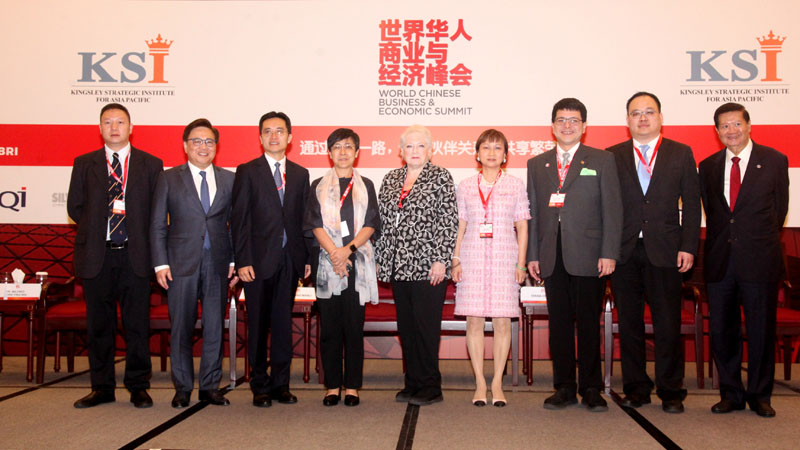
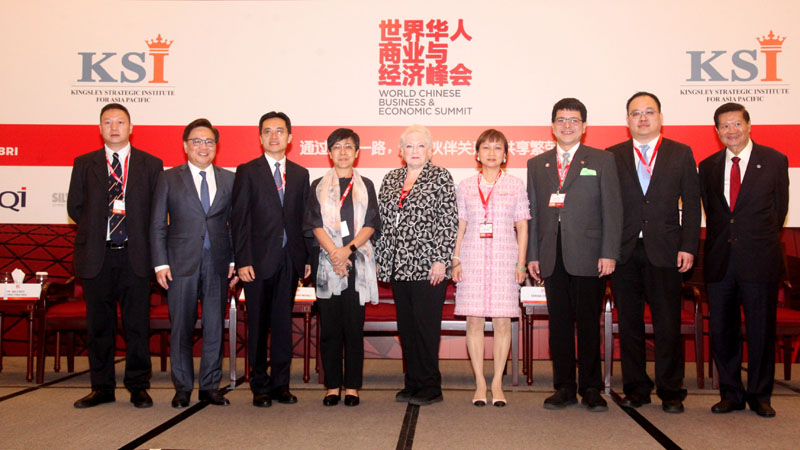
The 2019 World Chinese Business and Economic Summit, co-organized by CDI, was held in Macao on October 17. Discussion surrounded better ways to connect within the GBA, for example free flow of talents among the different jurisdictions, e-payment system that services the different currencies, air transportation between the rivers etc.Dr. Wang Wanli, Executive Director of Hong Kong, Macao and Reginal Development Research Department of CDI, spoke on Shenzhen’s role in Guangdong-Hong Kong-Macao Greater Bay Area development.
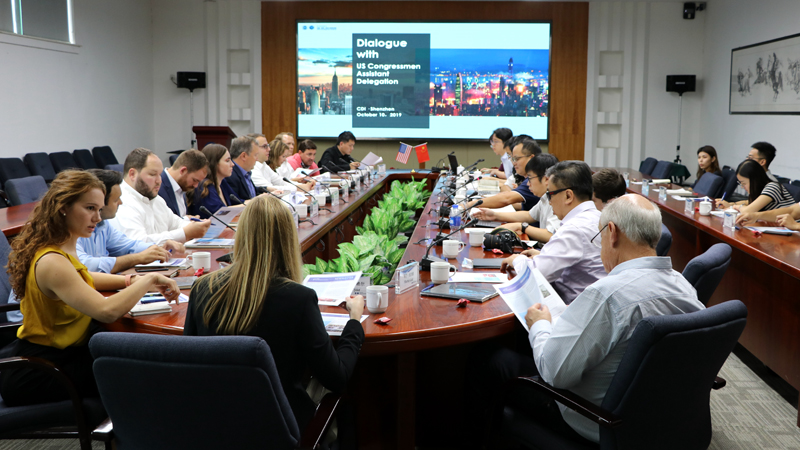
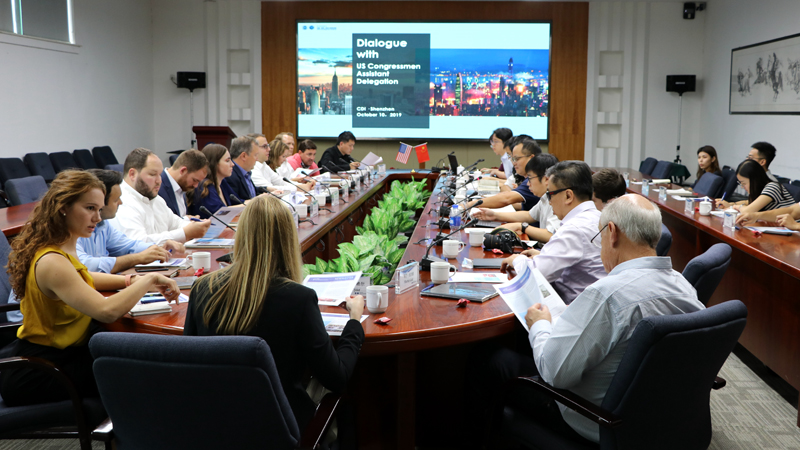
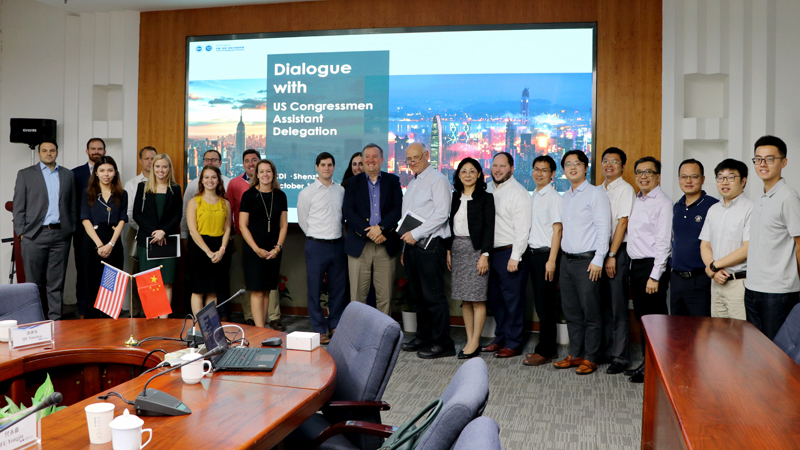
On October 10, US congressmen assistant delegation visited CDI. Discussion surrounded the current state of Shenzhen’s economic and social development. CDI researchers introduced the brief history of Shenzhen’s development, as well as the essential element for its fast growth – market economy. Now, Shenzhen also stresses on government service refinement, low carbon development, intellectual property protection, and vocational and technical education program etc.
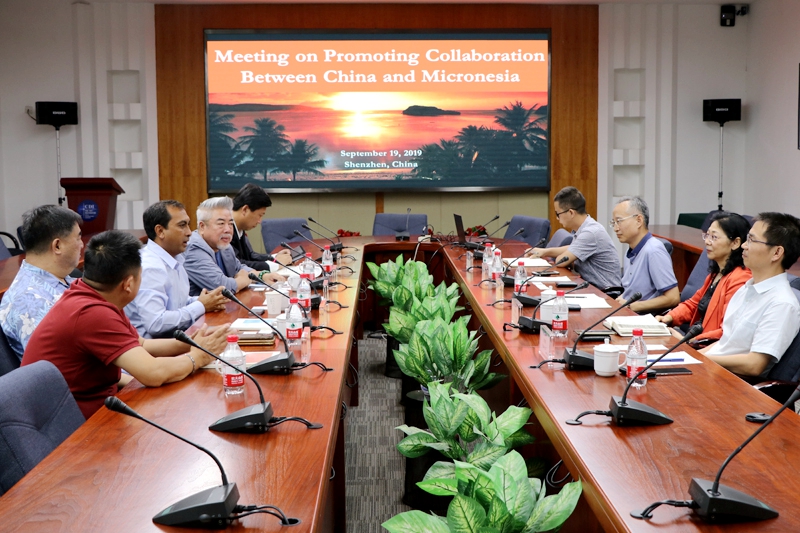
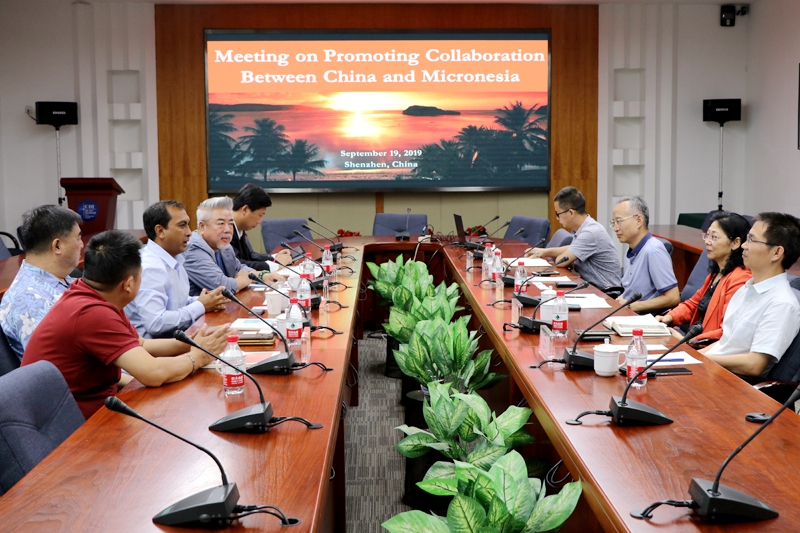
On September 19, Mr. Christopher Christian and the Federated States of Micronesia delegation visited CDI. Meeting focused on current state and vision of Micronesian tourism industry development, as well as collaborations opportunities between China and Micronesia. Based on strong emphasis on sustainable development, future collaborations in tourism industry should be gradual and paced. With ambitious goals in mind, Mr. Christian expressed intentions to start small in the foreseeable future, for example with adding Shenzhen and Pohnpei airway as pilot project.
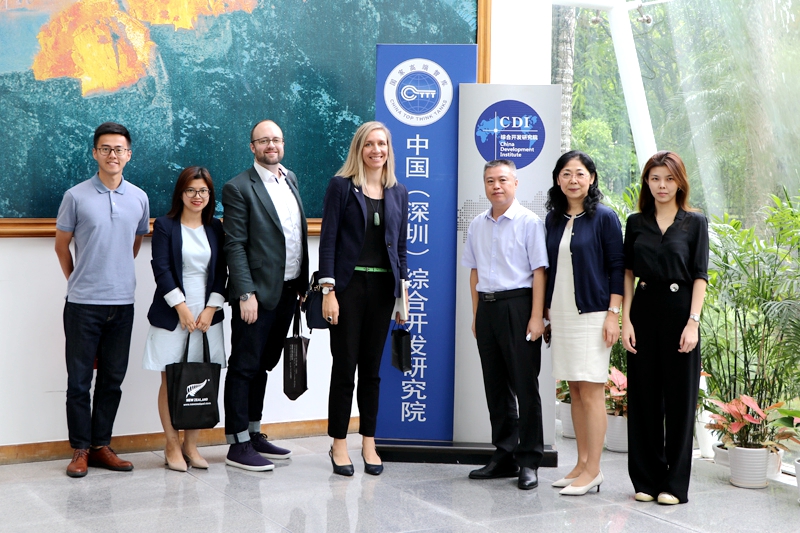
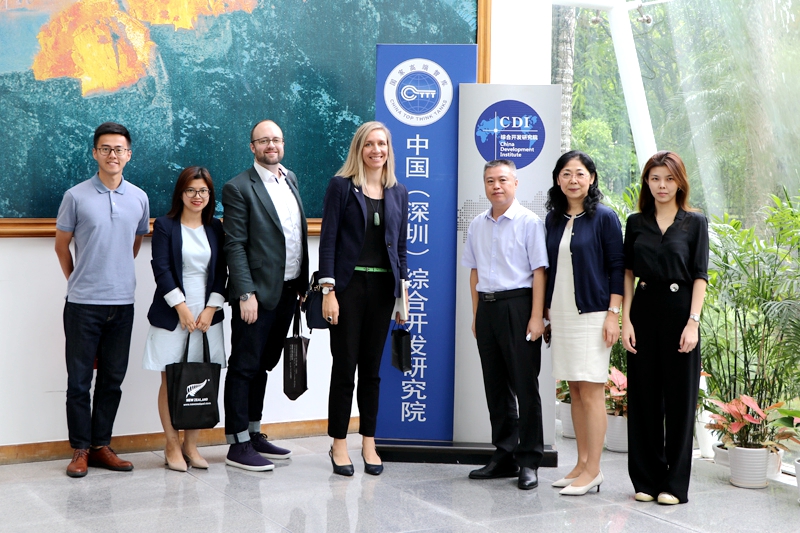
On September 4, New Zealand Consul-General Delegation, led by Rebekah Mawson, New Zealand Consul-General in Guangzhou and Paul Hawkes, the Deputy Consul General, visited CDI and discussed China-US trade conflict and Guangdong-Hong Kong-Macao Greater Bay Area with CDI experts. Both sides had a proactive discussion on the current situation of China's economic development under the trade war between China and US, the investment in the Guangdong-Hong Kong-Macao Greater Bay Area from home and abroad and the Hong Kong’s role in the Greater Bay Area development.
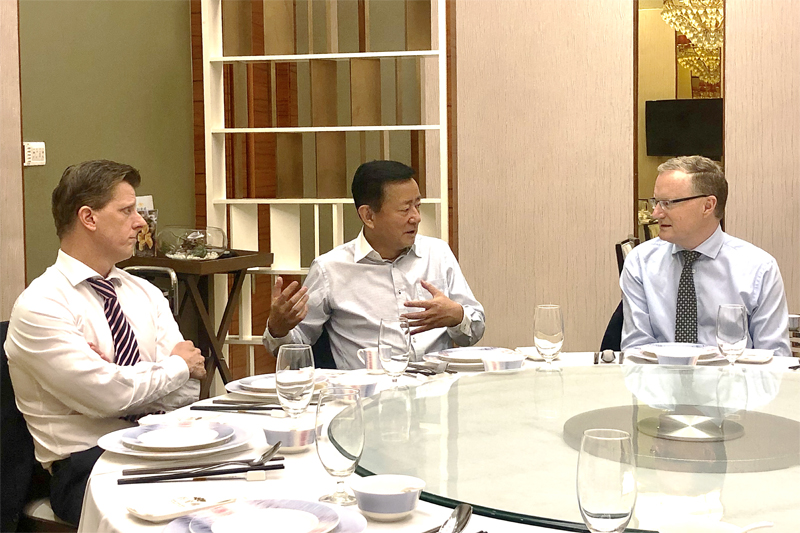
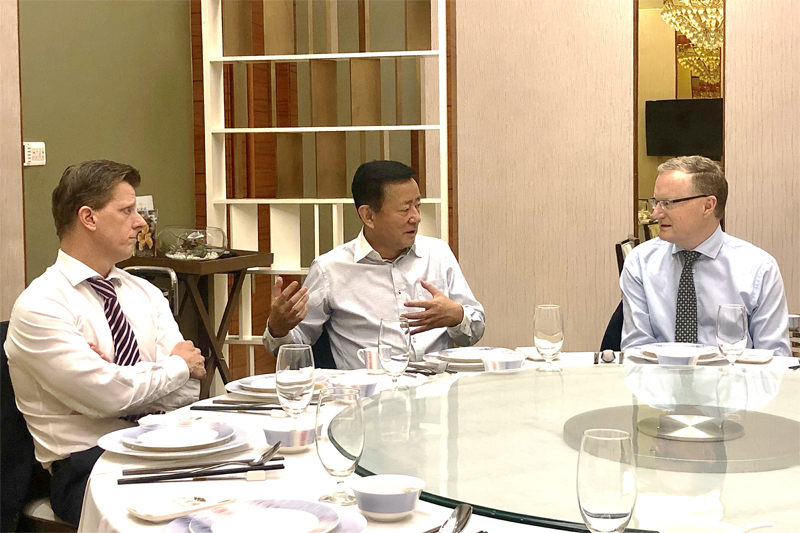
On August 28, Prof. Fan Gang, President of China Development Institute, met with Reserve Bank of Australia delegation led by governor Dr Philip Lowe. Discussion surrounded China’s economic development outlook, Sino-US trade war and its implication on exchange rate, current state of cryptocurrency development, and Hong Kong’s prospect within Guangdong-Hong Kong-Macao Greater Bay Area.
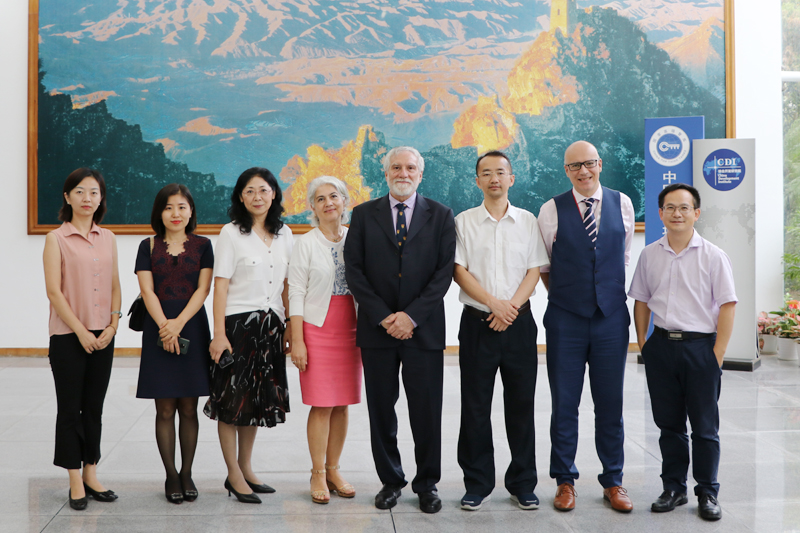
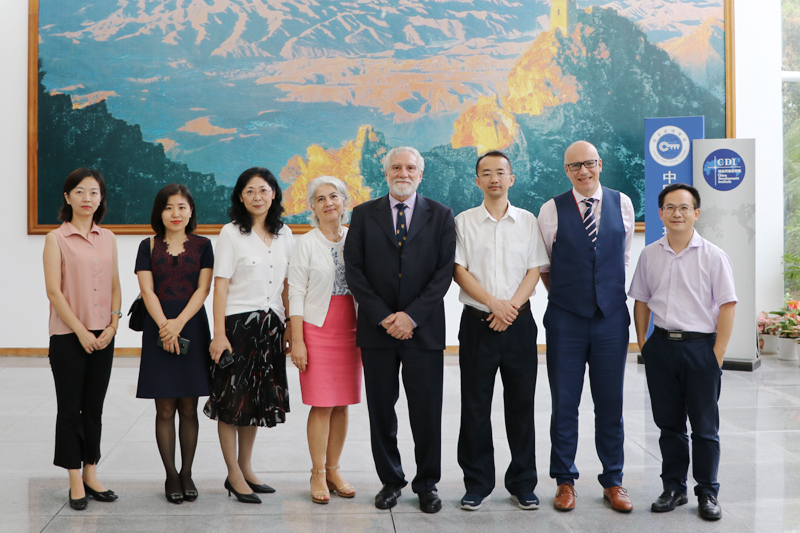
On August 26, Prof. Jonathan Liebenau of London School of Economics and Political Science, Dr. Gul Berna Ozcan of Royal Holloway University of London visited CDI. Dr. Cao Zhongxiong, Executive Director of New Economy Research Institute of CDI, introduced the history of Shenzhen’s high-tech innovation, how it came to the current stage, and its strengths and weakness, especially the lack of top research universities and institutes. He pointed out that Shenzhen has a long way ahead.
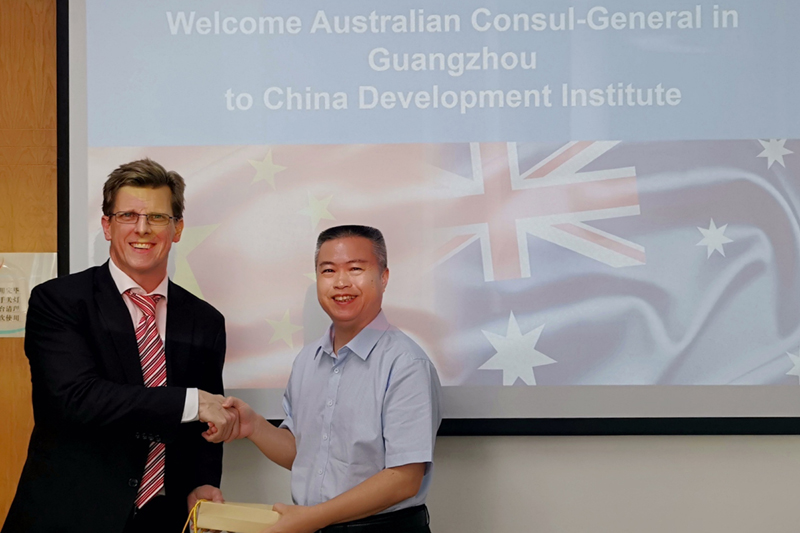
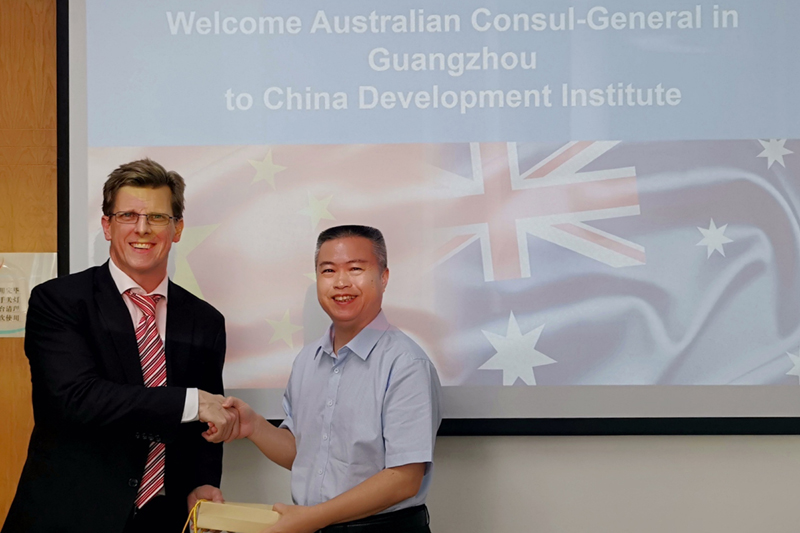
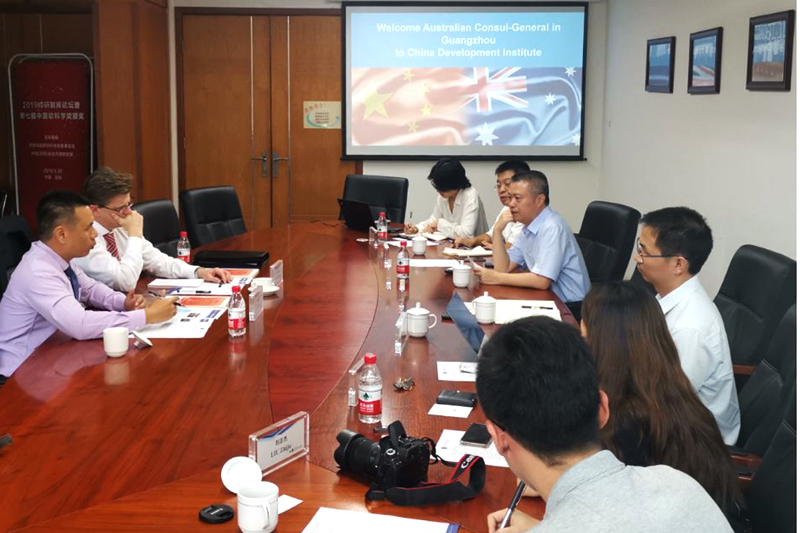
On July 30, Jason Robertson, Consulate General of Australia in Guangzhou visited CDI. CDI experts, led by Dr. Guo Wanda, Executive Vice President attended the meeting. Discussion surrounded the development of Guangdong-Hong Kong-Macao Greater Bay Area. Both sides exchanges views on quo status of foreign direct investment and issues concerning the business disputes between foreign and domestic companies in China’s Greater Bay Area. CDI experts also shared current condition of science and technology commercialization and industrialization in Shenzhen Special Economic Zone.
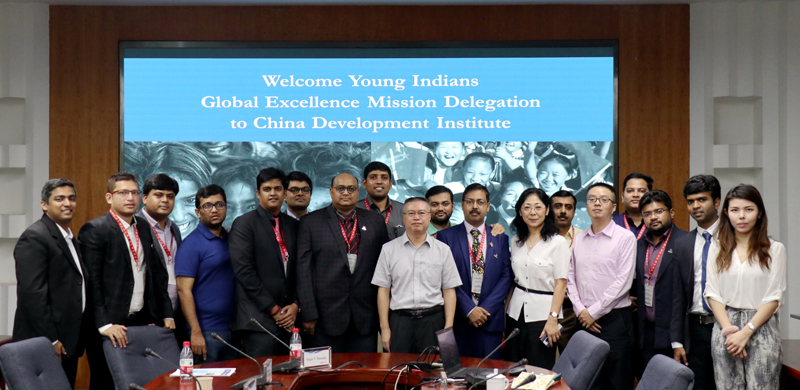
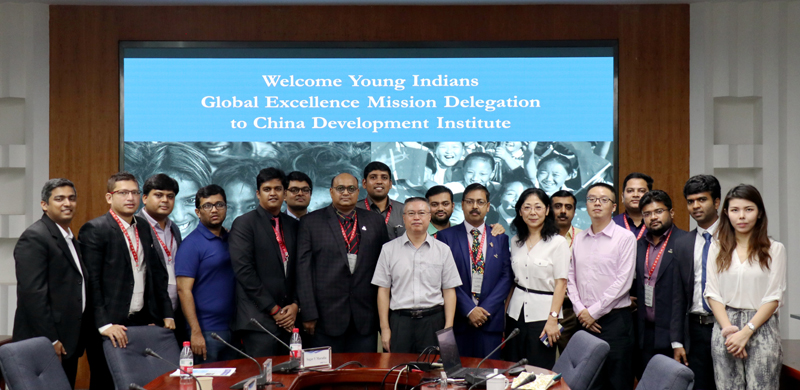
On July 19, Young Indians Global Excellence Mission to China delegation visited CDI. Discussion focused on the Guangdong-Hong Kong-Macao Greater Bay Area (Greater Bay Area) outline and economic development of Shenzhen throughout reform and opening-up with CDI experts.
Dr. Guo Wanda, Executive Vice President of CDI, introduced the Greater Bay Area outline in terms of development challenges and working priorities such as infrastructure connectivity, industrial clusters, and institutional innovation. CDI expert also answered questions on comparison study of India and China’s bio-pharmaceutical development.
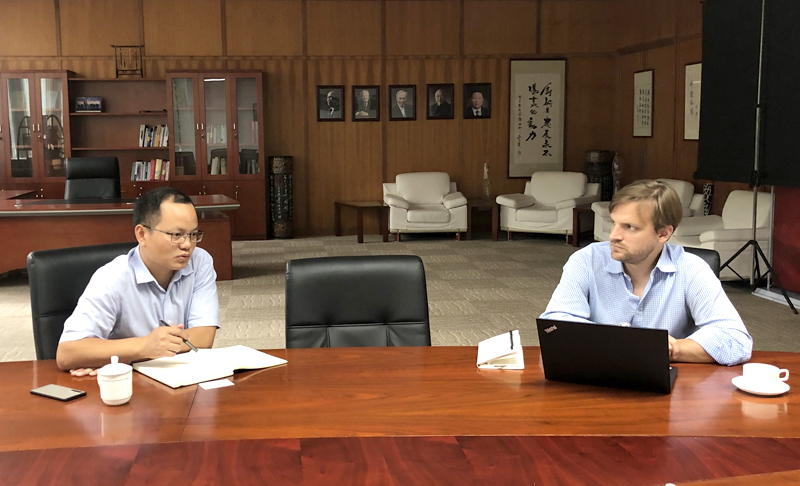
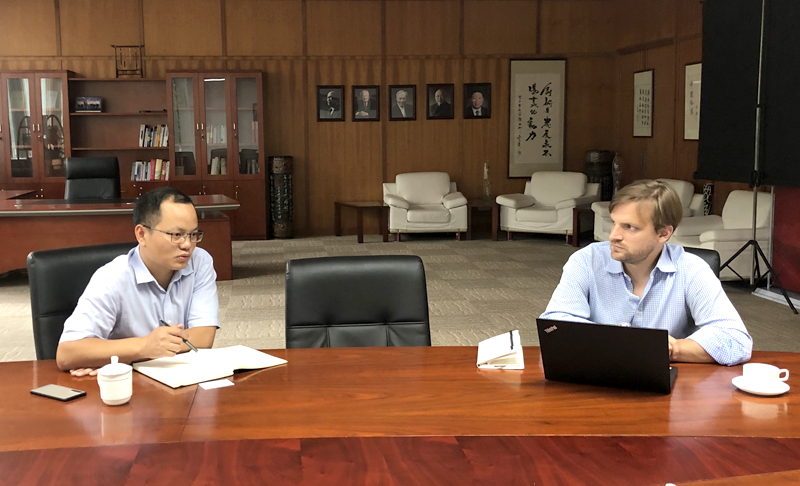
On June 28, Peter Vanham, lead writer and US Media Lead of World Economic Forum, interviewed Dr. Liu Guohong and Dr. Liu Yu of CDI. Discussion surrounded Shenzhen Special Economic Zone’s success, its construct, and replicatory value for other developing countries, and the relationship between global climate change and world economic growth. Stable political and social environment is crucial prerequisite for the development of SEZ, said Dr. Liu Guohong. In terms of the ongoing struggle to balance reducing carbon footprint and maintaining economic growth, Dr. Liu Yu believes that climate change does not necessarily restrict economic growth. On the contrary, new business opportunities have risen along new energy and related industries, as seen in electric cars manufacturing.
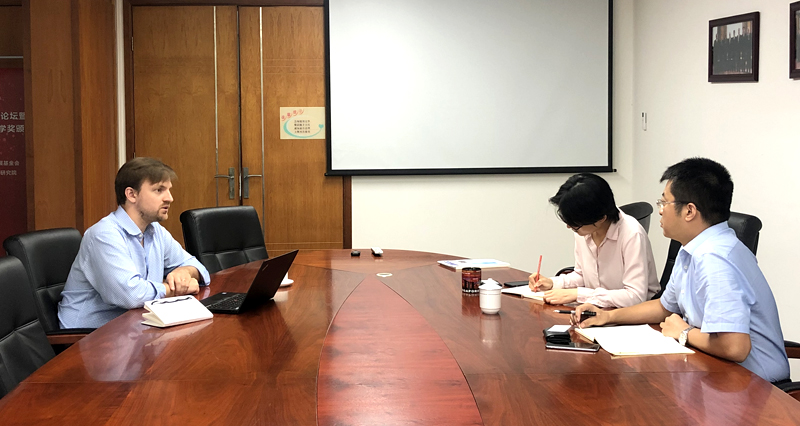
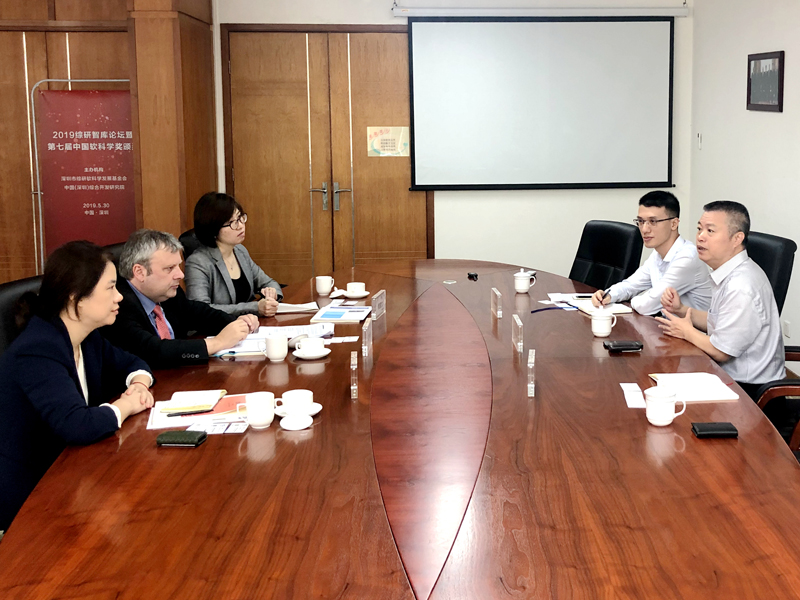
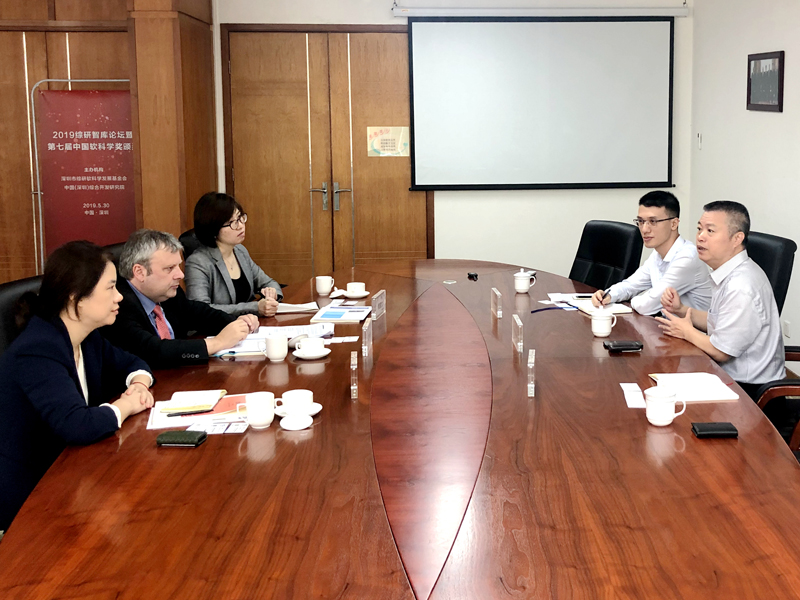
On June 27, HSBC delegation led by Mr. Steward James, Head of Group Public Affairs, Asia-Pacific, visited CDI. Discussion surrounded important aspects of Guangdong-Hong Kong-Macao Greater Bay Area, such as free movement of talents, research equipment and capital etc., as well as further opening up towards Hong Kong and Macao free ports. Hong Kong serves as a platform for both “going-out” of mainland enterprises, which is crucial for BRI related projects, and international players coming into mainland China, which also contributes to prosperity of GBA, said Dr. Guo Wanda, Executive Vice President of CDI. During the meeting, he also suggested that in case of Brexit, UK’s cooperation mechanism with EU members, such as Ireland, will be most valuable example for the development of GBA, especially in terms of economic, trade and cross border exchange. In terms of recent issues seen in projects along BRI countries, China is working strongly towards increasing transparency and financial diversity to reduce barrier for multilateral development banks and international enterprises to partake in BRI projects.
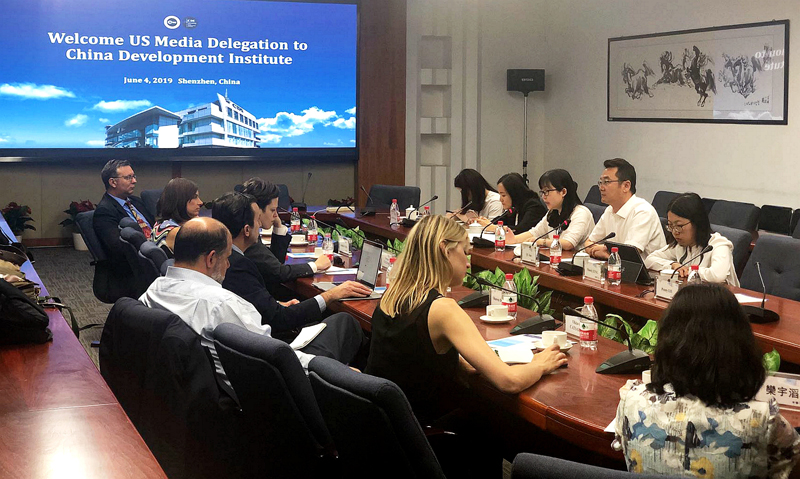
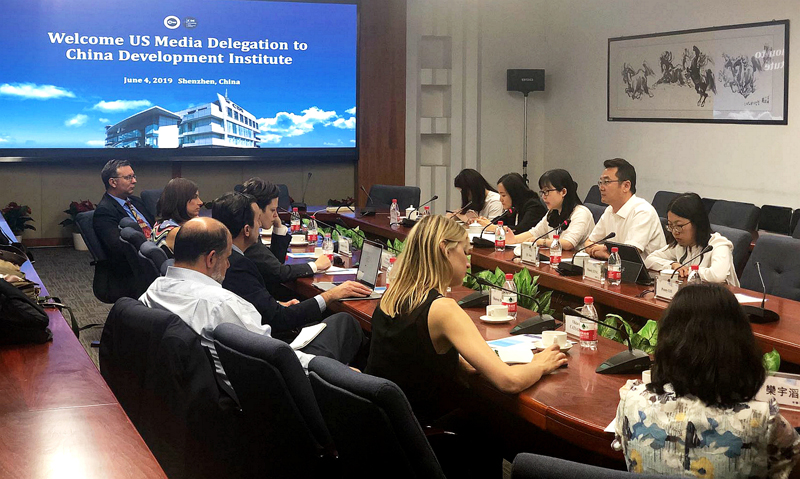 On June 4, United States media delegation visited CDI, with journalists from various major media outlets, such as Quartz, Reuters, Forbes, Bloomberg, National Public Radio, and Austin Business Journal. Vice President Qu Jian introduced the layout and development goals of the Guangdong-Hong Kong-Macao Greater Bay Area. The discussion focused on each city’s role and its comparative advantages within the Greater Bay Area.
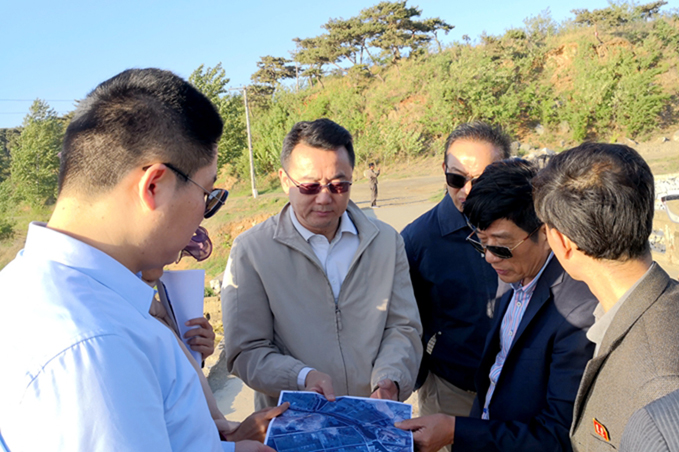
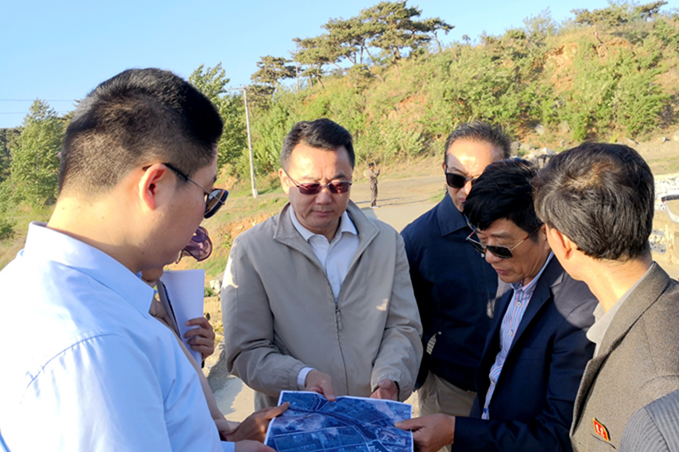 CDI research team visited North Korea for field studies on the Nampo Bonded Zone from May 20 to 24.
In the meeting with the Korea Economic Development Association, it was pointed out by CDI experts that North Korea, on promising trajectories of urbanization and industrialization, can move into some industries which are shifting base from China to other countries, with its abundant natural resources, cheap labor, and strong domestic demand.
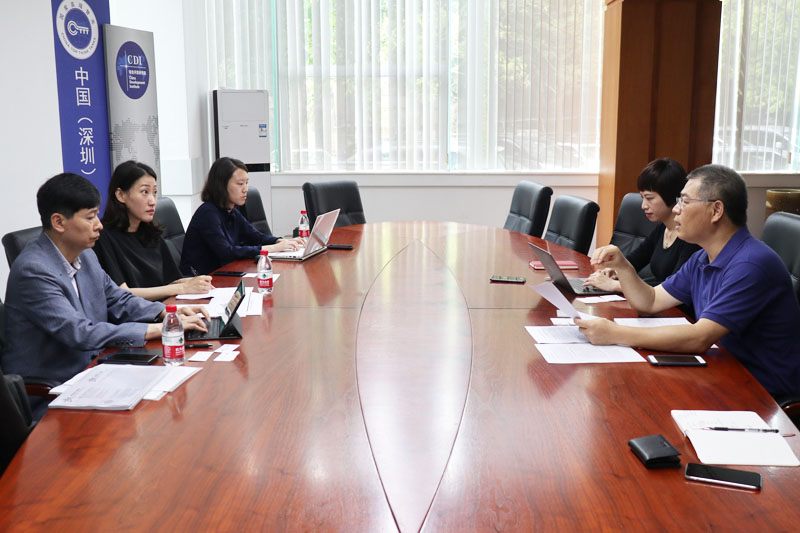
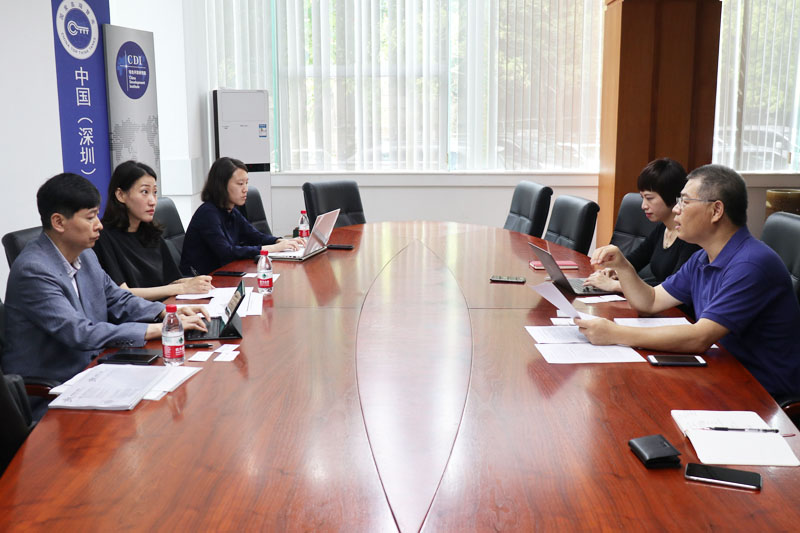 On May 20, Gyeonggi Research Institute Delegation visited CDI. Discussion surrounded the development of Shenzhen Special Economic Zone, Shenzhen’s transformation in terms of society, economy, and regulations, as well as Shenzhen and Hong Kong’s relation and cooperation throughout the years. Dr. Lee Jung Hoon proposed the vision of cross-border special economic zone between South and North Korea and Shenzhen’s successful experience should shed light on the planning and development of the special economic zone.
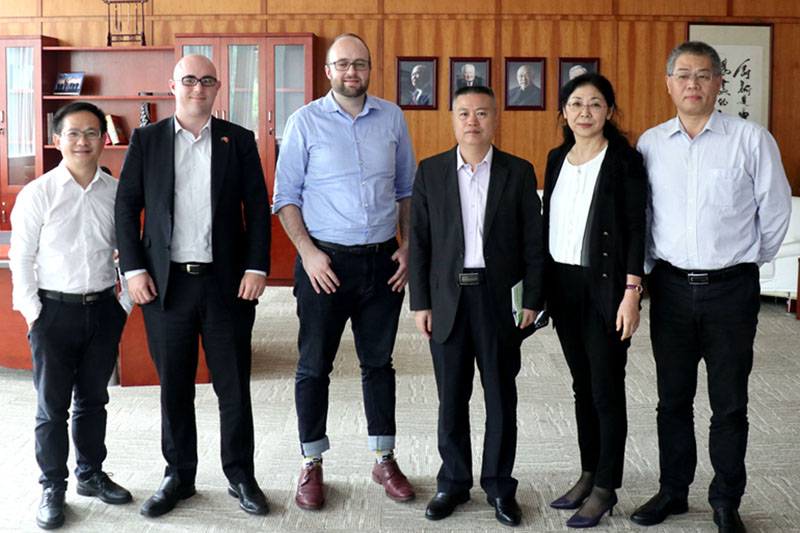
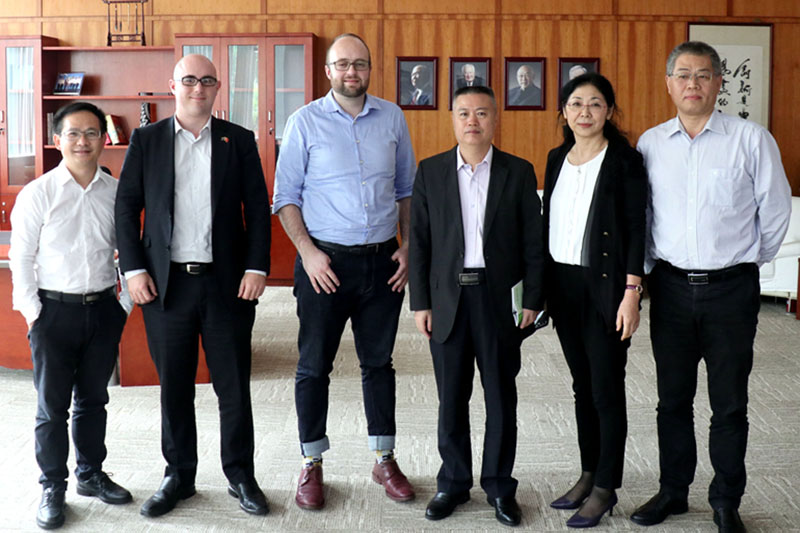 On May 10, Consulate General of New Zealand in Guangzhou Delegation visited CDI and discussed the development of Guangdong-Hong Kong-Macao Greater Bay Area. CDI experts, led by Dr. Guo Wanda, Executive Vice President, explained geographical construct, intercity cooperation and vision of the Greater Bay Area, as well as its supportive role in Belt and Road Initiative.
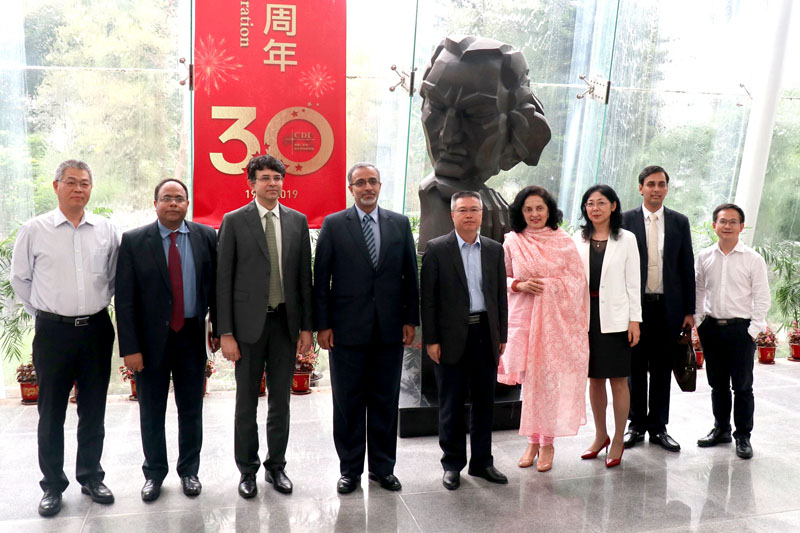
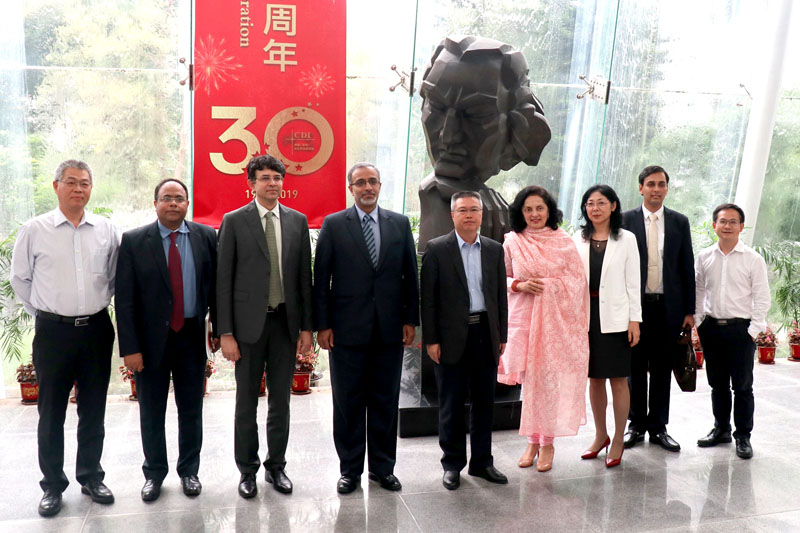 On May 6, Indian Ambassador to Bhutan Ms. Ruchira Kamboj, Indian Ambassador to Russia Mr. D. B. Venkatesh Varma, Joint Secretary Eurasian Division of Ministry of External Affairs of India Mr. Manish Prabhat, Indian Consul General of Guangzhou Mr. Sujit Ghosh visited CDI.
Dr. Guo Wanda, Executive Vice President of CDI, introduced visions of Guangdong-Hong Kong-Macao Greater Bay Area. Discussion focused on Shenzhen’s experience of transformation into China’s top high-tech center, Sino-US trade’s influence on Shenzhen, as well as government measures that took place to facilitate start-ups in Shenzhen.
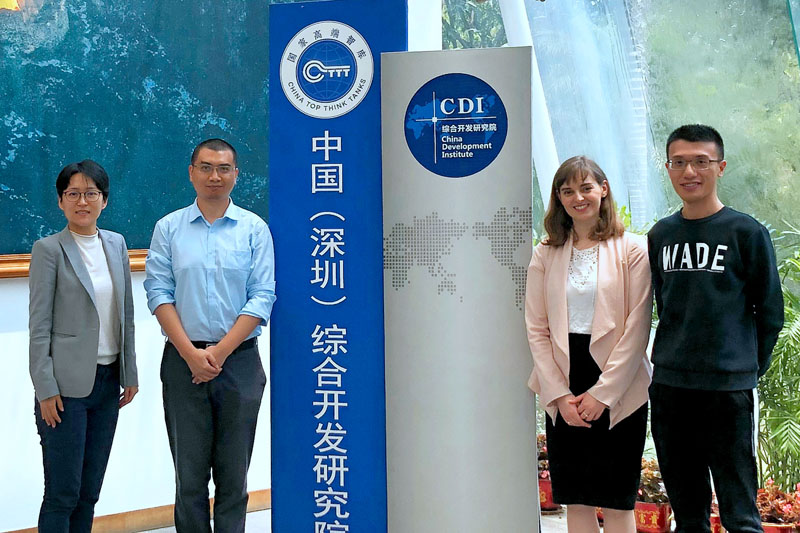
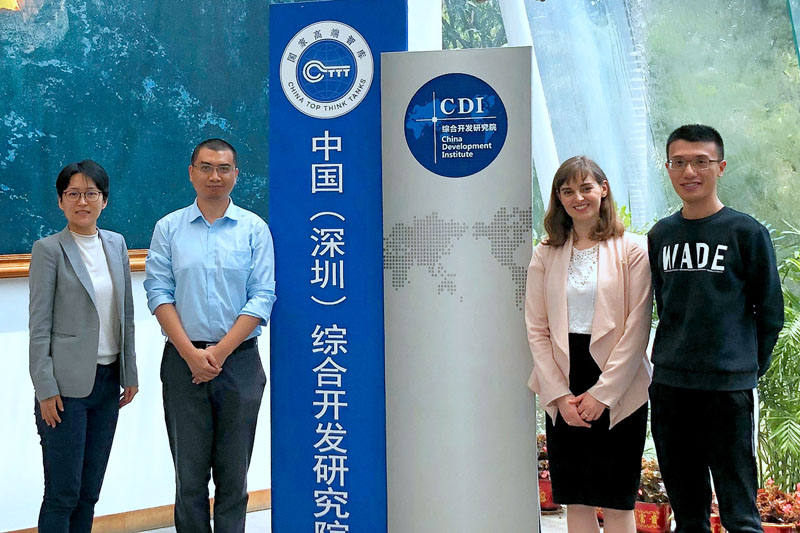 On April 25, Ms. Kimberley Long, Asia Editor of The Banker magazine in London, interviewed CDI experts on the changing economy and financial industry in China, the trends and challenges in the coming years, in particular, financial regulations and the rising new type of banks, e.g. WeBank and MyBank, their role in supporting small and medium enterprises, and the changing strategy and digitalization of traditional Chinese banks such as ICBC, ABC, CCB and BOC.
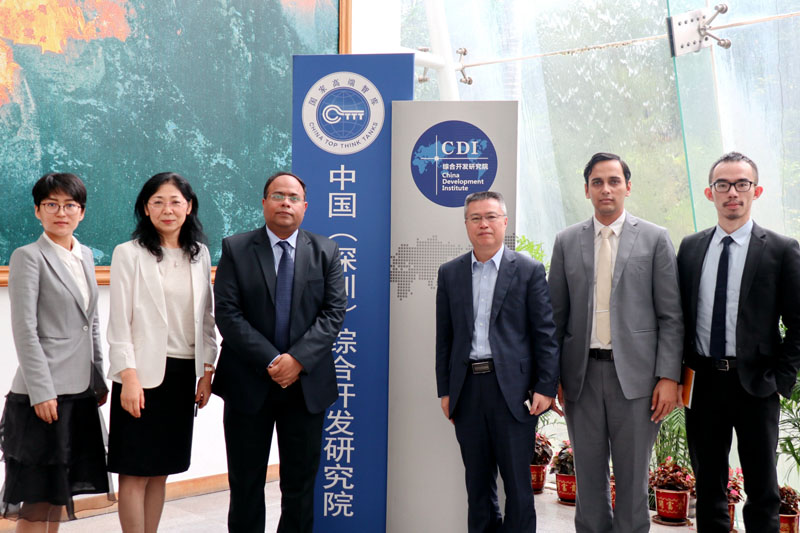
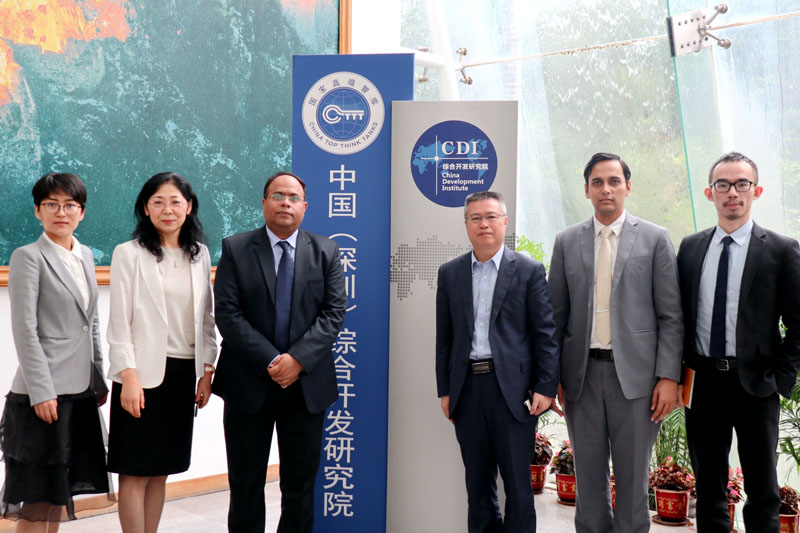 On April 18, Consul General Mr. Sujit Ghosh and Consul Mr. Aniket Patankar of India, Guangzhou visited CDI. As Sino-Indian trade and economic cooperation boosts in recent years, the need of think tank’s input on these matters has also increased, said Mr. Ghosh. He proposed to consolidate the exchange and collaboration between two country’s leading think tanks.
During the meeting, Executive Vice President Dr. Guo Wanda briefly explained different challenges that Guangdong-Hong Kong-Macao Greater Bay Area is faced with, including the need of institutional innovation, infrastructure connectivity, and environmental protection. Dr. Guo also pointed out Greater Bay Area’s many current advantages, such as matured industrial clusters along east and west bank of pearl delta. In the long run, a quality life circle will not only facilitate free movement of talents, but also businesses and capital.
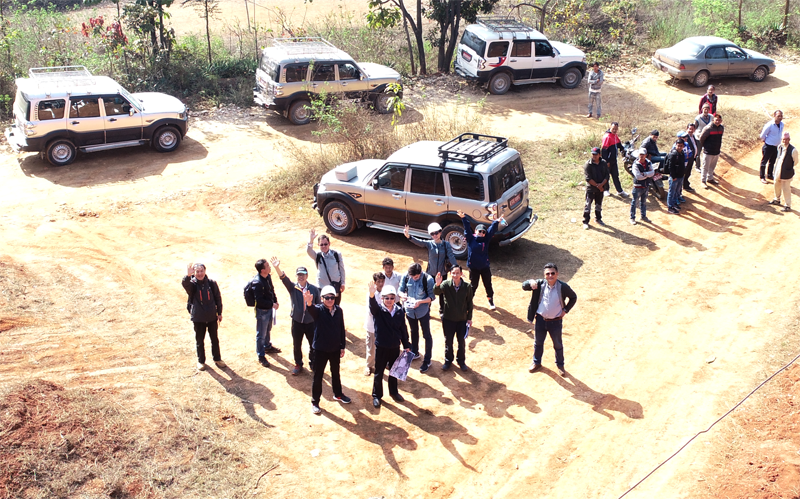
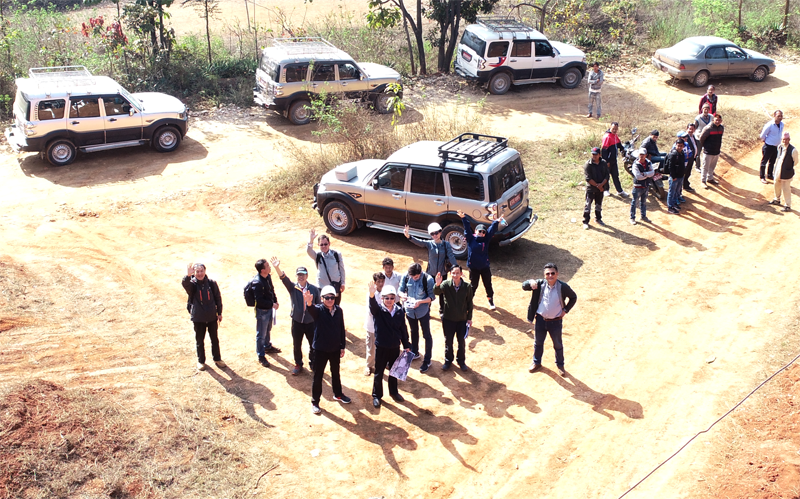 From March 28 to April 2, CDI researchers visited Nepal for field studies on the China-Nepal Cross-Border Economic Cooperation Zone.
In the meeting with the Nepalese Ministry of Industry, Commerce and Supplies, both sides exchanged views on the Zone and the economic and trade cooperation between China and Nepal. CDI experts also conducted field studies on the location of the Zone.
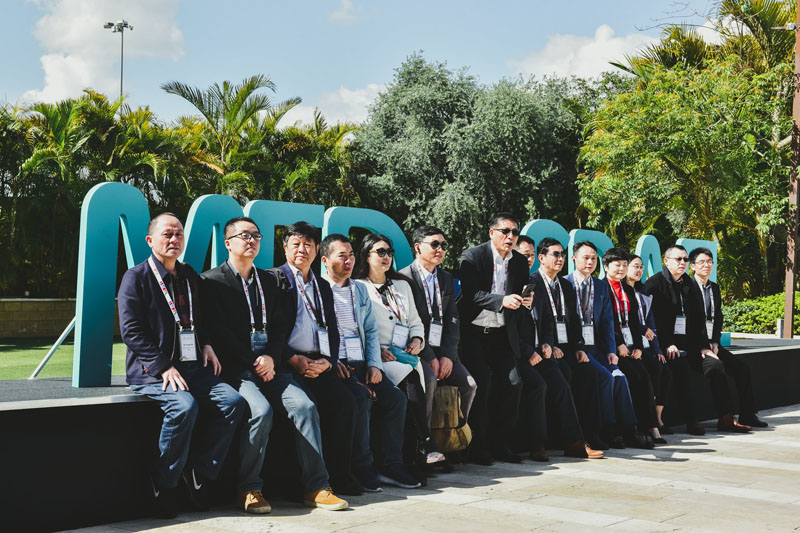
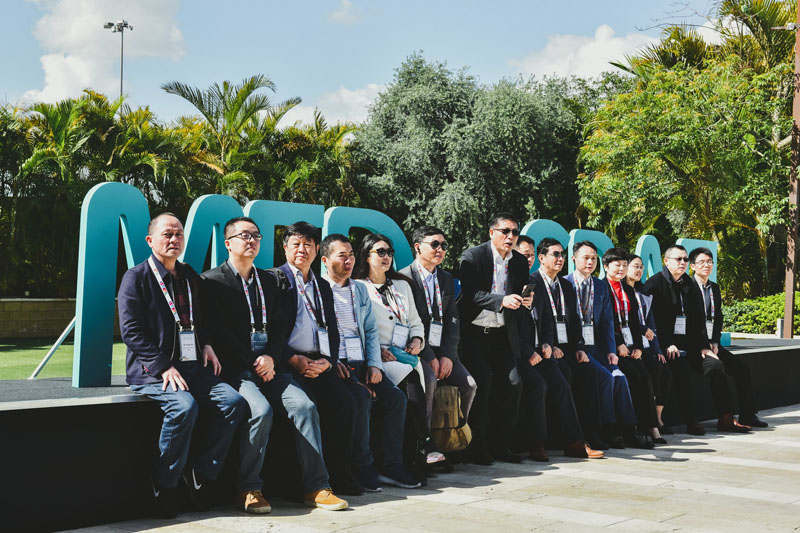 CDI researchers visited Israel together with the delegation of Shenzhen Association of Medical Devices to explore what fuels Israel’s innovation and opportunities for China-Israel cooperation on scientific and technological innovation, digital health, etc. from March 23 to 28.
In the meeting with Mr. Matan Safran, Director of the China Department at the Foreign Trade Administration within the Israeli Ministry of Economy & Industry, both sides agreed to tap into great potential for China-Israel innovation cooperation, especially on digital health, with Israel’s successful innovation ecosystem covering makers, incubation, commercialization and industrialization of scientific research results and venture capital and China being an important market in the world.
The delegation also visited eHealth Ventures and Techcode Israel, the innovation incubators, and Sheba Medical Center. They also attended the MEDinISRAEL, the flagship event of the digital health industry in Israel.
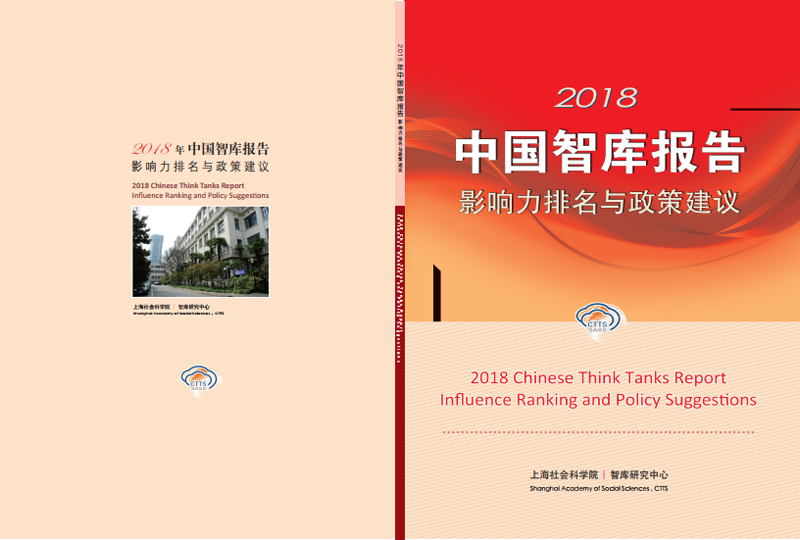
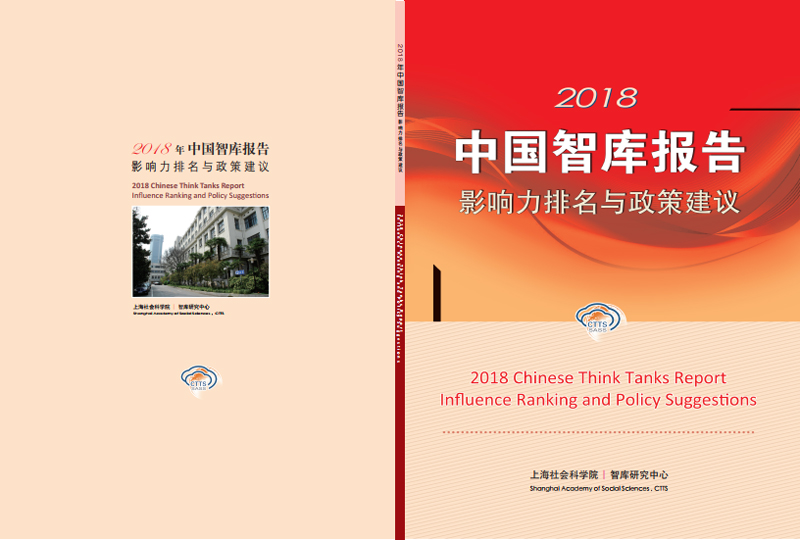
2018 Chinese Think Tanks Report: Influence Ranking and Policy Suggestions was launched on February 1, 2019, showcasing Top 50 Chinese Think Tanks (Comprehensive Influence). China Development Institute (CDI) ranked 15th place on Comprehensive Influence, 14th on Decision-making, and 2nd on Social Think Tank (Departmental Influence) respectfully, with rising places on Social Influence and International Influence.
Center for Think Tank Research of Shanghai Academy of Social Sciences (CTTS) has launched yearly “Chinese Think Tank Report” since 2014. This edition is themed “40 years of reform and opening up, and high-quality development of think tanks”, based on the development status quo of Chinese think tanks and actual needs engendered by China’s reform, innovation, transformation, and development of think tanks, aiming to shed lights on how to increase influence and international status of new-type Chinese think tanks.
Through surveys, Chinese think tanks are evaluated and ranked from comprehensive influence, itemized influence, departmental influence, and professional influence, striving to observe and assess their development situations, characteristics, and influences in an all-around, scientific, objective, and accurate manner.
The 2018 influence evaluation results of Chinese think tanks are given as follows:
Top 20 Chinese Think Tanks (Comprehensive Influence)
Ranking in 2018 | Think Tank Name | Ranking in 2017 |
1. | Chinese Academy of Social Sciences (CASS) | 1 |
2. | Development Research Center of the State Council | 3 |
3. | Chinese Academy of Sciences (CAS) | 2 |
4. | Chinese Academy of Engineering (CAE) | 5 |
5. | Academy of Macroeconomic Research, NDRC | 7 |
6. | China Center for International Economic Exchanges (CCIEE) | 11 |
7. | Party School of the CPC Central Committee (China Academy of Governance) | 4 |
8. | China Institutes of Contemporary International Relations | 6 |
9. | National School of Development, Peking University | 12 |
10. | China Institute of International Studies | 10 |
11. | PLA Academy of Military Sciences | 8 |
12. | Chinese Academy of International Trade and Economic Cooperation, MOFCOM | 19 |
13. | Shanghai Institutes for International Studies | 16 |
14. | National Institute for International Strategy, CASS | 13 |
15. | China Development Institute | 15 |
16. | State Information Center | 17 |
17. | National Defense University PLA China | 9 |
18. | Chinese Academy of Fiscal Sciences | 18 |
19. | National Academy of Development and Strategy, Renmin University of China | 24 |
20. | Center for World Studies, Xinhua News Agency | 22 |
Top 15 Chinese Think Tanks (Decision-making Influence)
Ranking in 2018 | Think Tank Name | Ranking in 2017 |
1. | Development Research Center of the State Council | 2 |
2. | Chinese Academy of Social Sciences (CASS) | 1 |
3. | Chinese Academy of Sciences (CAS) | 3 |
4. | Academy of Macroeconomic Research, NDRC | 5 |
5. | Chinese Academy of Engineering | 7 |
6. | China Center for International Economic Exchanges (CCIEE) | 9 |
7. | Party School of the CPC Central Committee (China Academy of Governance) | 4 |
8. | China Institutes of Contemporary International Relations | 6 |
9. | PLA Academy of Military Sciences | 8 |
10. | National Institute for International Strategy, CASS | 10 |
11. | National Defense University PLA China | 12 |
12. | China Institute of International Studies | 13 |
13. | State Information Center | 16 |
14. | China Development Institute | 11 |
15. | Shanghai Institutes for International Studies | 14 |
Top 20 Chinese Think Tanks (International Influence)
Ranking in 2018 | Think Tank Name | Ranking in 2017 |
1. | Chinese Academy of Social Sciences (CASS) | 1 |
2. | Development Research Center of the State Council | 4 |
3. | China Institutes of Contemporary International Relations | 3 |
4. | Chinese Academy of Sciences (CAS) | 2 |
5. | China Institute of International Studies | 5 |
6. | China Center for International Economic Exchanges (CCIEE) | 15 |
7. | National Institute for International Strategy, CASS | 10 |
8. | Shanghai Institutes for International Studies | 12 |
9. | Institute of International and Strategic Studies, Peking University | 9 |
10. | Chinese Academy of International Trade and Economic Cooperation, MOFCOM | 13 |
11. | China Center for Contemporary World Studies | 17 |
12. | CCG | 19 |
13. | Academy of Macroeconomic Research, NDRC | 11 |
14. | Chinese Academy of Engineering (CAE) | 6 |
15. | National School of Development, Peking University | 18 |
16. | PLA Academy of Military Sciences | 8 |
17. | Party School of the CPC Central Committee (China Academy of Governance) | 7 |
18. | Center for World Studies, Xinhua News Agency | 16 |
19. | Chongyang Institute for Financial Studies, Renmin University of China | 20 |
20. | China Development Institute |
Top 5 Social Think Tank (Departmental Influence)
Ranking in 2018 | Think Tank Name | Ranking in 2017 |
1. | China Center for International Economic Exchanges (CCIEE) | 1 |
2. | China Development Institute | 2 |
3. | China Institute for International Strategic Studies | |
4. | China Institute for Reform and Development | |
5. | CCG | 5 |
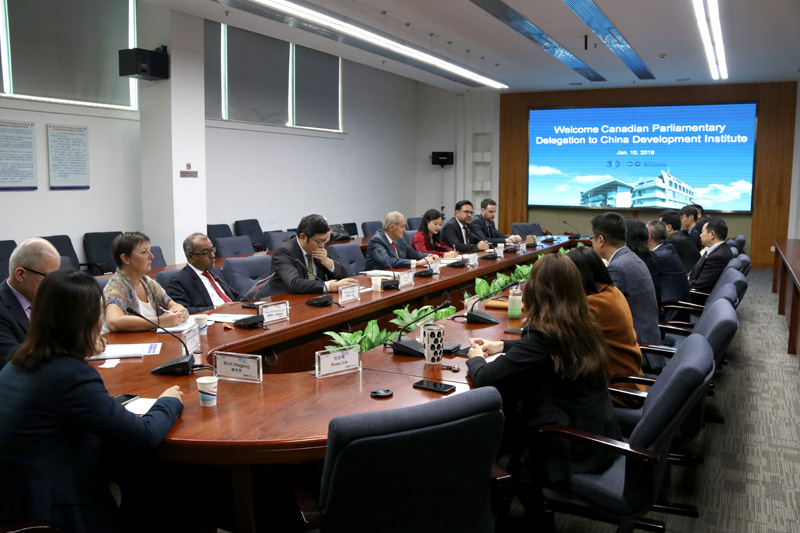
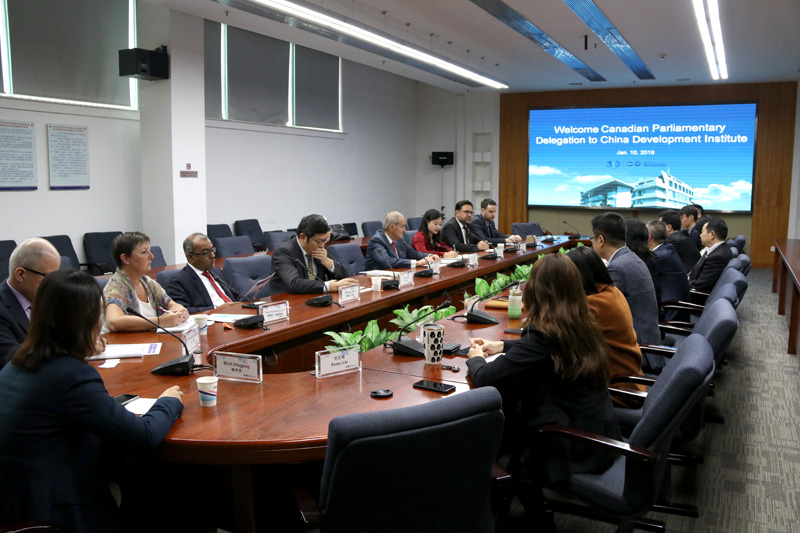 A Canadian parliamentary delegation led by Senator Joseph Day, Co-Chair, Canada-China Legislative Association, visited CDI on January 10 and discussed the Guangdong-Hong Kong-Macao Greater Bay Area (Greater Bay Area) and economic and social development of Shenzhen with CDI experts.
Dr. Guo Wanda, Executive Vice President, briefed the Greater Bay Area in terms of development challenges and working priorities including infrastructure connectivity, industrial clusters, environmental protection, quality life circle and institutional innovation. Both sides had a proactive discussion on integration of the Greater Bay Area.
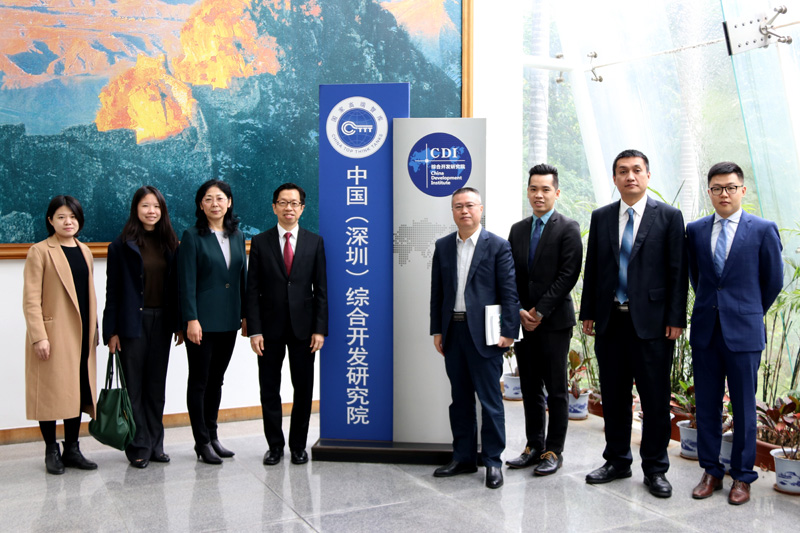
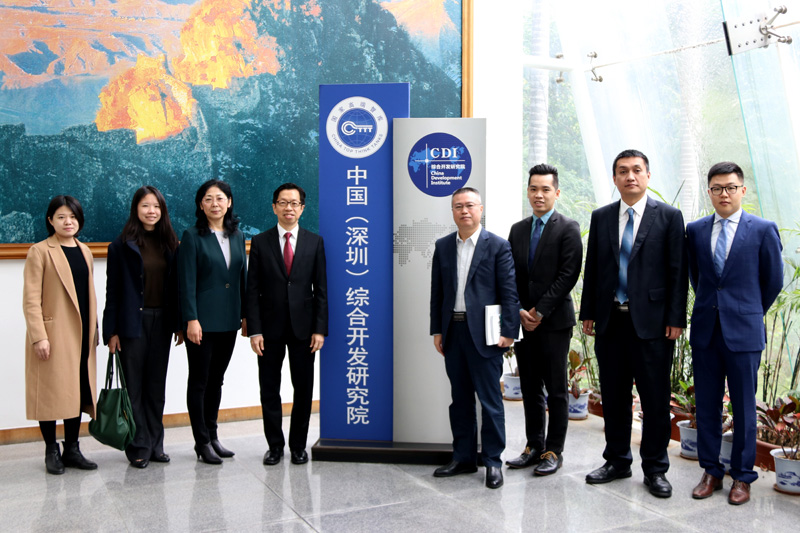 On January 9, Mr. Chua Teng Hoe, Consul-General of Singapore to Guangzhou, visited CDI and discussed to explore opportunities for cooperation between Singapore and the Guangdong-Hong Kong-Macao Greater Bay Area (Greater Bay Area) with Dr. Guo Wanda, Executive Vice President of CDI.
Dr. Guo Wanda elaborated on background and priorities of the Greater Bay Area and suggested that Singapore deepen cooperation with the Greater Bay Area in areas like scientific innovation, financial opening and environmental protection. Both sides agreed that the Greater Bay Area will bring more opportunities for the bilateral cooperation between China and Singapore.