Innovative, Objective, Practical

Click here to download the full report.
Date: November 2024
Author: Prof FAN Gang, President of China Development Institute; Dr CAO Zhongxiong is Assistant President, and Director of the Digital Economy and Global Strategy Research Department of China Development Institute. E-mail: caozx@cdi.org.cn
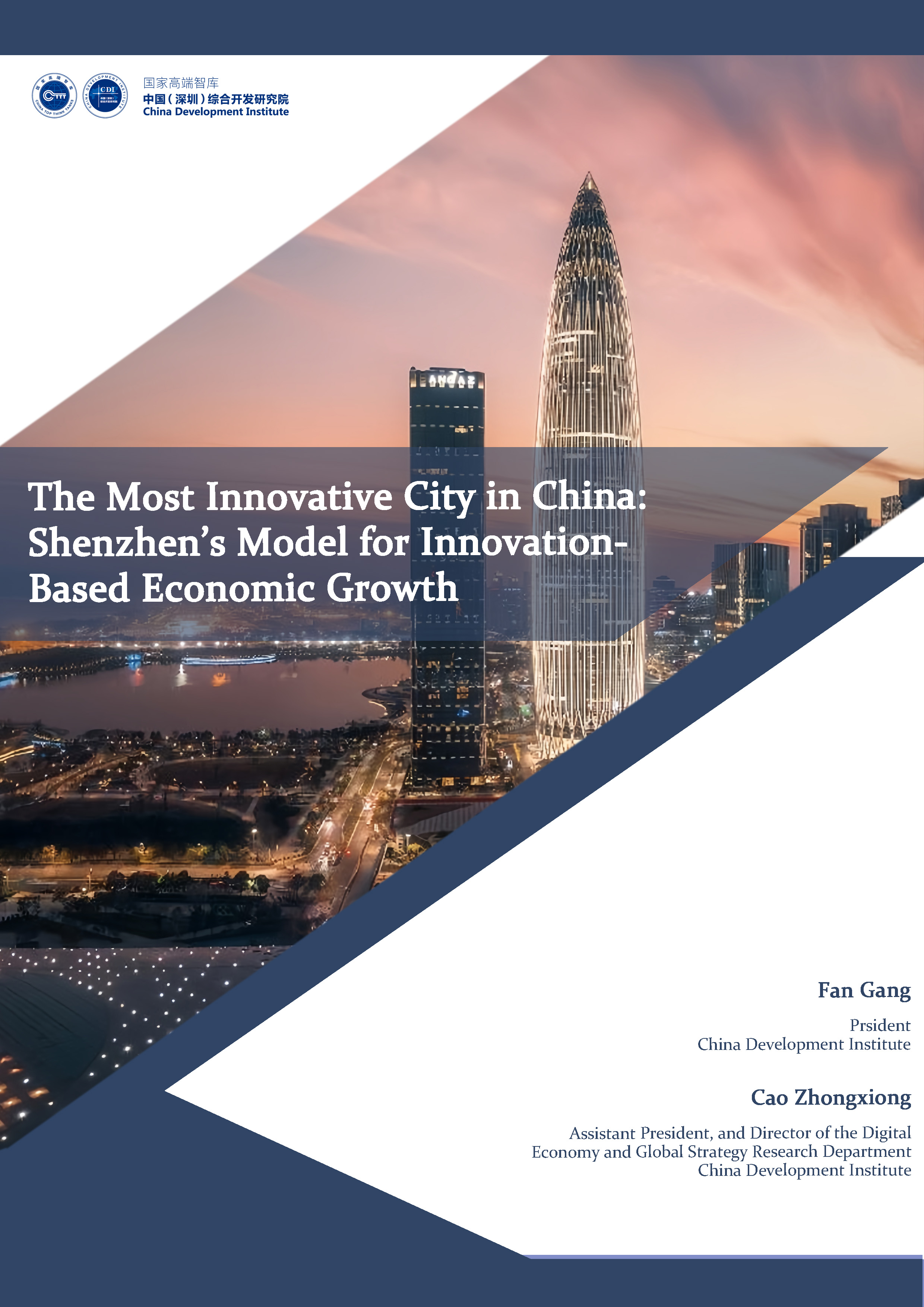
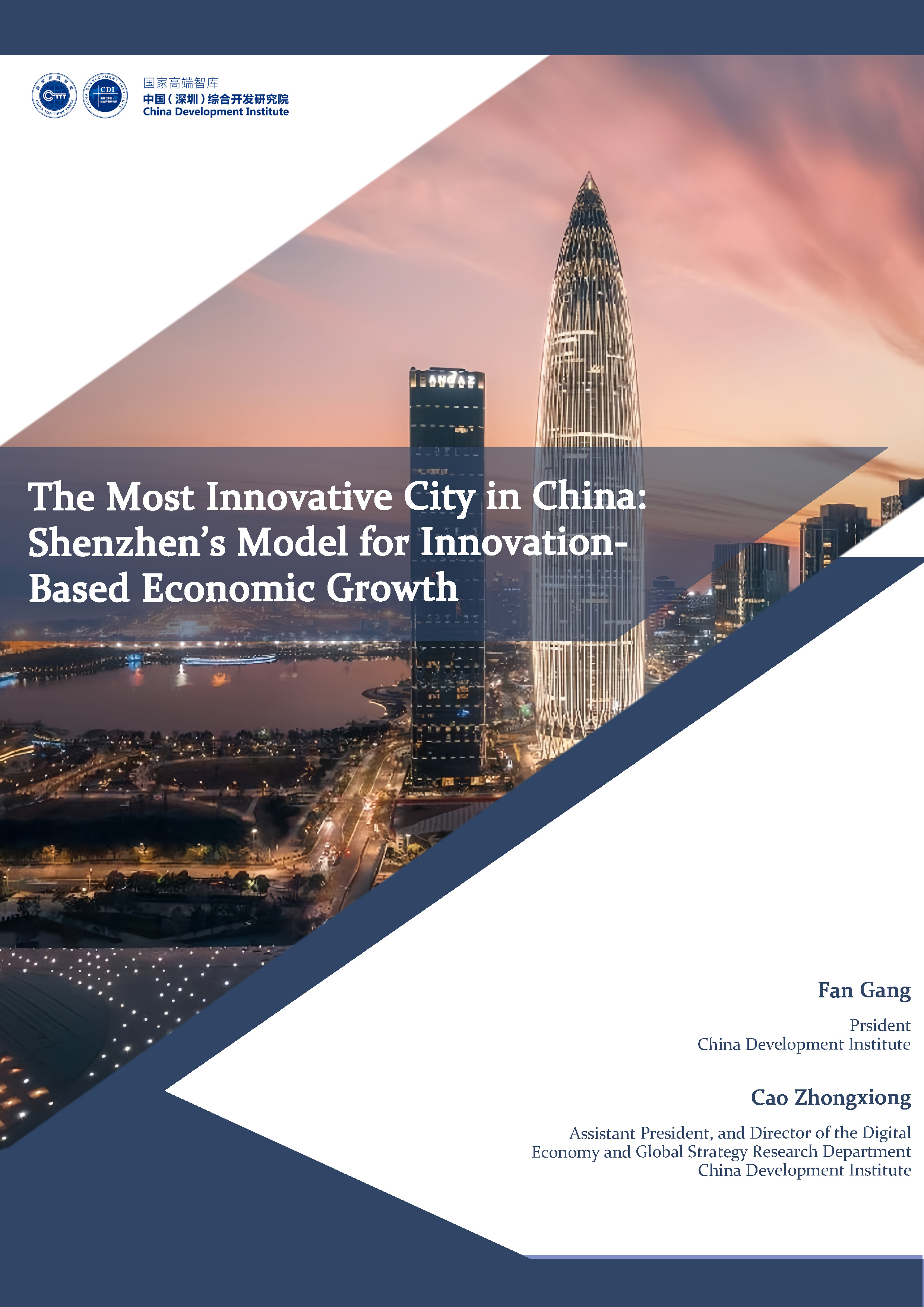
Shenzhen, reputed as China’s technology capital and a global manufacturing powerhouse, has undergone an astonishing transformation from a small fishing village into an international hub of innovation in a mere 45 years. Home to global giants like Huawei, Tencent, BYD, Dajiang-Innovation and BGI Genomics, the city also nurtures a thriving ecosystem of startups in emerging fields such as biotechnology, artificial intelligence (AI), hydrogen energy and the low-altitude economy. Shenzhen stands as a testament to the wonders of urban development and represents a typical example in global technological innovation and industrial progress.
Diversified development infuses the city’s industries with vitality. Shenzhen’s urban growth initially hinged on a cluster of open industrial parks that attracted manufacturers from Japan, Hong Kong, Taiwan and elsewhere. However, the city did not rest on its manufacturing successes. Amidst the sweeping global trends of industrial relocation and innovation, Shenzhen has persistently fostered new industries and tapped into the intrinsic momentum driving urban industrial advancement. For instance, Shenzhen’s pillar industries have evolved from outsourced processing and export-oriented manufacturing, and logistics supply chains to high-tech and strategic emerging industries. Today, Shenzhen is even more proactive in cultivating industries of the future, such as quantum computing and graphene. Furthermore, the city’s industrial development places a strong emphasis on the seamless integration of both new and traditional growth drivers. Building on the foundations of traditional industries like bicycles, gold jewellery, women’s fashion and shoes, Shenzhen’s industries continue to evolve and transform. For instance, the bicycle industry has experienced a transition from traditional bikes to electric bikes, while industries like clothing and footwear are swiftly pivoting towards the fashion sphere, gradually spanning the entire spectrum from manufacturing and branding to fashion shows and modelling agencies. Particularly in the manufacturing realm, driven by the need for industrial automation, many Shenzhen companies have stepped up their digital transformation efforts, speeding the construction of fully automated and digital factories, especially in the face of labour shortages due to the pandemic.
Green power drives sustainable development. During its industrialisation process, Shenzhen faced the challenge of environmental degradation. Early on, the city recognised that developing eco-friendly industries was crucial for sustainable urban development. 20 years ago, Shenzhen began to aggressively promote the development of green economies and industries, such as the circular economy and new energy batteries. One of the most iconic examples of Shenzhen’s commitment to sustainable and green development is its public transportation system’s conversion to green energy. Shenzhen has become the world’s first city where all taxis and buses are powered by new energy vehicles. This successful transformation has been a driving force behind the growth of the new energy vehicle industry and companies like BYD.
An inclusive and open innovation environment attracts global talent. Shenzhen is a city of immigrants, a city that embraces innovation and accepts failure. Here, no one considers failure to be shameful or embarrassing; perhaps most entrepreneurs and startups have experienced failure. It is this very atmosphere that draws individuals who have faced setbacks in their pursuits elsewhere in China and are eager for greater challenges, as well as a diverse range of international talent.
A market mechanism committed to supporting the growth of private enterprises. Throughout the development of Shenzhen, numerous state-owned enterprises hailing from cities such as Beijing and Guangzhou played a role. However, with the progression of the city and its industries, these state-owned enterprises now account for a diminishing share in the city’s economic landscape. A multitude of private enterprises has flourished. In Shenzhen, private enterprises have achieved remarkable statistics in six ‘90%’ categories: 1) more than 90% of innovation-oriented companies are private; 2) over 90% of R&D institutions are set up within private enterprises; 3) over 90% of R&D personnel are employed by private enterprises; 4) over 90% of R&D funding is provided by private enterprises; 5) over 90% of utility model and design patents come from private enterprises; and 6) over 90% of major scientific and technological project patents originate from private enterprises.
A service-oriented government that is more closely aligned with the growth of the industry. The government of Shenzhen is committed to serving industry and innovation. Instead of placing emphasis on so-called government subsidies, the Shenzhen government focuses on creating a level playing field for innovation and establishing a policy framework that is conducive to technological advancements and the adoption of new products. Shenzhen consistently amends relevant laws and regulations to cater to the demands of emerging industries and the application of new technologies. The city leverages its urban context to nurture innovative businesses. For instance, it offers access to real-world scenarios within its subway and bus systems, allowing companies to develop and refine unmanned driving and AI technologies.
It is fair to say that Shenzhen is both the ‘most global’ and the ‘most Chinese’ city. Its ‘most global’ aspect is reflected in its respect for the market, enterprises and talent, which is common among other world-class international cities. However, Shenzhen is also ‘most Chinese’ in its boldness to open up urban scenarios, continually pushing the boundaries of existing policies and regulations, and adapting to the rise of new technologies, products and industries. It is this very spirit of openness and Chinese characteristics that has made Shenzhen a hub of scientific discovery and technological innovation.
Click here to download the full report.
Date: May 25, 2024
Author: WEI Fulei, Director, Centre for Finance, Trade and Industrial Development, China Development Institute
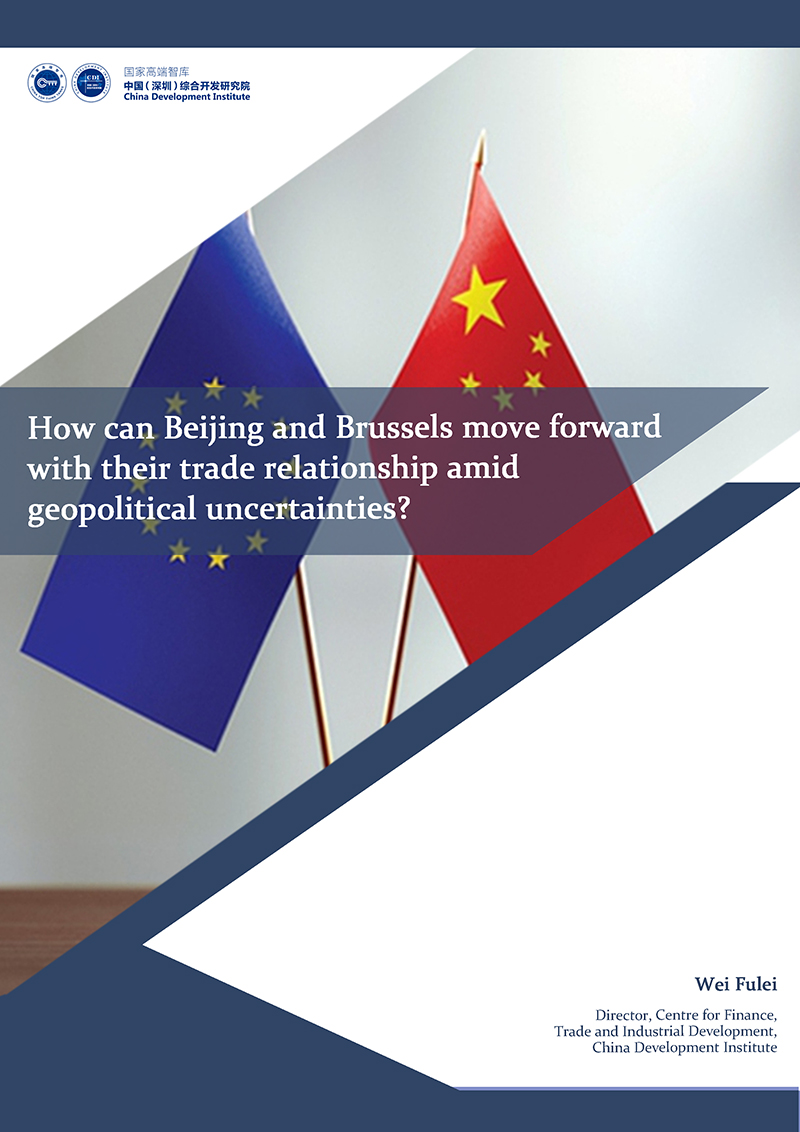
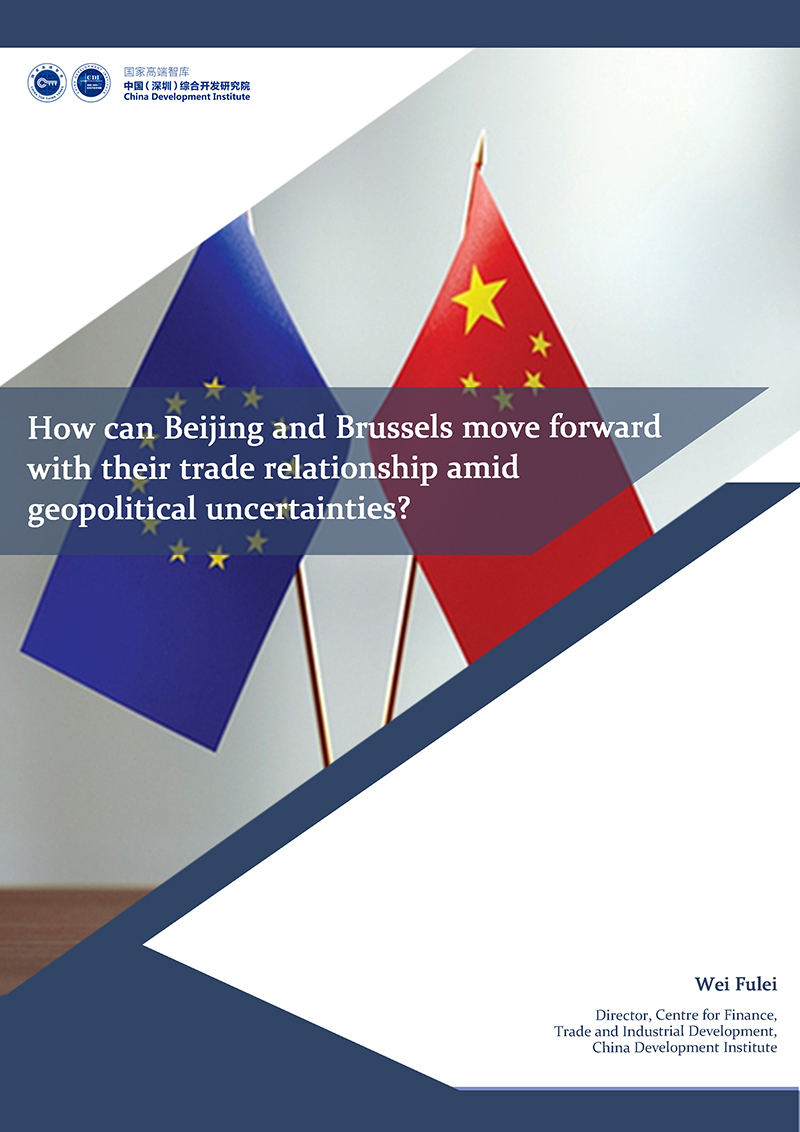
China and the EU, as two of the world’s major economies, together comprise one-third of the global economic output. China is now the EU’s second-largest trading partner, as well as the largest source of its imports and the third-largest destination of its exports. In recent years, the EU has accelerated the ‘de-risking’ process amid geopolitical crises, and prioritised security in the cooperation with China, a shift from the past orientation towards economic interests and technical cooperation. A raft of new acts and policies adopted by the EU, in particular the Critical Raw Materials Act, has challenged China-EU relations. Nevertheless, the two economies are still highly complementary in terms of industrial structure, technological strength, and market demand. As reiterated by Wang Yi, Member of the Political Bureau of the CPC Central Committee and Foreign Minister of China, China and the EU are comprehensive strategic partners with common interests far outweighing differences, and cooperation is the keynote of China-EU relations.1 In the future, China and Europe should strengthen dialogue, enhance strategic mutual trust, bolster consensus on cooperation and development, and collaborate to facilitate trade cooperation under the new and turbulent circumstances.

Click here to download the full report.
As a key strategic partner of China, ASEAN is an important participant in the development of the Belt and Road Initiative (BRI). ASEAN has made a commitment to link its Master Plan on ASEAN Connectivity 2025 with the BRI and accelerate its infrastructure development on the great momentum brought about by the BRI. At present, the BRI has achieved general strategic alignment with ASEAN countries.
Click here to download the full report.
After the obsolescence of the ‘Greater Hong Kong’ narrative dominant in the 1990s, today Shenzhen is recognized as an emergent global city of its own. Yet, at the same time important indicators of this status are still ambiguous, such as the role in international financial flows or the dynamics of its service sector, beyond its role as a global workbench. In A.T. Kearney’s ‘Global Cities Report’, the performance of Shenzhen has been lacklustre since 2012, even retreating in the middle field in terms of ‘outlook’, comparing with a strong dynamism of other Chinese cities newly included in the ranking.
The pilot study concentrates on one specific question, namely whether Shenzhen evolves its own cultural characteristics and dynamism, combined with creating a sustainable and harmonious social structure that is embedded into this local culture. It is based on in-depth case studies, embedded in expert interviews and analysis of other sources, such as newspaper reports. Methodologically, it combines anthropology and economics, and mobilizes recent conceptual innovations in international China studies.
In common pictures of Shenzhen, the image of an ‘instant city’ prevails, driven by huge and historically unique inflows of migrants within a very short time. This short history of immigration has shaped its social structure, which is even reflected in the urban infrastructure and settlement patterns, with the ‘urban villages’ being the most conspicuous phenomenon. In the urban villages, where about 50 percent of the urban population live, migrant populations have met with the local inhabitants of the rural areas where Shenzhen was implanted. Even though those local people now only form a tiny minority in the total population, they are becoming increasingly visible in the ongoing renewal of urban villages, with many expressions of traditional culture embodied in artefacts, buildings or public events.