Theme: Innovation-Driven Bay Area of China
2017 marks the 20th anniversary of Hong Kong’s return to China and the development plan for the Guangdong-Hong Kong-Macao Greater Bay Area, which will become a strategic “pivot” for the opening-up to the outside world and the “Belt and Road” initiative, was included into this year's Government Work Report. Holding discussions on scientific and technological innovation, talent flow and institutional integration, the forum is aimed at offering policy recommendations on the development plan for the city cluster.
Date: June 20, 2017
Host: CDI, One Country Two Systems Research Institute (OCTSRI)
Organizer: Tencent
10:00-10:25 Opening Remarks
YUAN Baocheng, Vice Governor, the People's Government of Guangdong Province
Paul CHAN Mo-po, GBS, MB, JP, Financial Secretary, Government of Hong Kong Special Administrative Region of the People's Republic of China
LEONG Vai Tac, Secretary for Economy and Finance, Government of Macao Special Administrative Region of the People's Republic of China
10:25-10:45 Keynote Speech One
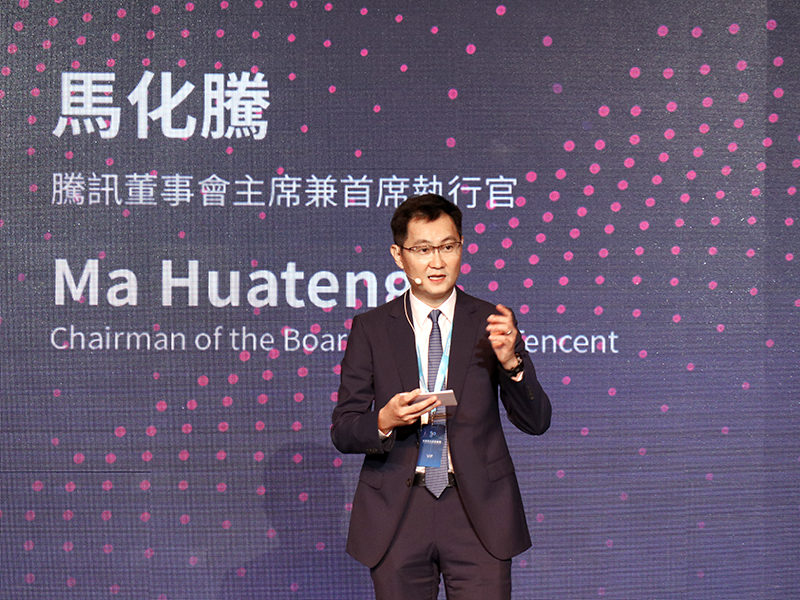
MA Huateng, Chairman of the Board and CEO, Tencent
10:45-11:05 Keynote Speech Two
ZHOU Qiren, LangRun Chair Professor, National School of Development at Peking University
11:05-11:25 Report Release: Innovation-Driven Development and Urban Transformation: Builidng a World-Class Bay Area in China
FAN Gang, President, China Development Institute (CDI)
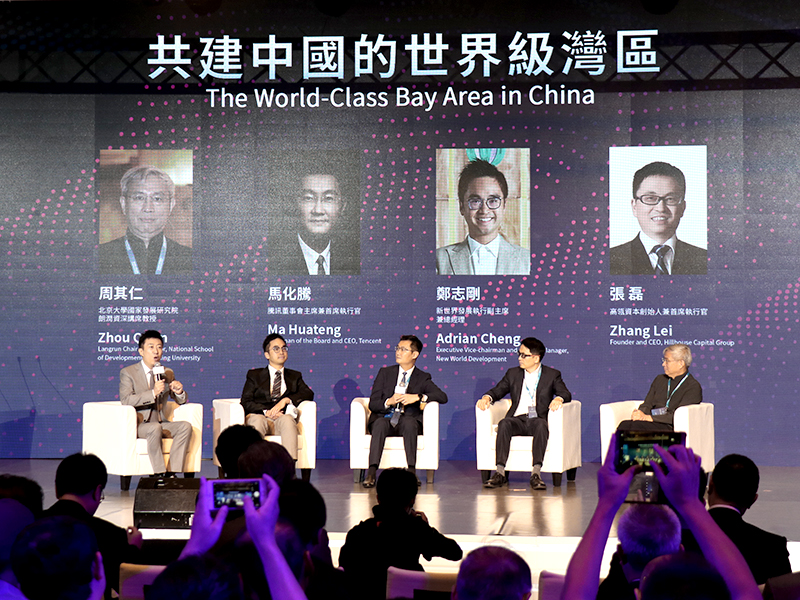
11:25-12:25 Plenary Session One: Building China’s World-Class Bay Area
Moderator: CHEN Weihong, Anchor, CCTV Business Channel
Panelists:
MA Huateng, Chairman of the Board and CEO, Tencent
ZHANG Lei, Founder and CEO, Hillhouse Capital Group
Adrian CHENG, Executive Vice-chairman and General Manager, New World Development
ZHOU Qiren, LangRun Chair Porfessor, National School of Development at Peking University
12:25-13:55 Luncheon
14:00-14:20 Keynote Speech Three
LI Zexiang, Professor, Dept. of Electronic & Computer Engineering, HKUST;
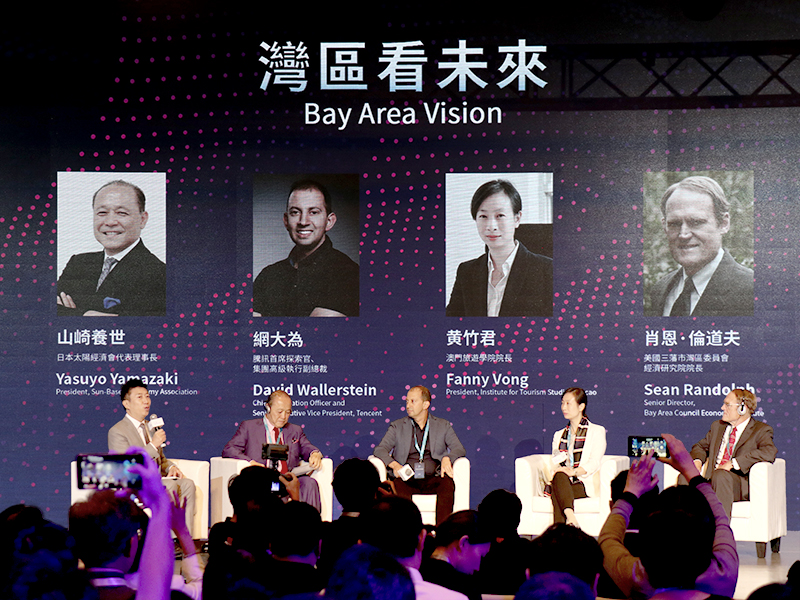
14:20-15:05 Plenary Session Two: Bay Area Vision
Moderator: CHEN Weihong, Anchor, CCTV Business Channel
Panelists:
Fanny VONG, President, Institute for Tourism Studies
Yasuyo YAMAZAKI, President, Sun-Based Economy Association
David WALLERSTEIN, Chief Exploration Officer, Senior Executive Vice President, Tencent
Sean RANDOLPH, Senior Director, Bay Area Council Economic Institute
15:05-15:20 Project Launch: Tencent Youth Camp
15:20-16:05 Talent Engine
Moderator: XU Chenggang, Professor of Economics, Cheung Kong Graduate School of Business
Panelists:
CHEN Guanghan, Chief Expert, Institute of Guangdong, Hong Kong and Macao Development Studies, Sun Yat-sen University
HAI Wen, Dean, HSBC Business School, Peking University
Otto Chui Chau LIN, Senior Advisor to the President, Hong Kong Polytechnic University,
Lawrence J. LAU, Ralph and Claire Landau Professor of Economics, The Chinese University of Hong Kong
16:05-16:50 Plenary Session Four: Innovation Hub
Moderator: Tony CHAN, president, Hong Kong University of Science and Technology
Panelists:
DONG Mingzhu, Chairman & President, Gree Electric Appliances, Inc. of Zhuhai
Peter LEE Ka Kit, GBS, JP, Vice Chairman of Henderson Land Group
Pang Chuan, Vice President of Macau University of Science and Technology
MA Huateng, Chairman of the Board and CEO, Tencent
WONG Wai, Chairman, SF Holdings Incorporated Company
16:50-17:00 Closing Remarks
CHEUNG Chi-kong, BBS, JP, President, One Country Two System Research Institute
“The Guangdong-Hong Kong-Macao Greater Bay Area is facing two major transformations; the transition from individual cities to a city cluster and the transition from the original manufacturing center, financial center and service center to a scientific innovation center.”
The development of the Guangdong-Hong Kong-Macao Greater Bay Area requires the cities to pursue fair benefits for all parties with no distinguishing distribution. Therefore, the coordination by higher-level institutions is the prerequisite. Having a sound industrial chain distinguishes China’s Greater Bay Area from other bay areas in the world. Thus, the producing process can be made inside the Bay Area to reduce manufacturing costs.
FAN Gang, President, China Development Institute (CDI)
“The prerequisite of innovation elements, like talents, should be sought from all over the world.”
The Guangdong-Hong Kong-Macao Greater Bay Area needs to absorb world-class resources and integrate with key elements of development. Successful businesses draw on the advantages of various places. For example, DJI was a scientific research project in Hong Kong, but it started up in Shenzhen and finally produced UAVs in the Pearl River Delta. It is now a world-class company with 90 percent of the global market share.
ZHOU Qiren, LangRun Chair Porfessor, National School of Development at Peking University
“The Greater Bay Area has led unprecedented opportunities for development. Policies should facilitate scientific and technological progress, create innovative environment and establish coordination mechanism.”
Hong Kong is highly internationalized, which can attract scientific and technological enterprises. The Guangdong-Hong Kong Macao Greater Bay Area should build an innovation eco-system featuring integration of enterprises, universities and research. For example, Stanford not only cultivates talents, it also can retains them for the development of the Silicon Valley. The governments of Guangdong, Hong Kong and Macao should establish a smooth coordination mechanism, working together to seek talents and markets from the world.
MA Huateng, Chairman of the Board and CEO, Tencent
“The flexible mechanism of Hong Kong can facilitate the establishment of private universities, so that “Hong Kong-Shenzhen-Dongguan” could become China’s Silicon Valley.”
Hong Kong has a lot of achievements in scientific research. In order to commercialize the scientific research, Hong Kong should use its flexible mechanism to establish private universities in the Hetao area, a science and technology zone jointly developed by Hong Kong and Shenzhen. Hong Kong should also bring new technologies into the city cluster of Hong Kong, Shenzhen and Dongguan, therefore, develops China’s own Silicon Valley with sound manufacturing systems.
LI Zexiang, Professor, Dept. of Electronic & Computer Engineering, HKUST
“Silicon Valley is self-motivated and self-driven.”
The entrepreneurs will turn into venture capitalists and more talents will be attracted with the venture capital. In this way, Silicon Valley is self-motivated and self-driven. For example, universities like Stanford are not just academic institutions and they also actively encourage students to start their own businesses. Some big companies will cultivate many talents, and encourage them to create new small companies. Talent is the key element of innovation. About 45 percent of Silicon Valley's entrepreneurs come from abroad. If you can bring innovative ideas, Silicon Valley will open the door for you and provide the resources you need. Free flow of ideas is a prerequisite for innovation.
Sean RANDOLPH, Senior Director, Bay Area Council Economic Institute
“The Guangdong-Hong Kong-Macao Greater Bay Area enjoys an advantage in manufacturing. Now we are in era of artificial intelligence, which is an opportunity for the city cluster.”
The Guangdong-Hong Kong-Macao Greater Bay Area has a solid foundation for manufacturing which is different from the Silicon Valley. Now that we are about to step into the era of artificial intelligence, the city cluster becomes very competitive because it can connect software, hardware and services. For companies in the Bay Area, especially small and medium-sized ones, they are exposed to the latest technology which can change the world and seek investment from Hong Kong.
David WALLERSTEIN, Chief Exploration Officer, Senior Executive Vice President, Tencent
Gallery